Itinerance Plus Logo

Excursions

Full and half-day trips

Circuits

Multi-day, desert and Atlas

Packages

Combined Agafay experiences

Custom bundle

Build your own combination

Agafay

Quad, buggy, dinner, sunset

Palmeraie

Rides and activities near Marrakech

Custom trip

Tailored premium itinerary

Organized trips

Turnkey circuits

Transfers

Airport, hotel, intercity

Visa

Simplified application

Flight tickets

Domestic and international flights

Destinations

Articles

Travel inspiration and news

Guides

Comparisons and practical tips

Story

Our story and team

Logo
Circuits

Excursions

ExcursionsCircuitsPackagesCustom

Activities

AgafayPalmeraie

Services

Custom tripOrganized tripsTransfersVisaFlight tickets
Destinations
MarrakechAgafayEssaouiraMerzougaOurikaOuzoud

Journal

ArticlesGuidesStory
Reviews
Back
Itinerary
What to do in Marrakech in 3 days? - Marrakech and Morocco travel article | Itinerance Plus

What to do in Marrakech in 3 days?

Before choosing

Key take

Yes, but not for the reasons you were sold. Marrakech is not the Thousand and One Nights city promised by brochures. It is a living, noisy, sometimes exhausting city, with entire neighborhoods calibrated to pull money from tourists.

And yet, something happens when you let go: the evening light on the ramparts, a silent alley behind the crowd of Jemaa el-Fna, a meal on a rooftop while watching the storks.

Number of days that are truly usable

Desired rhythm between city, recovery time and outings

Expected level of comfort or flexibility

Live reputation

Check our public profiles before booking.

Google Business

4.2/5

TripAdvisor

4.8/5

408 reviews

Open source

Related excursions

Vallée de l'Ourika depuis Marrakech

Vallée de l'Ourika depuis Marrakech

Nature, cascades et villages berbères au cœur de l'Atlas.

Related articles

10 Must-Do Things in Essaouira in One Day

Essaouira

What to Do in Marrakech: The Complete Guide (2026)

Marrakech Guide

Family Excursions from Marrakech: The Complete Guide

Family Travel

Planning guides

Marrakech Price Guide: How Much to Budget?

Planning

Mistakes to Avoid in Marrakech: What They Don't Tell You Before You Go

Planning

Live reputation

Check our public profiles before booking.

Google Business

4.2/5

TripAdvisor

4.8/5

408 reviews

Open source

Planning your stay

Start by defining the days you truly have available, your priorities and time for rest. You can then organize each stage without overloading the trip or sacrificing the experiences that matter most.

Traveler reviews

What travelers really feel once they are there

Is It Really Worth The Trip? - Marrakech and Morocco travel article | Itinerance Plus

Planning

Is It Really Worth The Trip?

Yes, but not for the reasons you were sold. Marrakech is not the Thousand and One Nights city promised by brochures. It is a living, noisy, sometimes exhausting city, with entire neighborhoods calibrated to pull money from tourists.

And yet, something happens when you let go: the evening light on the ramparts, a silent alley behind the crowd of Jemaa el-Fna, a meal on a rooftop while watching the storks.

Marrakech has to be earned. Those who arrive with postcard expectations leave disappointed. Those who arrive curious, prepared, and able to handle a bit of chaos leave deeply marked. The difference lies in preparation and mindset.

Practical Sheet - Marrakech and Morocco travel article | Itinerance Plus

Useful cue

Practical Sheet

Best season: March-April or October-November. Temperatures stay manageable (20-28°C), the light is beautiful, and crowds are a little less suffocating than in summer. Avoid July-August: 40°C inside the medina is punishment.

Ideal duration: 3 days are enough to see the essentials without rushing. 4 days if you want an excursion nearby (Ourika, Essaouira). Less than 2 days is frustrating.

Realistic daily budget: Low budget — 30 to 50 euros per day in a dorm or cheap riad, meals at street stands and tajines in local small eateries. Mid-range — 80 to 120 euros, comfortable riad in the medina, decent restaurants, a few taxis.

Comfort — 200 euros and up, charming riads, gastronomic dinner, quality hammam.

Logistical difficulty: moderate. The medina is a labyrinth and getting lost is unavoidable at first. But everything is on foot or by small taxi, riads help, and the essentials lie within a compact perimeter.

You can organize this perfectly well on your own, without an agency.

What you can skip without regret: horse carriages, wax museums, folkloric tourist shows in restaurants outside the medina.

What you should not miss: walking the medina early in the morning, a real neighborhood hammam (not a hotel spa), the dyers' souk, the ramparts at sunset, the Saadian Tombs before 9 a. m.

Planning

The Truth About The Place

What people imagine: a mysterious and authentic medina, alleys scented with spices, artisans working inside their shops, an atmosphere outside time.

What they actually find: a two-speed medina. There is the tourist area around Jemaa el-Fna and the main souks, where everything is calibrated to sell you something at five times the normal price.

And there is the real medina, ten minutes away on foot, where people do their shopping, children play in the alleys, and artisans are genuinely working.

The line between both worlds is invisible if you do not know how to look for it.

Jemaa el-Fna is both the heart of the city and its most obvious tourist trap. Snake charmers, chained monkeys, henna forced on your hand without prior agreement: all of that exists.

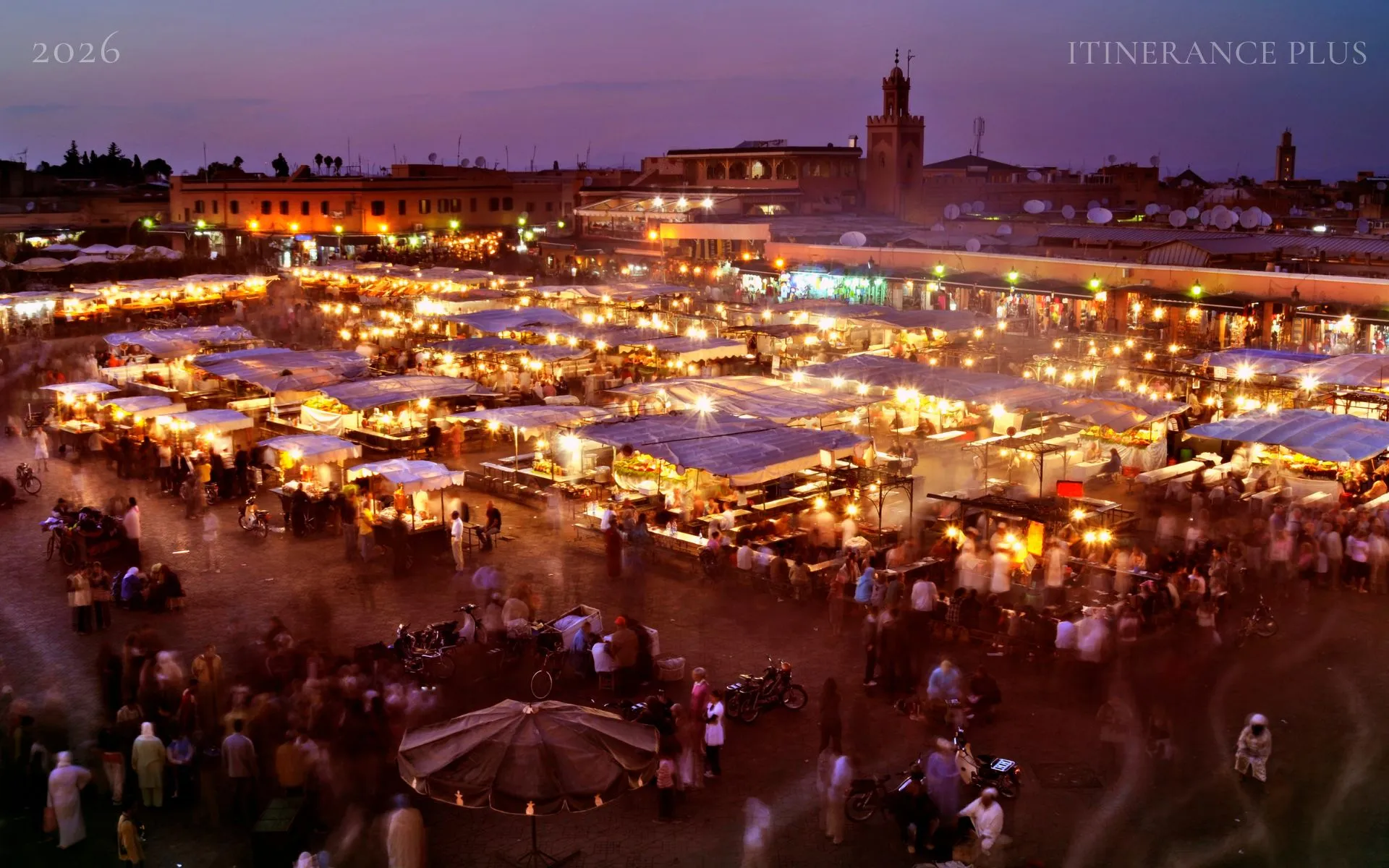
The square is worth it in the evening, when the street kitchens set up and the smoke starts rising. Not at noon under 38°C with a backpack.

The good surprise: the people of Marrakech themselves. Behind the attempts to sell you something, there are people with a great sense of humor and real frankness.

Take the time for a real conversation in a café and you will see another city.

The bad surprise: harassment in certain areas. Not violent, not dangerous, but exhausting. Someone offers to guide you when you asked for nothing, then demands money at the end. It happens often around the souks. You learn quickly.

Day-By-Day Program - Marrakech and Morocco travel article | Itinerance Plus

Program

Day-By-Day Program

1

Day 1 — Getting used to the medina

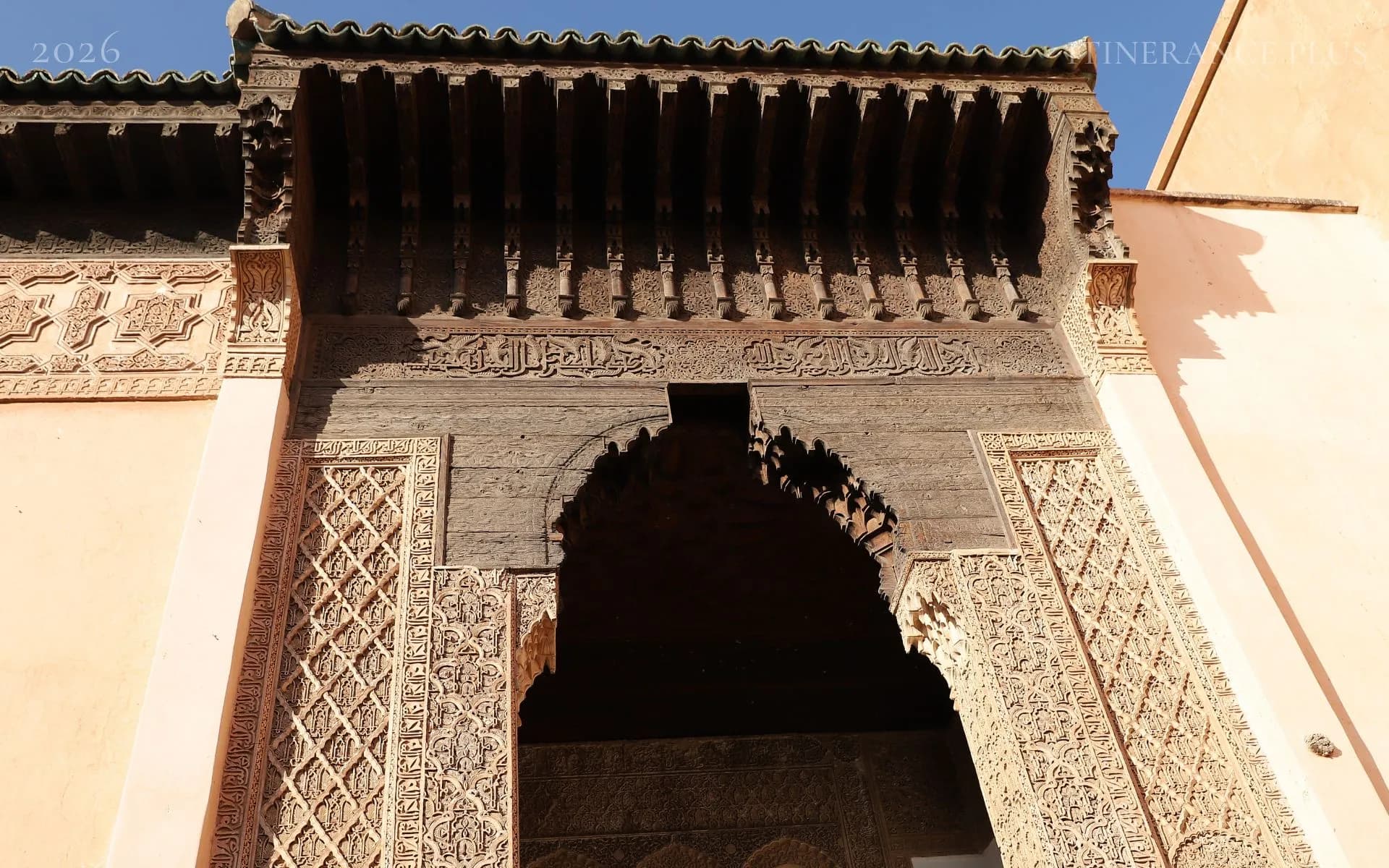
In the morning, leave at 8:30. The medina is still relatively calm, the light is beautiful, and you can walk without being constantly pushed around. Head first to the Saadian Tombs, before the line starts stretching. These are 16th-century mausoleums hidden behind a discreet entrance in the Kasbah district. The Hall of Twelve Columns is one of the most beautiful things you will see in Morocco. Take your time. Then walk back up toward the Mellah, the old Jewish quarter, often ignored by standard itineraries. Wooden balconies, the spice market, an atmosphere unlike the rest of the medina: it is twenty minutes away on foot and already another city.

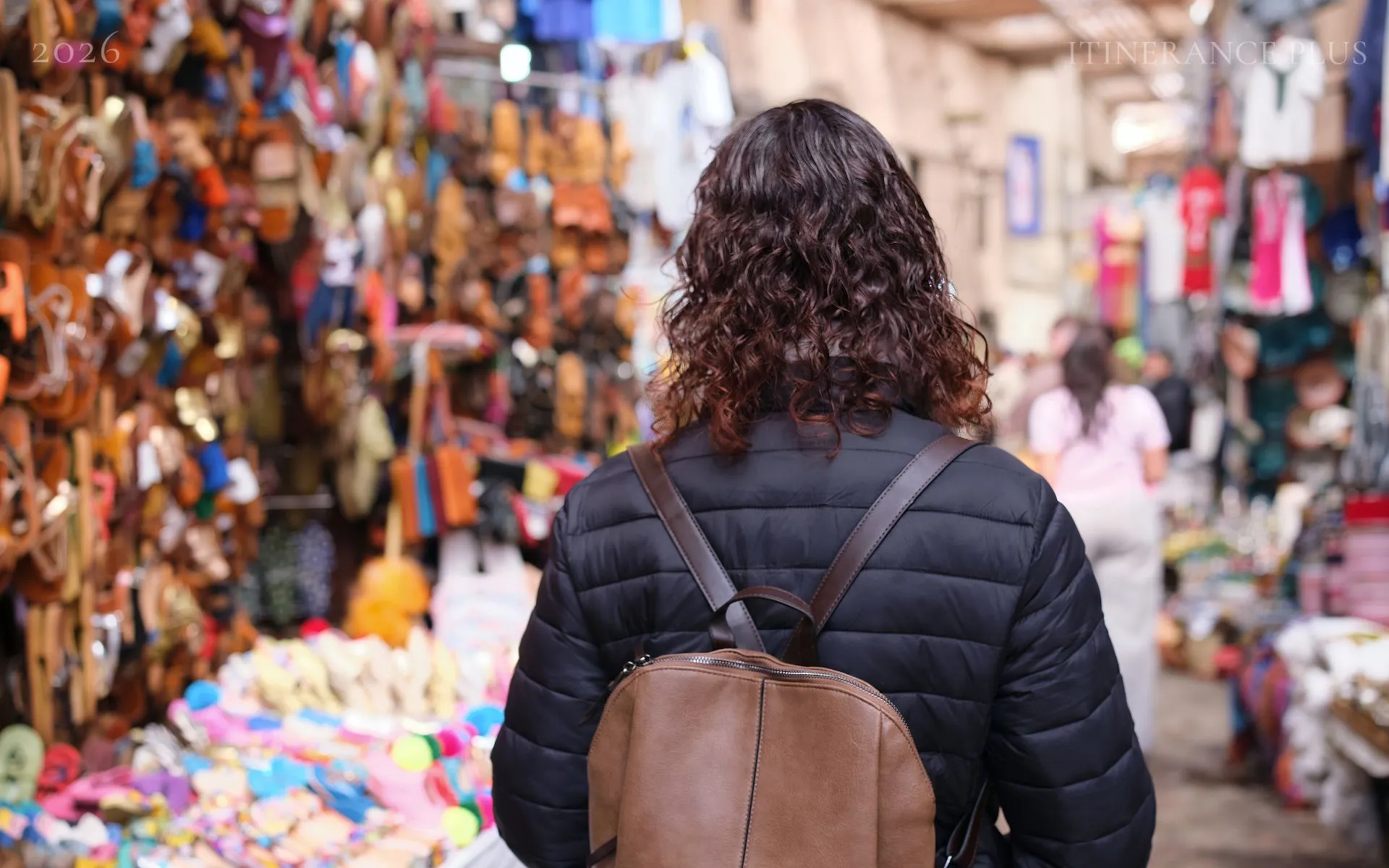
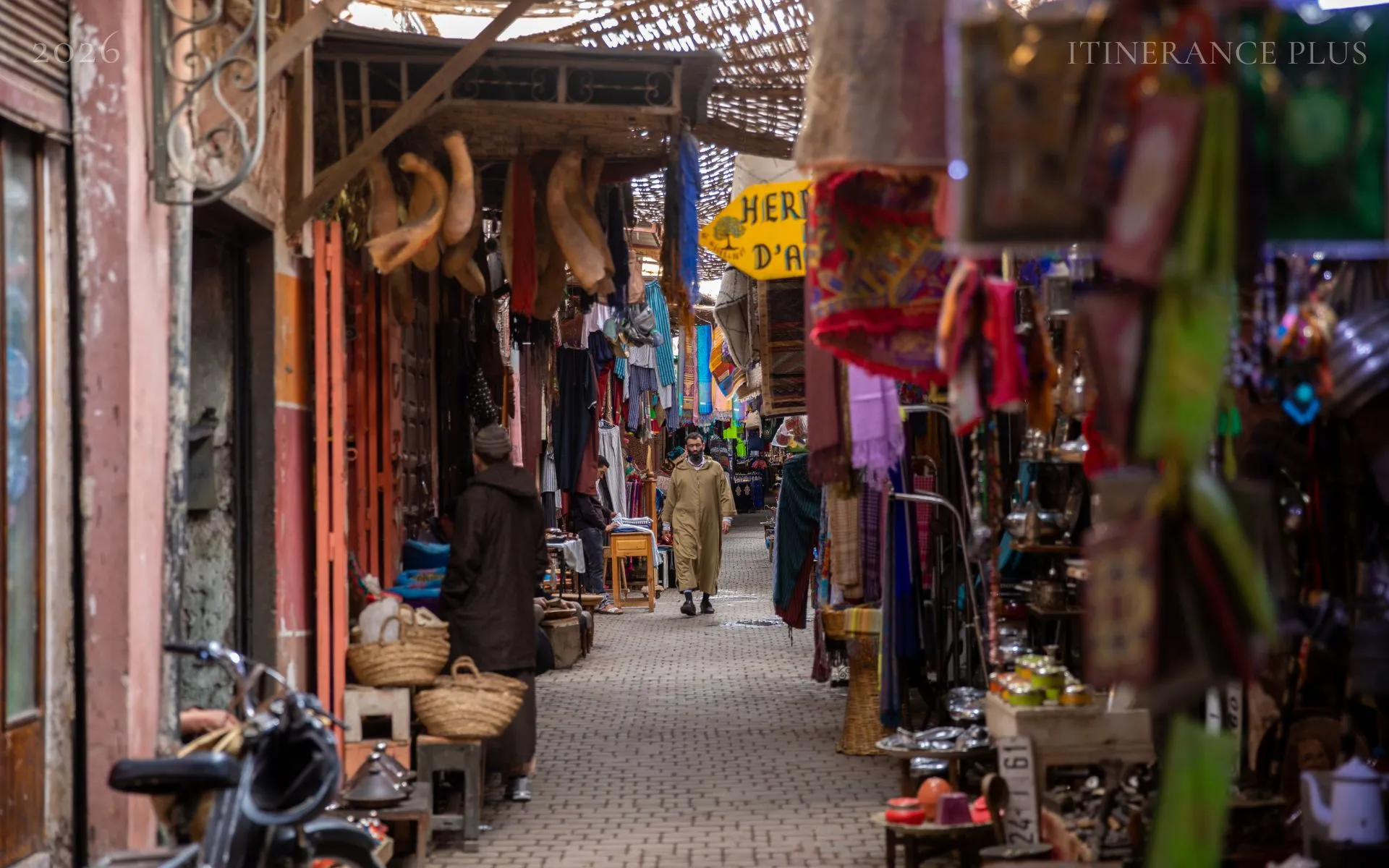
In the afternoon, take a break between 1 p.m. and 3 p.m. This is when heat and crowds reach their peak. Go back to the riad, eat there or in a quiet café. Head out again around 3:30 p.m. for the souks. Enter through Souk Semmarine, let yourself drift, but keep in mind that getting lost is normal and that your phone with Google Maps will bring you back. The dyers' souk is worth the stop, but go early in the afternoon when the colors are still fresh.

In the evening, settle on one of the terraces overlooking Jemaa el-Fna around 6:30 p.m. Order a mint tea and watch the square change before your eyes. Gnawa musicians take their places, storytellers settle in, and the smoke from the grills starts rising. This is the highlight of the first day. For dinner, go down to the street kitchens on the square. Look for stands with Moroccans eating there, not only tourists.

Common mistake that day

trying to see everything on the first day and ending up exhausted and in a bad mood by 5 p.m. Leave things for tomorrow.

2

Day 2 — Palaces, gardens and hammam

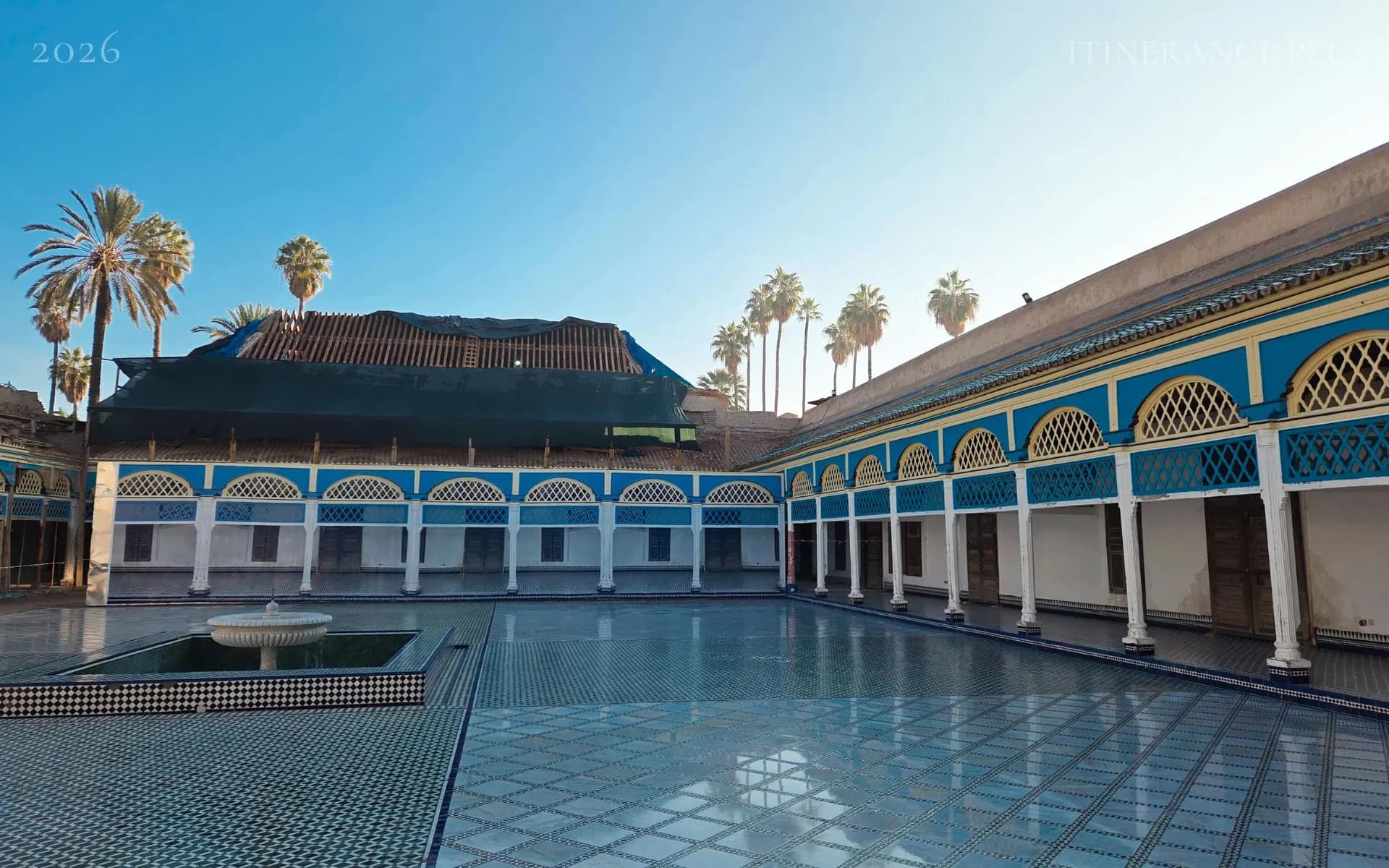
In the morning, leave at 9 a.m. for Bahia Palace. Arrive early to see it almost empty. It is a late 19th-century palace built by a grand vizier for his wives and concubines. The sequence of rooms, inner courtyards, zellige tiles and carved cedar ceilings is impressive without being overcrowded at that hour. Right next to it, the ruins of El Badi Palace deserve thirty minutes. Only the foundations and a few walls remain, but the view of a stork on its nest at the top of a wall is worth the ticket.

In the afternoon, hammam. Not the luxury hammam of your riad. A neighborhood hammam. Ask your host to recommend one that locals actually use. Count 15 to 30 dirhams for entry, plus a few dirhams for black soap and the kessa glove. It is hot, dark, and disorganized if you have never done it before. It is also one of the best experiences you can have in Marrakech. Take time to recover afterward — at least two full hours before going back out.

In the evening, walk up toward Bab Doukkala to dine somewhere that is not in direct view of Jemaa el-Fna. Prices drop, menus change, and the atmosphere becomes more local.

Common mistake that day

booking an 80-euro hotel hammam thinking it is "the authentic experience." It is a spa with Moroccan tiles. It is not the same thing.

3

Day 3 — Breathe and move away from the center

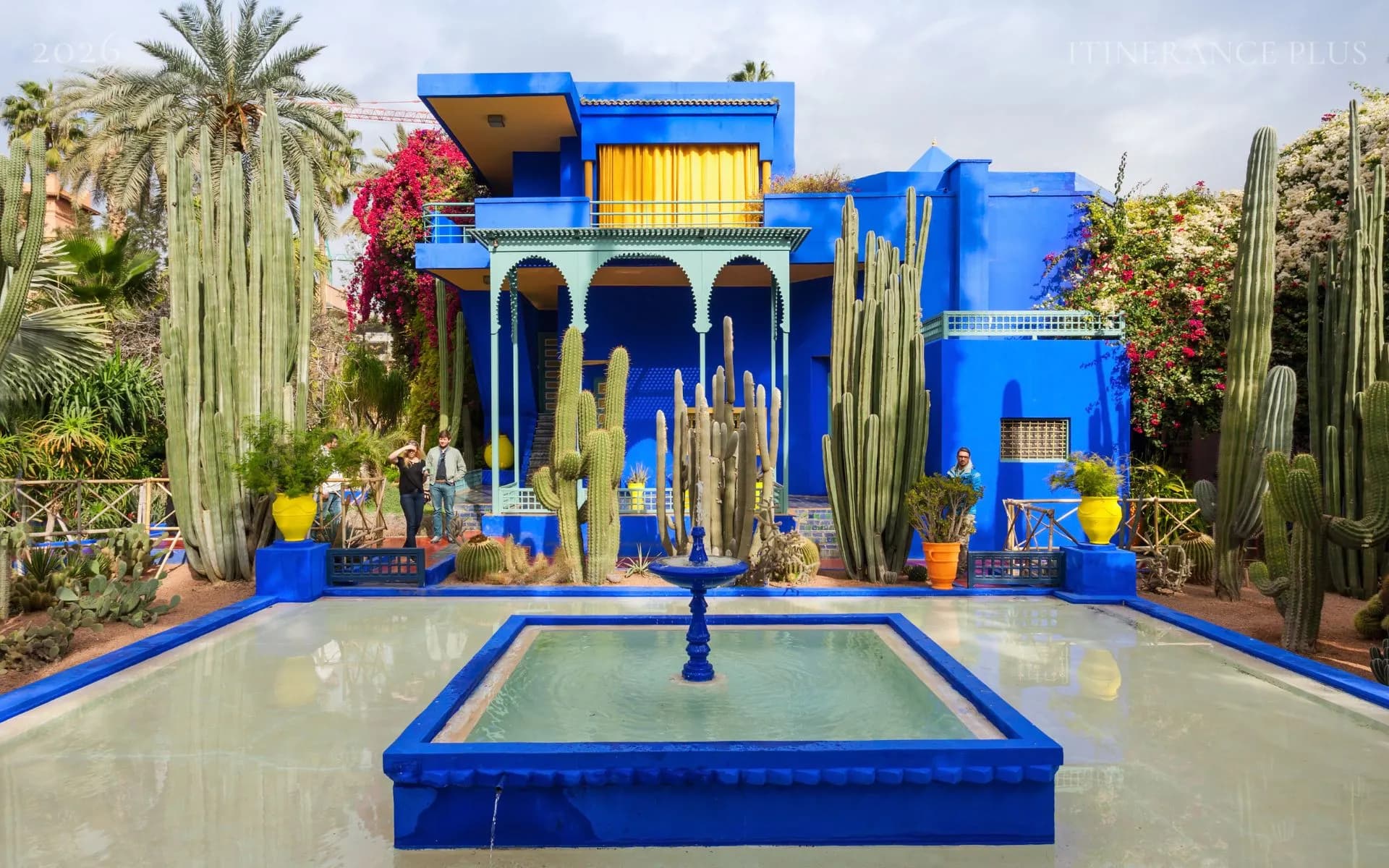
In the morning, Jardin Majorelle at 9 a.m. when it opens. It is the only moment of the day when you can spend an hour there without being packed in with four hundred other people. The garden belongs to the Yves Saint Laurent estate, the ticket is expensive (around 150 dirhams), but the vegetation, the Majorelle blue of the buildings and the relative serenity of the morning make it a real breathing space. The adjacent Berber Museum is honestly very well done.

In the afternoon, leave the medina completely. Take a taxi to the southern ramparts and walk along the fortifications. Or take a horse carriage — yes, these ones do have a purpose when you want to follow the walls and see the historic gates. Bab Agnaou, Bab Doukkala, the pink-orange earthen ramparts in the late-afternoon light: this is the image of Marrakech that photos often miss because it looks too simple.

In the evening, dine in Guéliz, the new town. This is where wealthier locals and expats eat. The restaurants are less picturesque, but the cooking is often better and prices are more honest.

Common mistake that day

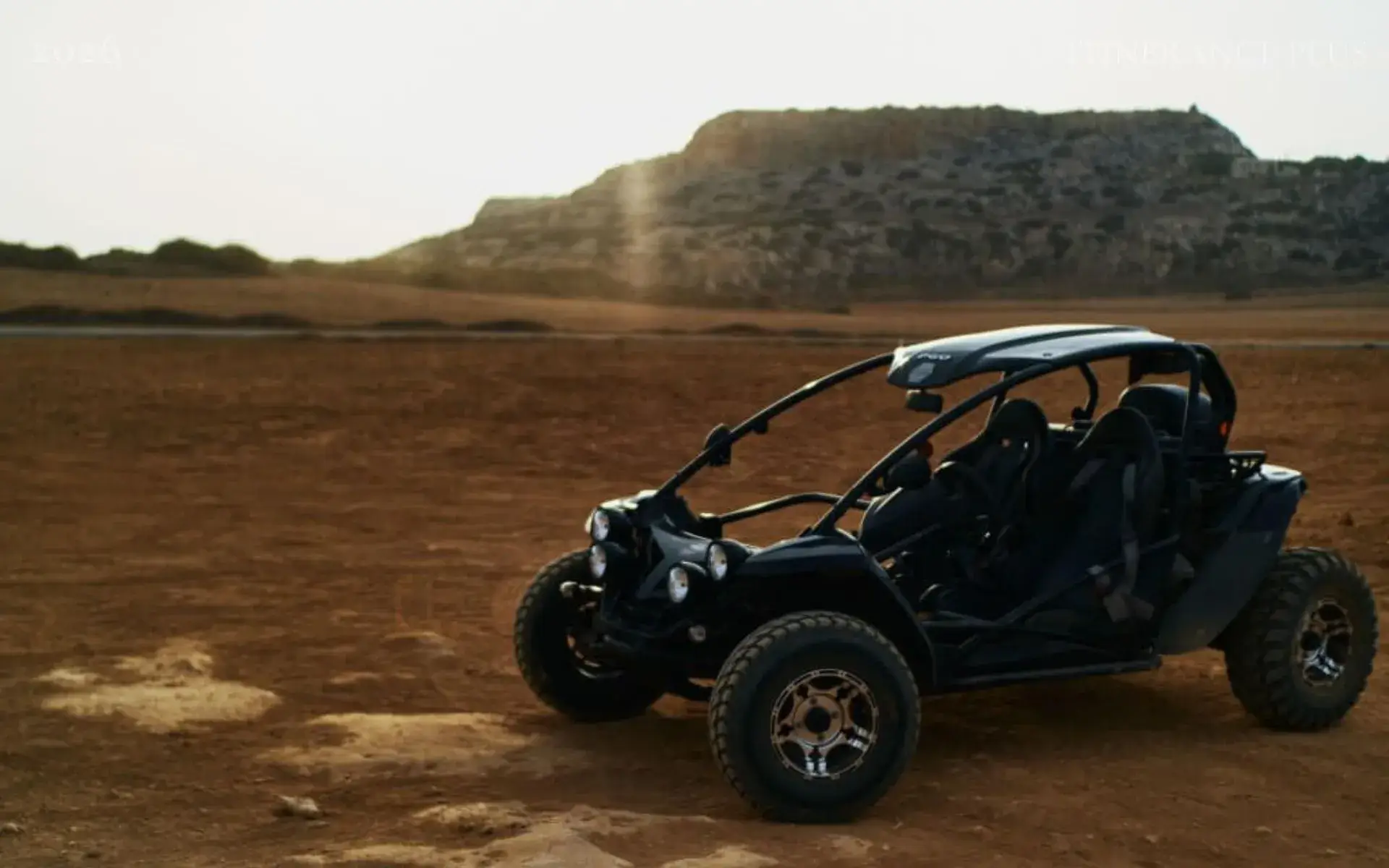
believing that a day trip to real sand dunes is possible from Marrakech. The dunes of Erg Chebbi are 10 hours away by road. What is sold to you as a "desert excursion" from Marrakech is a fake dune in wasteland. Avoid it.

The Neighborhoods - Marrakech and Morocco travel article | Itinerance Plus

Neighborhoods

The Neighborhoods

The medina is the historic heart, enclosed by ramparts. This is where the riads, souks, mosques and palaces are. It is noisy, dense and labyrinthine. Ideal for travelers who want full immersion and accept the compromise between authenticity and fatigue.

The Kasbah district, south of the medina, is calmer than the center. The Saadian Tombs and El Badi Palace are there. The alleys feel less invaded. A good starting point in the morning.

The Mellah, the old Jewish quarter, lies next to the Kasbah. Often forgotten in itineraries. Yet it is one of the most interesting parts of the city: different architecture, a local market, very few tourists.

Mouassine, in the northwestern medina, contains some of the best fountains, mosques and old houses. Calmer than the central souks. Ideal for those who want to drift without a plan.

Guéliz, the new town to the west, is functional and not especially charming. But this is where you find pharmacies, supermarkets, cafés where people leave you alone, and decent restaurants at fair prices. Essential when you need to breathe.

Eat, Sleep, Move Around - Marrakech and Morocco travel article | Itinerance Plus

Planning

Eat, Sleep, Move Around

Eating: the best meals do not announce themselves. In the souks, look for tiny eateries frequented by men in djellabas eating standing up or on stools.

Harira, kefta, grilled merguez, bissara early in the morning. Price: 20 to 40 dirhams per meal. On Jemaa el-Fna, street stands are acceptable, but negotiate the price before sitting down — surprise bills do happen.

Restaurants with terraces over the square charge for the view. Expect two to three times the normal price for similar quality. Absolutely avoid restaurants that shout at you from the sidewalk with a menu translated into five languages.

What you absolutely should eat: pigeon pastilla if you find a real one, lamb tajine with prunes, tangia (a clay-pot lamb dish, a specialty of Marrakech),

couscous on Friday at lunchtime, msemen and argan oil for breakfast.

Sleeping: staying in a riad inside the medina changes the whole experience. A riad is a traditional house with an inner courtyard. The best ones remain quiet even in the center.

Choose a riad in Mouassine or Kasbah rather than directly facing Jemaa el-Fna. Nights close to the square can remain noisy until 2 a. m. Mid-range budget: 50 to 150 euros per night for a decent riad.

Hotels in Guéliz are cheaper but take away the joy of stepping into the medina on foot in the morning.

Getting around: on foot inside the medina, that is the only sensible way. The alleys are too narrow for cars. Small taxis (cream-colored) to go from the medina to Guéliz or Majorelle: expect 20 to 30 dirhams, ask for the meter or negotiate before getting in.

Uber and Careem taxis exist and avoid haggling. Horse carriages are slow, expensive, and only useful when following the ramparts.

Who It Suits - Marrakech and Morocco travel article | Itinerance Plus

Planning

Who It Suits

Solo travelers: very good, provided you like constant sensory stimulation and can say no without apologizing. Solitude is rare in the medina but easy to find in cafés and riads.

Couples: an excellent choice. The intimacy of a riad, dinners on terraces, exploring the souks together. Women can still feel harassed in certain parts of the medina, though. It remains manageable, but it should not be ignored.

Families with children: possible but demanding. The medina is not designed for strollers. Heat, crowds, and alleys clogged with motorbikes require serious organization. Children over 8 who enjoy adventure can love it.

Under 5, it becomes exhausting for everyone.

Groups of friends: very good, as long as you do not insist on doing everything together. The medina encourages splitting up and meeting again in the evening. Riads with a shared patio are perfect for that.

Seniors or reduced mobility travelers: difficult. The alleys are unevenly paved, riad entrances often have steps, and bathrooms in traditional riads can be poorly accessible.

Better to choose a hotel in Guéliz with an elevator and organize outings by taxi.

Budget backpackers: yes, absolutely. The country remains affordable and dorms in the medina do exist. Just do not expect serenity.

Comfort and luxury travelers: Marrakech is one of the destinations that combines exoticism and high-end comfort best. Great riads and hotels like La Mamounia or Royal Mansour are experiences in themselves, if you have the budget.

Planning

Traps, Scams, Disappointments

The fake guide: someone approaches you in the street, speaks your language perfectly, says he is a student, offers to show you the dyers' quarter "just to practice his French.

" In the end, he brings you into a friend's shop, waits for a commission, then asks for money for his kindness. The simple response: refuse politely but firmly from the start. Do not enter the conversation.

Henna: women offer to draw henna on your hand. What feels like a friendly gesture is actually a paid service. Once the design has started, an absurd price is demanded. Never offer your hand without asking the price first.

The taxi without meter: only take the taxi after asking for the meter or negotiating a price. "How much to Majorelle? " — if the driver does not answer clearly, move on to the next one.

Paid photos: snake charmers, monkey handlers, men in costume. Every photo has a price, and it is requested afterward, often aggressively. If you do not want to pay, do not take the picture.

The "desert excursion": see above. What is called desert two hours from Marrakech is not one.

The restaurant with a view over Jemaa el-Fna: the bill is disproportionate, the food ordinary. What you are paying for is the terrace.

The daytime disappointment of Jemaa el-Fna: the square is interesting in the evening. In the middle of the afternoon under the sun, it is a tourist parking lot with aggressive vendors. Do not let your first impression be formed there.

Useful cue

Insider Tips

Saadian Tombs before 9 a. m. : you will almost visit them alone. After 10 a. m. , the line goes past thirty minutes and the interior becomes packed.

The dyers' souk: go in mid-morning, around 10 to 10:30. The vats are still full of fresh colors and artisans are active. In the afternoon, many vats are empty or covered.

To negotiate in the souks: start at half the asking price, accept walking away if they refuse, and never show enthusiasm for an object before agreeing on a price.

The merchant who "makes an effort for you" is simply doing his job.

Le Café des Épices, on Rahba Kedima square, is crowded and not exactly cheap. But the terrace overlooks the spice market square and it is the ideal place to observe without being bothered. Go there for tea between 3 p. m. and 5 p. m.

Bab Doukkala district on Friday morning: this is the local weekly market. Few tourists. Vegetables, spices, tools, fabrics. The real life of the city.

Riads all have rooftop terraces. Some are open to outsiders. Ask your host which ones are accessible outside meal times.

How to choose

Final Verdict

Marrakech is worth the trip, but not for everyone and not without preparation.

It is an excellent choice for people who enjoy being shaken out of their habits, who accept getting lost, who know how to say no without guilt, and who are looking for something viscerally different from Europe.

The chaos of the medina is also what makes it memorable.

You cannot have one without the other.

It is a bad idea for those who need calm, order, and predictability in their travels.

Also for those who expect to find the image from brochures — it exists in fragments, not as a permanent soundtrack.

If Marrakech is not for you, look toward Essaouira, three hours away on the Atlantic coast.

Same season, same architecture, same cuisine, but windy, calm, and without the same level of commercial pressure.

Or Fez, if history and architecture matter more to you than public-square energy.

Marrakech leaves no one indifferent.

That may be the best thing one can say about a destination.

Guide

What matters first

The most useful signals first, before the nuances.

Yes, but not for the reasons you were sold. Marrakech is not the Thousand and One Nights city promised by brochures. It is a living, noisy, sometimes exhausting city, with entire neighborhoods calibrated to pull money from tourists.

And yet, something happens when you let go: the evening light on the ramparts, a silent alley behind the crowd of Jemaa el-Fna, a meal on a rooftop while watching the storks.

Vallée de l'Ourika depuis Marrakech in Vallée de l'Ourika, Morocco | premium excursion from Marrakech
Ourika EscapeVallée de l'Ourika

Vallée de L'ourika Depuis Marrakech

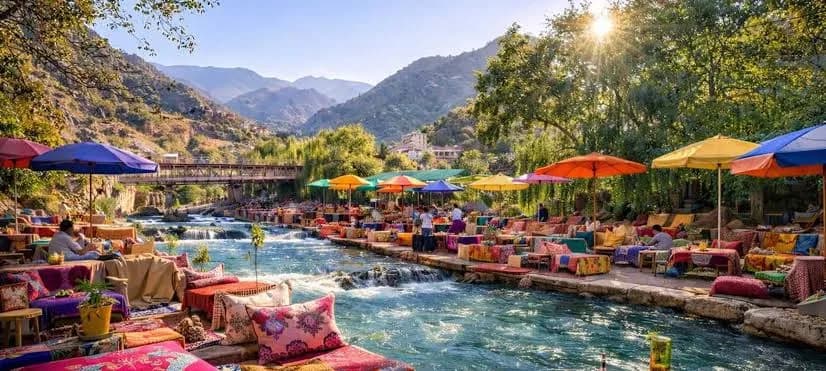
If you find the city too intense, a day in the Ourika Valley is the perfect remedy.

From

20 EUR

View experience

Marrakech has to be earned. Those who arrive with postcard expectations leave disappointed. Those who arrive curious, prepared, and able to handle a bit of chaos leave deeply marked. The difference lies in preparation and mindset.

Best season: March-April or October-November. Temperatures stay manageable (20-28°C), the light is beautiful, and crowds are a little less suffocating than in summer. Avoid July-August: 40°C inside the medina is punishment.

Guide

How to frame the stay well

Rhythm, constraints and tradeoffs that matter.

Ideal duration: 3 days are enough to see the essentials without rushing. 4 days if you want an excursion nearby (Ourika, Essaouira). Less than 2 days is frustrating.

Realistic daily budget: Low budget — 30 to 50 euros per day in a dorm or cheap riad, meals at street stands and tajines in local small eateries. Mid-range — 80 to 120 euros, comfortable riad in the medina, decent restaurants, a few taxis.

Comfort — 200 euros and up, charming riads, gastronomic dinner, quality hammam.

Logistical difficulty: moderate. The medina is a labyrinth and getting lost is unavoidable at first. But everything is on foot or by small taxi, riads help, and the essentials lie within a compact perimeter.

You can organize this perfectly well on your own, without an agency.

Guide

How to move to action

The right format to turn intention into a concrete plan.

What you can skip without regret: horse carriages, wax museums, folkloric tourist shows in restaurants outside the medina.

What you should not miss: walking the medina early in the morning, a real neighborhood hammam (not a hotel spa), the dyers' souk, the ramparts at sunset, the Saadian Tombs before 9 a. m.

What people imagine: a mysterious and authentic medina, alleys scented with spices, artisans working inside their shops, an atmosphere outside time.

What they actually find: a two-speed medina. There is the tourist area around Jemaa el-Fna and the main souks, where everything is calibrated to sell you something at five times the normal price.

And there is the real medina, ten minutes away on foot, where people do their shopping, children play in the alleys, and artisans are genuinely working.

The line between both worlds is invisible if you do not know how to look for it.

Guide

Focus on what matters

Turn reflection into a concrete itinerary.

Jemaa el-Fna is both the heart of the city and its most obvious tourist trap. Snake charmers, chained monkeys, henna forced on your hand without prior agreement: all of that exists.

The square is worth it in the evening, when the street kitchens set up and the smoke starts rising. Not at noon under 38°C with a backpack.

The good surprise: the people of Marrakech themselves. Behind the attempts to sell you something, there are people with a great sense of humor and real frankness.

Take the time for a real conversation in a café and you will see another city.

The bad surprise: harassment in certain areas. Not violent, not dangerous, but exhausting. Someone offers to guide you when you asked for nothing, then demands money at the end. It happens often around the souks. You learn quickly.

Day 1 — Getting used to the medina

In the morning, leave at 8:30. The medina is still relatively calm, the light is beautiful, and you can walk without being constantly pushed around. Head first to the Saadian Tombs, before the line starts stretching.

These are 16th-century mausoleums hidden behind a discreet entrance in the Kasbah district. The Hall of Twelve Columns is one of the most beautiful things you will see in Morocco. Take your time.

Then walk back up toward the Mellah, the old Jewish quarter, often ignored by standard itineraries. Wooden balconies, the spice market, an atmosphere unlike the rest of the medina: it is twenty minutes away on foot and already another city.

Guide

Focus on what matters

Turn reflection into a concrete itinerary.

In the afternoon, take a break between 1 p. m. and 3 p. m. This is when heat and crowds reach their peak. Go back to the riad, eat there or in a quiet café. Head out again around 3:30 p. m. for the souks.

Enter through Souk Semmarine, let yourself drift, but keep in mind that getting lost is normal and that your phone with Google Maps will bring you back.

The dyers' souk is worth the stop, but go early in the afternoon when the colors are still fresh.

In the evening, settle on one of the terraces overlooking Jemaa el-Fna around 6:30 p. m. Order a mint tea and watch the square change before your eyes.

Gnawa musicians take their places, storytellers settle in, and the smoke from the grills starts rising. This is the highlight of the first day. For dinner, go down to the street kitchens on the square.

Look for stands with Moroccans eating there, not only tourists.

Common mistake that day: trying to see everything on the first day and ending up exhausted and in a bad mood by 5 p. m. Leave things for tomorrow.

Day 2 — Palaces, gardens and hammam

In the morning, leave at 9 a. m. for Bahia Palace. Arrive early to see it almost empty. It is a late 19th-century palace built by a grand vizier for his wives and concubines.

The sequence of rooms, inner courtyards, zellige tiles and carved cedar ceilings is impressive without being overcrowded at that hour. Right next to it, the ruins of El Badi Palace deserve thirty minutes.

Only the foundations and a few walls remain, but the view of a stork on its nest at the top of a wall is worth the ticket.

In the afternoon, hammam. Not the luxury hammam of your riad. A neighborhood hammam. Ask your host to recommend one that locals actually use. Count 15 to 30 dirhams for entry, plus a few dirhams for black soap and the kessa glove.

It is hot, dark, and disorganized if you have never done it before. It is also one of the best experiences you can have in Marrakech. Take time to recover afterward — at least two full hours before going back out.

In the evening, walk up toward Bab Doukkala to dine somewhere that is not in direct view of Jemaa el-Fna. Prices drop, menus change, and the atmosphere becomes more local.

Common mistake that day: booking an 80-euro hotel hammam thinking it is "the authentic experience. " It is a spa with Moroccan tiles. It is not the same thing.

Day 3 — Breathe and move away from the center

In the morning, Jardin Majorelle at 9 a. m. when it opens. It is the only moment of the day when you can spend an hour there without being packed in with four hundred other people.

The garden belongs to the Yves Saint Laurent estate, the ticket is expensive (around 150 dirhams), but the vegetation, the Majorelle blue of the buildings and the relative serenity of the morning make it a real breathing space.

The adjacent Berber Museum is honestly very well done.

In the afternoon, leave the medina completely. Take a taxi to the southern ramparts and walk along the fortifications. Or take a horse carriage — yes, these ones do have a purpose when you want to follow the walls and see the historic gates.

Bab Agnaou, Bab Doukkala, the pink-orange earthen ramparts in the late-afternoon light: this is the image of Marrakech that photos often miss because it looks too simple.

In the evening, dine in Guéliz, the new town. This is where wealthier locals and expats eat. The restaurants are less picturesque, but the cooking is often better and prices are more honest.

Common mistake that day: believing that a day trip to real sand dunes is possible from Marrakech. The dunes of Erg Chebbi are 10 hours away by road. What is sold to you as a "desert excursion" from Marrakech is a fake dune in wasteland. Avoid it.

The medina is the historic heart, enclosed by ramparts. This is where the riads, souks, mosques and palaces are. It is noisy, dense and labyrinthine. Ideal for travelers who want full immersion and accept the compromise between authenticity and fatigue.

The Kasbah district, south of the medina, is calmer than the center. The Saadian Tombs and El Badi Palace are there. The alleys feel less invaded. A good starting point in the morning.

The Mellah, the old Jewish quarter, lies next to the Kasbah. Often forgotten in itineraries. Yet it is one of the most interesting parts of the city: different architecture, a local market, very few tourists.

Mouassine, in the northwestern medina, contains some of the best fountains, mosques and old houses. Calmer than the central souks. Ideal for those who want to drift without a plan.

Guéliz, the new town to the west, is functional and not especially charming. But this is where you find pharmacies, supermarkets, cafés where people leave you alone, and decent restaurants at fair prices. Essential when you need to breathe.

Eating: the best meals do not announce themselves. In the souks, look for tiny eateries frequented by men in djellabas eating standing up or on stools.

Harira, kefta, grilled merguez, bissara early in the morning. Price: 20 to 40 dirhams per meal. On Jemaa el-Fna, street stands are acceptable, but negotiate the price before sitting down — surprise bills do happen.

Restaurants with terraces over the square charge for the view. Expect two to three times the normal price for similar quality. Absolutely avoid restaurants that shout at you from the sidewalk with a menu translated into five languages.

What you absolutely should eat: pigeon pastilla if you find a real one, lamb tajine with prunes, tangia (a clay-pot lamb dish, a specialty of Marrakech),

couscous on Friday at lunchtime, msemen and argan oil for breakfast.

Sleeping: staying in a riad inside the medina changes the whole experience. A riad is a traditional house with an inner courtyard. The best ones remain quiet even in the center.

Choose a riad in Mouassine or Kasbah rather than directly facing Jemaa el-Fna. Nights close to the square can remain noisy until 2 a. m. Mid-range budget: 50 to 150 euros per night for a decent riad.

Hotels in Guéliz are cheaper but take away the joy of stepping into the medina on foot in the morning.

Getting around: on foot inside the medina, that is the only sensible way. The alleys are too narrow for cars. Small taxis (cream-colored) to go from the medina to Guéliz or Majorelle: expect 20 to 30 dirhams, ask for the meter or negotiate before getting in.

Uber and Careem taxis exist and avoid haggling. Horse carriages are slow, expensive, and only useful when following the ramparts.

Solo travelers: very good, provided you like constant sensory stimulation and can say no without apologizing. Solitude is rare in the medina but easy to find in cafés and riads.

Couples: an excellent choice. The intimacy of a riad, dinners on terraces, exploring the souks together. Women can still feel harassed in certain parts of the medina, though. It remains manageable, but it should not be ignored.

Families with children: possible but demanding. The medina is not designed for strollers. Heat, crowds, and alleys clogged with motorbikes require serious organization. Children over 8 who enjoy adventure can love it.

Under 5, it becomes exhausting for everyone.

Groups of friends: very good, as long as you do not insist on doing everything together. The medina encourages splitting up and meeting again in the evening. Riads with a shared patio are perfect for that.

Seniors or reduced mobility travelers: difficult. The alleys are unevenly paved, riad entrances often have steps, and bathrooms in traditional riads can be poorly accessible.

Better to choose a hotel in Guéliz with an elevator and organize outings by taxi.

Budget backpackers: yes, absolutely. The country remains affordable and dorms in the medina do exist. Just do not expect serenity.

Comfort and luxury travelers: Marrakech is one of the destinations that combines exoticism and high-end comfort best. Great riads and hotels like La Mamounia or Royal Mansour are experiences in themselves, if you have the budget.

The fake guide: someone approaches you in the street, speaks your language perfectly, says he is a student, offers to show you the dyers' quarter "just to practice his French.

" In the end, he brings you into a friend's shop, waits for a commission, then asks for money for his kindness. The simple response: refuse politely but firmly from the start. Do not enter the conversation.

Henna: women offer to draw henna on your hand. What feels like a friendly gesture is actually a paid service. Once the design has started, an absurd price is demanded. Never offer your hand without asking the price first.

The taxi without meter: only take the taxi after asking for the meter or negotiating a price. "How much to Majorelle? " — if the driver does not answer clearly, move on to the next one.

Paid photos: snake charmers, monkey handlers, men in costume. Every photo has a price, and it is requested afterward, often aggressively. If you do not want to pay, do not take the picture.

The "desert excursion": see above. What is called desert two hours from Marrakech is not one.

The restaurant with a view over Jemaa el-Fna: the bill is disproportionate, the food ordinary. What you are paying for is the terrace.

The daytime disappointment of Jemaa el-Fna: the square is interesting in the evening. In the middle of the afternoon under the sun, it is a tourist parking lot with aggressive vendors. Do not let your first impression be formed there.

Saadian Tombs before 9 a. m. : you will almost visit them alone. After 10 a. m. , the line goes past thirty minutes and the interior becomes packed.

The dyers' souk: go in mid-morning, around 10 to 10:30. The vats are still full of fresh colors and artisans are active. In the afternoon, many vats are empty or covered.

To negotiate in the souks: start at half the asking price, accept walking away if they refuse, and never show enthusiasm for an object before agreeing on a price.

The merchant who "makes an effort for you" is simply doing his job.

Le Café des Épices, on Rahba Kedima square, is crowded and not exactly cheap. But the terrace overlooks the spice market square and it is the ideal place to observe without being bothered. Go there for tea between 3 p. m. and 5 p. m.

Bab Doukkala district on Friday morning: this is the local weekly market. Few tourists. Vegetables, spices, tools, fabrics. The real life of the city.

Riads all have rooftop terraces. Some are open to outsiders. Ask your host which ones are accessible outside meal times.

How many days are truly enough? Three days are enough to see the essentials without rushing. Four if you want an excursion nearby. Two days are too short not to leave frustrated.

Can you go with young children? Yes, but with organization. Small children and strollers suffer in the medina. From age 7 or 8, it can become a positive adventure.

Is it doable without a local guide? Completely. A phone with Google Maps is enough not to stay lost for too long. Riads guide their guests well. A guide is only useful if you want a deeper visit focused on architectural history.

What is the difference with Fez? Fez has a larger medina, denser, less touristic, and architecturally more impressive. Marrakech is more accessible and more lively.

If you only have one city to do in Morocco, Fez is often the better choice for authenticity. Marrakech is easier to reach from Europe.

Is it safe? Yes, overall. No serious physical danger. Insecurity is mostly economic: scams, overcharging, pressure to buy. Women can feel uncomfortable in some isolated areas at night. Nothing unmanageable with common sense.

Should you book in advance? Riads fill up quickly in high season (March-April, October-November). Book your accommodation at least two to three weeks in advance.

Visits can be done without booking, except Jardin Majorelle during busy periods, when online reservation avoids the line.

What is it like in high season? More expensive, hotter, more crowded. The medina in April or October is already very busy. In July-August, the heat makes certain outdoor activities painful after 11 a. m.

Does everyone speak French? In the medina and with shopkeepers, French is everywhere. In more residential neighborhoods, Darija Arabic dominates. Spanish also works with many people. English is growing, but remains less fluid than French.

Marrakech is worth the trip, but not for everyone and not without preparation.

It is an excellent choice for people who enjoy being shaken out of their habits, who accept getting lost, who know how to say no without guilt, and who are looking for something viscerally different from Europe.

The chaos of the medina is also what makes it memorable. You cannot have one without the other.

It is a bad idea for those who need calm, order, and predictability in their travels. Also for those who expect to find the image from brochures — it exists in fragments, not as a permanent soundtrack.

If Marrakech is not for you, look toward Essaouira, three hours away on the Atlantic coast. Same season, same architecture, same cuisine, but windy, calm, and without the same level of commercial pressure.

Or Fez, if history and architecture matter more to you than public-square energy.

Marrakech leaves no one indifferent. That may be the best thing one can say about a destination.

Frequently asked questions

The most common questions before choosing

Useful reading before booking

How to use this guide next

Excursions & activities

Vallée de l'Ourika depuis Marrakech

Vallée de l'Ourika

Vallée de l'Ourika depuis Marrakech

20 EUR

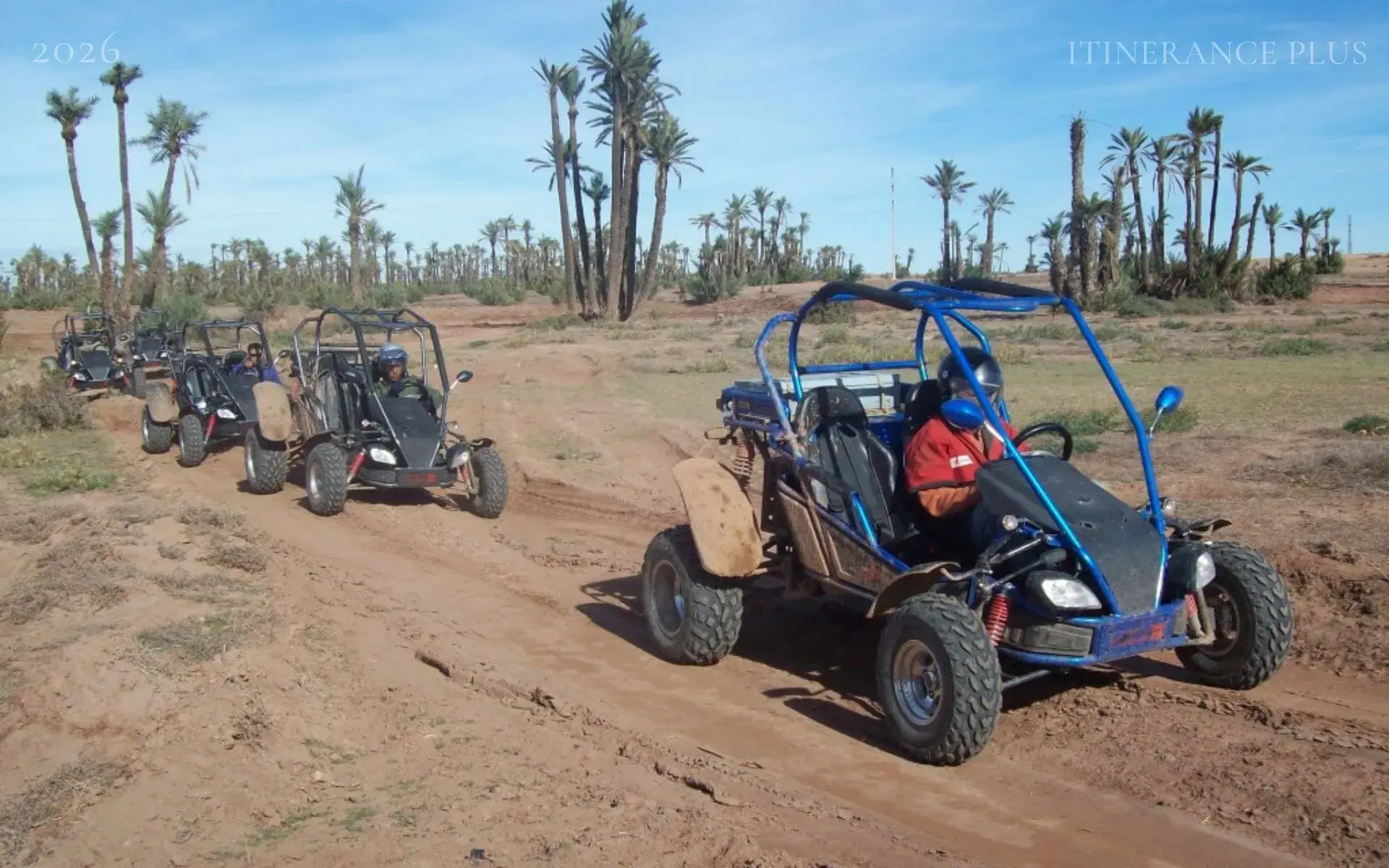
Buggy Agafay : Exploration du désert de pierre depuis Marrakech

Désert d'Agafay

Buggy Agafay : Exploration du désert de pierre depuis Marrakech

150 EUR

Buggy Palmeraie Marrakech

Palmeraie

Buggy Palmeraie Marrakech

110 EUR

Cheval Palmeraie Marrakech

Marrakech

Cheval Palmeraie Marrakech

50 EUR

Other strong guides can support the next booking.

View journal

Destination guides

Destinations related to this guide

These destination pages extend the guide with practical information, excursions and places to visit.

Marrakech: the best base to explore Morocco

Marrakech: the best base to explore Morocco

Practical guides

Complementary guides to read

More guides to refine preparation and compare options based on pace and preferences.

Marrakech Price Guide: How Much to Budget?
Mistakes to Avoid in Marrakech: What They Don't Tell You Before You Go
Logo

Creating premium travel experiences and luxury excursions through Morocco's most breathtaking landscapes.

TripAdvisorReview us

Company

  • About us
  • Reviews
  • Blog
  • Contact
  • Morocco Visa

Explore

  • Destinations
  • Excursions
  • Guides
  • Transfers
  • Organized trip
  • Packages & Bundles
  • Custom bundle

Support

  • +212 688 588 022
  • sales@itineranceplus.ma
  • contact@itineranceplus.ma
  • 1er Étage, Kissariat Idaouzal, N°54, N°16 - 20 Rue Bab Agnaou, Marrakesh 40000
  • Mon – Sun · 9am – 8pm
Certified Guides
Premium Transport

© 2026 Itinerance Plus. All rights reserved.

PrivacyTerms