
Sahara Adventure
Excursion Merzouga 3 Jours depuis Marrakech : Nuits au Sahara
The most complete 3-day tour to Merzouga. Kasbahs, camels and luxury bivouac.
Merzouga
View optionPublished on April 20, 2025

Before choosing
Key takeNeither is overrated. But they are misunderstood, and that's where disappointments happen.
Real time available inside the stay
Road-time tolerance for the client
Type of image or emotion they are really seeking
Live reputation
Check our public profiles before booking.
Open source
Planning your stay
Compare your available time, travel duration and preferred comfort level first. The best choice is the one that suits your pace, not simply the best-known destination.
Sahara Adventure
Excursion Merzouga 3 Jours depuis Marrakech : Nuits au Sahara
The most complete 3-day tour to Merzouga. Kasbahs, camels and luxury bivouac.
Merzouga
View optionTraveler reviews

Comparison
Neither is overrated. But they are misunderstood, and that's where disappointments happen.
People who choose the Atlas expect a Himalayan adventure. They find magnificent landscapes, certainly, but also bumpy roads, villages that have become semi-touristic, and logistics that require patience.
Those who choose the desert imagine an infinite solitude of orange dunes. They arrive in Merzouga, share their sunset with fifty other tourists, three camel agencies, and quads roaring two hundred meters from supposedly virgin dunes.
The real problem is not the destination, it's the expectation. Recalibrate it, and you will be delighted. Keep it as is, and you will be disappointed, even if the place is objectively splendid. The real question is not which is better.
It's which one matches what you really came looking for.

Comparison
Best time: March, April, May, then September and October. Avoid July-August (exhausting dry heat at altitude) and January-February (snow on the passes, roads cut without warning).
Ideal duration: 3 days minimum to feel something, 5 to 7 days if you want to walk and really settle in.
Realistic daily budget: count 25 to 35 euros per day on a budget (guest house, local food, grand taxi), 55 to 80 euros on a mid-range budget (decent inn, day
guide), 120 euros and more for comfort (lodge with a view, rental car, private guide).
Logistical difficulty: medium. Feasible alone if you like to manage yourself, but transport requires anticipation. Grand taxis do not follow a fixed schedule and minibuses are unpredictable. Off marked trails, a local guide is highly recommended.
What you can skip without regrets: folklore evenings organized in group guest houses, mule rides offered at the entrance of every village, "panoramic
viewpoints" signaled on tourist roads and crowded with cars.
What you absolutely shouldn't miss: walking early in the morning before the light shifts, crossing a Berber village off-season when the inhabitants are really
there, sitting in a cafe in Aït Ben Haddou before nine o'clock when the tourist buses haven't arrived yet.

Comparison
Best time: October, November, February, and March. December and January are bearable but cold at night, sometimes below zero. April can already be hot.
May to September, the heat is a serious problem, not an anecdote.
Ideal duration: 2 nights on-site are enough to see the dunes at dawn and dusk. A single night is frustrating. Three nights are for those who really want to immerse themselves and go beyond Merzouga.
Realistic daily budget: 30 to 45 euros on a budget (inn in Merzouga, local food, walking in the dunes), 70 to 100 euros on a mid-range budget (comfortable fixed
camp, dromedary included), 150 euros and more for luxury camps with decorated tents, candlelit dinner, and hotel service.
Logistical difficulty: high if you come by public transport from Marrakech (8 to 10 hours of road, with changes in Ouarzazate and Rissani). Much simpler by rental car or with a driver. From Fes, it's also possible but long.
What you can skip without regrets: the dromedary ride at peak hour (between 4 PM and 6 PM, when everyone is taking the same photo), the musical show in
collective camps, the "Berber experiences" sold in packages by Marrakech hotels.
What you absolutely shouldn't miss: getting up at 5 AM and walking alone in the dunes before the groups arrive. It's there, and only there, that you will find what you came looking for. The silence, the low light, the still-cold sand.
Everything else is staging.

Comparison
For the Atlas, people imagine snow-capped peaks accessible on foot from Marrakech, preserved Berber villages where life hasn't changed for centuries, wild hikes without a soul in sight.
They find a magnificent region but much more accessible and busy than they thought, villages where children ask for pens or dirhams as soon as they see a backpack, trails sometimes marked with trash between two refuges, and a Toubkal in high season that looks more like a queue than an adventure.
What surprises in a good way: the quality of guest houses in the Ourika Valley and around Imlil, the real generosity of the families who host, the raw beauty of
the Dades Gorges seen from above, the freshness of the air at 2000 meters when Marrakech is stifling at 42 degrees.
For the desert, people imagine dunes as far as the eye can see, absolute solitude, a night under the stars far from everything.
They find Merzouga, a village now entirely turned towards tourism, camps lined up along the Erg Chebbi, jeeps and quads roaming the dunes all day, and "nights in the desert" that take place twenty minutes on foot from the paved road.
What surprises in a good way: the dunes of Erg Chebbi are truly spectacular, even with tourists. The light at dawn is exactly what one hoped for.
Erg Chigaga, further west and harder to access, offers what Merzouga hasn't offered for a long time: a real sense of isolation.

Comparison
The highlight
the morning trail, when the dew is still on the stones and you cross mules loaded with wood coming down to the village. This is not a reenactment, it's the real life of the mountain.
Common mistake
wanting to climb up to the Toubkal refuge on the first day. It's physically doable, but you'll be flat for the rest.

Comparison
The highlight
Aït Ben Haddou early in the morning, seen from the top, with the low light baking the adobe facades. It's one of the most striking images of Morocco, and it delivers on its promises.
Common mistake
buying anything from the vendors who approach you at the entrance of the ksar. Prices are quadruple, and the quality is often mediocre.

Comparison
This is the long day. Count at least 6 hours of road, more if you stop in the Dades Gorges or in Tinghir for the Todgha Gorges. Leave at 7 AM sharp.
The Todgha Gorges deserve a one-hour stop. Park at the end of the road and walk in the canyon on foot. The orange rock that rises steeply on each side is striking.
Avoid the restaurants installed in the canyon: they are expensive and uninteresting.
Arrival in Merzouga in the late afternoon. Don't try to go into the dunes at this hour: it's the rush. Settle in, dine early, and go to bed at 9 PM.
Common mistake: accepting the offer of a "dune guide" on the roadside between Rissani and Merzouga. These men are touts for camps and agencies. You don't need them.

Comparison
Wake up at 4:45 AM. No negotiation on this. Walk into the dunes on foot from your accommodation, if possible. Twenty to thirty minutes are enough to get away from the camps and find a place mostly alone. Sit down. Wait for the sunrise.
This is the moment for which you made all this journey. It lasts about forty minutes. Then, groups arrive and the magic evaporates.
In the afternoon, do nothing intense. The heat is strong even outside the summer season. Sleep, read, swim if your accommodation has a pool.
In the late afternoon, around 5 PM, return to the dunes for the sunset, but accept that you will be less alone. It's different from the morning, not necessarily less beautiful, but different.
In the evening, if you are in a camp, dinner and Berber music are often offered. It's an honest experience if the camp is modest in size. If you are in a camp of fifty tents, it's a show, not immersion.
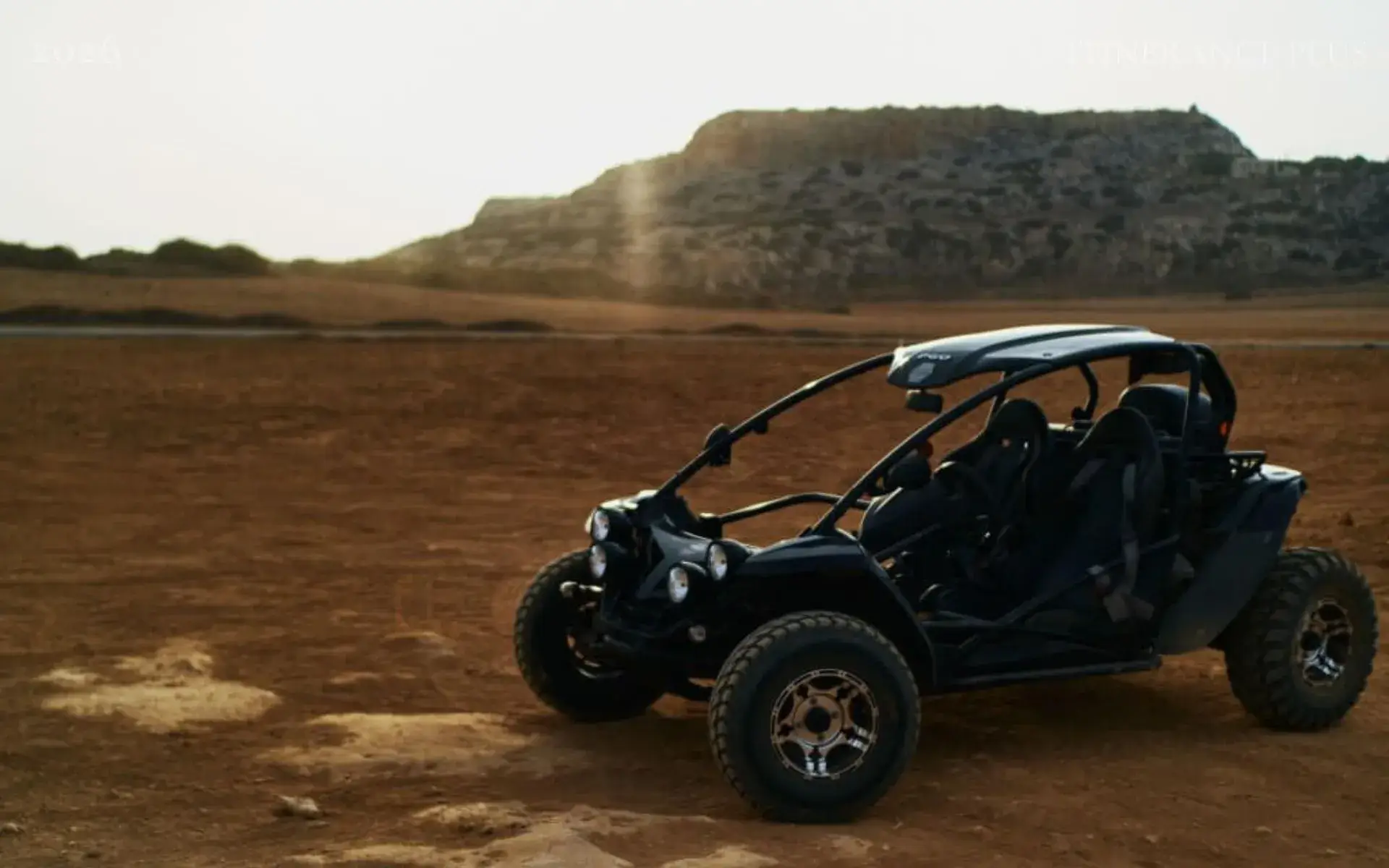
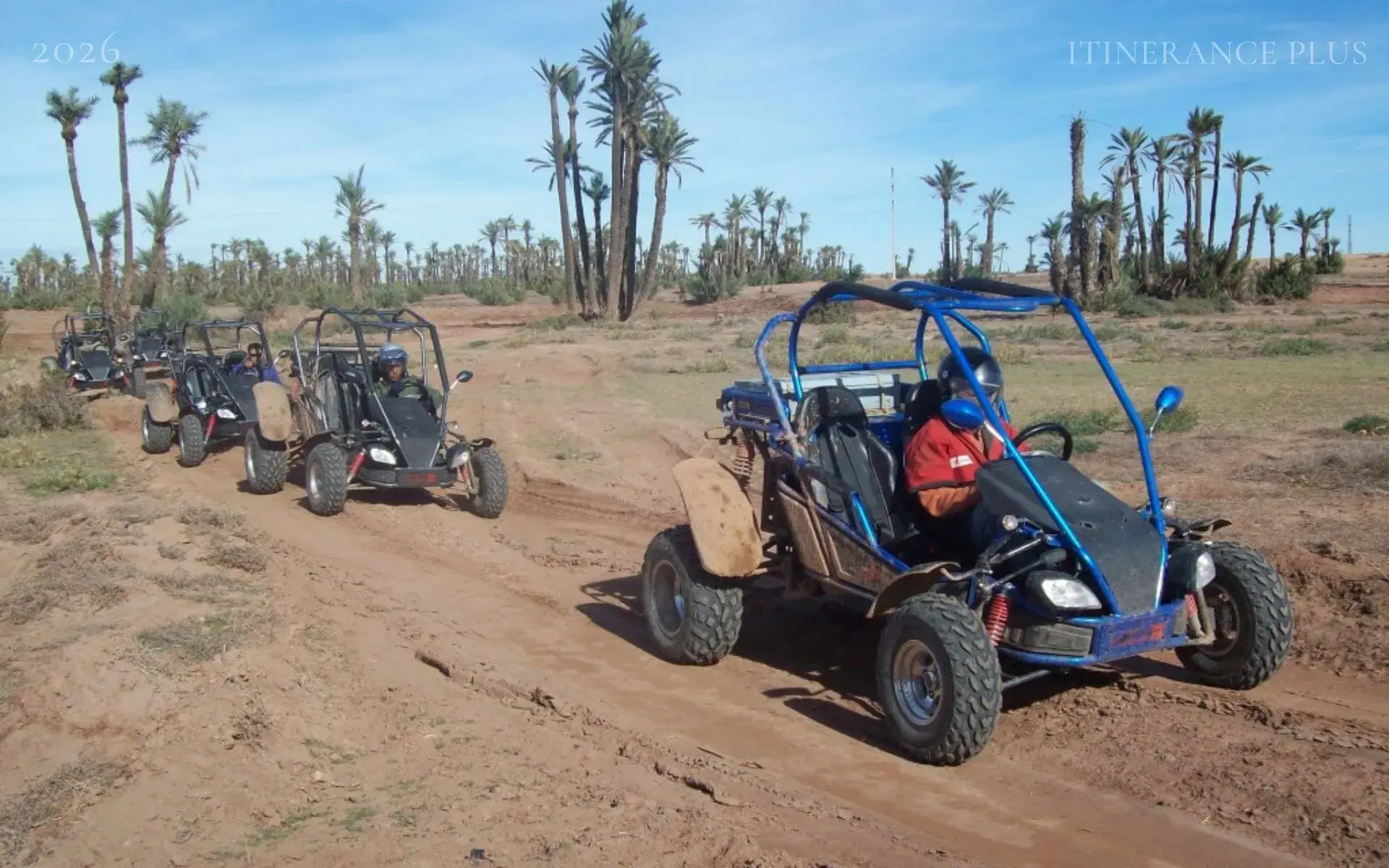
Common mistake: renting a quad. The noise and dust it generates spoil everyone's experience around you, including yours once the adrenaline drops.

Comparison
From Merzouga, the return to Marrakech in one day is doable by car but grueling: count 9 to 10 hours. Better to split it over two days with a night in Ouarzazate or Boumalne Dades.
If you take a direct bus, choose the night departure from Rissani or Erfoud: you sleep during the journey and arrive in Marrakech in the morning.

Comparison
The Ourika Valley is the most accessible from Marrakech, an hour's road. It's also the busiest on weekends. The Ouzoud waterfalls are often sold as a circuit from Marrakech: they are beautiful, but the path leading to them is a succession of shops and touts.
Imlil and the region around Toubkal are more interesting for those who want to walk seriously. The Aït Bougmez Valley, harder to access, remains the least touristy and most authentic place in the entire High Atlas.
It's for travelers who accept complicated logistics in exchange for real immersion.
Erg Chebbi around Merzouga is the reference desert, the most photographed, most accessible, most busy. The dunes are real and spectacular. So is the crowd.
Erg Chigaga, west of M'Hamid, is the alternative for those who want the same beauty without the lined-up camps. It takes a 4x4 and two hours of track from M'Hamid, or organization through a serious agency from Zagora. The result is worth it.
The Dades and Todgha Gorges are stops, not destinations. You stop there for a few hours, walk, then leave. Those who spend the night there find a pleasant calm once the buses leave, but it's not essential if time is short.

Comparison
In the Atlas, eat where local guides and Berber families eat. Guest houses often serve the best food: vegetable tajine, Friday couscous, harira soup in the early evening.
Roadside restaurants between Marrakech and Imlil should be avoided except in emergencies. In the desert, in Merzouga, restaurants overlooking the dunes charge tourist prices.
Look for the small cafes in the village of Hassilabied, just north, where prices are normal.
What you absolutely must taste in both regions: bread baked in a wood oven, fresh dates when arriving in the south, mint tea served three times sweeter than you imagine.
To sleep in the Atlas, guest houses are the best option if you are walking. They are often run by local families, clean, warm, and the price includes dinner and breakfast.
If you are looking for more comfort, the lodges around Imlil have considerably improved their level in recent years, some with a direct view of Toubkal.
Avoid main road accommodations: they target transit groups and the welcome shows it. In the desert, stay inside or immediately on the edge of the dunes. Merzouga village inns are decent for a budget.
Dune camps vary enormously: a simple tent with shared toilets for 25 euros per night, a suite with private bathroom and terrace for 200 euros.
Beware of camps displaying photos of deserted dunes on their site: the photos were taken at dawn, not at 5 PM when you arrive with the others.
To move around, the shared grand taxi is the reality on the ground: no fixed schedule, departure when the car is full, and you share with other passengers.
It's slow, sometimes uncomfortable, but it's how Morocco works off the tourist circuits. A rental car changes everything if your budget allows: you choose your schedules, your stops, your pace.
Take a vehicle with decent ground clearance for the Atlas tracks and desert access off main roads. CTM buses reliably connect Marrakech to Ouarzazate and Ouarzazate to Errachidia, but the schedules don't adapt to your program; you adapt to theirs.
Comparison
Solo travelers do well in both regions, provided they accept paying the price of a full room in guest houses that don't offer dorm beds. The Atlas solo is stimulating if you like hiking and managing yourself.
The desert solo can seem empty of human interaction beyond tourist commerce. Plan to connect with other travelers in your inn.
Couples find both regions very suitable, especially off-season. The Atlas offers natural intimacy in mountain guest houses. The desert is romantic despite the crowd, as soon as you know where and when to go.
Families with young children can consider the Atlas if the children walk without being carried and if you avoid serious hikes. The region around Ourika is accessible and safe.
The desert with children is doable, but the road is very long from Marrakech and conditions in the camps are not always suitable for very young children.
Older travelers or those with reduced mobility will have difficulties in the Atlas if hikes are on the program. By car, the landscapes can be contemplated from the road.
For the desert, 4x4 accessible camps exist, but the track is still a track.
Budget backpackers get by in both, provided they travel by grand taxi, sleep in Atlas guest houses and simple inns in Merzouga, and eat locally. Count between 25 and 35 euros per day being rigorous.
Those seeking luxury will find serious options in both regions. High-end lodges around Imlil and luxury camps in Erg Chebbi have a service level that justifies the prices.
But expect to pay for the location, not necessarily for exceptional gastronomy.
Comparison
In the Atlas, the most classic scam is the unofficial guide who approaches you at the entrance of Imlil or Setti Fadma and offers to take you "where tourists don't go. " He usually takes you to his cousin who sells rugs.
An official guide is recognized by his professional card issued by the Ministry of Tourism. Ask for it.
Another common disappointment: Ouzoud waterfalls in summer, crowded with merchants, unsolicited guides, and monkeys fed by tourists for so long they've lost all natural behavior.
In the desert, the most widespread scam is the camp presented as "isolated" and "authentic" which is actually five minutes from other camps, visible from a dozen neighboring tents.
Photos on booking sites are misleading: always ask for the exact distance between the camp and the first neighbor, and ask for recent photos taken during the day.
Another classic trap: the driver who offers you an "optional detour" through an argan cooperative or a fossil shop between Ouarzazate and Merzouga. He gets a commission. You are not obliged to accept.
The promises of Marrakech agencies selling "Atlas and desert in 3 days" circuits are hollow by definition. In three days, you can do one or the other correctly, not both.
These circuits make you drive 12 hours a day to spend 45 minutes in the dunes and take the same photo as the fifty other people in the same minibus.
What you see in photos and which is very different in real life: the Merzouga dunes on Instagram appear infinite and virgin.
From the ground, at Erg Chebbi, you see the same dunes but with camps lined up in the background and sometimes power lines feeding the installations. It's still beautiful, but it's not the promised solitude.
Useful cue
In the Atlas, the best time to visit Aït Ben Haddou is between 7:30 AM and 9 AM, before the buses and before the heat. The upper path, which goes up behind the ksar, is ten times more beautiful than the marked lower visit and almost no one takes it.
For the desert, Erg Chigaga remains what Merzouga was twenty years ago. You have to organize from M'Hamid, rent a 4x4 with a driver for the track (count 80 to 100 euros for the vehicle round-trip), and plan at least one night on-site.
It's the unfiltered version of the Moroccan desert.
What you can negotiate: grand shared taxi prices are fixed and known, do not negotiate. On the other hand, the price of a room in low season in a guest house or desert camp is often negotiable by 10 to 20%, especially if you stay several nights.
Do it directly, without an agency.
What locals do and tourists ignore: Imlil locals go walking early on Saturday mornings to the pastures above the village, not towards Toubkal. This direction is more beautiful, less busy, and no one will ask you for a guide.
In Merzouga, locals go to sleep in the erg long before tourists, between 7 PM and 8 PM, to enjoy the silence before the groups arrive with their music.
Comparison
Comparison
If you have a week, do both by accepting that you will spend a lot of time in a car. If you only have three or four days, choose.
Choose the Atlas if you like walking, if mountain landscapes speak to you more than sand landscapes, if you seek immersion in Berber life rather than a natural show.
It's also the right choice if you travel with children or people who cannot do long roads.
Choose the desert if you have never seen large sand dunes in your life and that image has obsessed you for a long time. Do it once, do it well, get up at dawn.
It's not overrated if you are ready to go find that moment at the right place and at the right time.
If you come back to Morocco for the second or third time, go to Erg Chigaga via M'Hamid and to the Aït Bougmez Valley. These are the two places that still look like what travelers imagined finding everywhere, and rarely found on the first trip.
Guide
Neither is overrated. But they are misunderstood, and that's where disappointments happen.
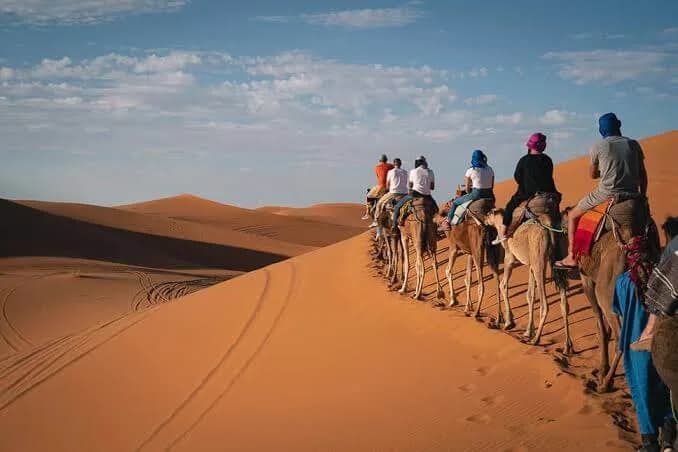
The most complete 3-day tour to Merzouga. Kasbahs, camels and luxury bivouac.
From
80 EUR
People who choose the Atlas expect a Himalayan adventure. They find magnificent landscapes, certainly, but also bumpy roads, villages that have become semi-touristic, and logistics that require patience.
Those who choose the desert imagine an infinite solitude of orange dunes. They arrive in Merzouga, share their sunset with fifty other tourists, three camel agencies, and quads roaring two hundred meters from supposedly virgin dunes.
The real problem is not the destination, it's the expectation. Recalibrate it, and you will be delighted. Keep it as is, and you will be disappointed, even if the place is objectively splendid. The real question is not which is better.
It's which one matches what you really came looking for.
Guide
Best time: March, April, May, then September and October. Avoid July-August (exhausting dry heat at altitude) and January-February (snow on the passes, roads cut without warning).
Ideal duration: 3 days minimum to feel something, 5 to 7 days if you want to walk and really settle in.
Realistic daily budget: count 25 to 35 euros per day on a budget (guest house, local food, grand taxi), 55 to 80 euros on a mid-range budget (decent inn, day
guide), 120 euros and more for comfort (lodge with a view, rental car, private guide).
Guide
Logistical difficulty: medium. Feasible alone if you like to manage yourself, but transport requires anticipation. Grand taxis do not follow a fixed schedule and minibuses are unpredictable. Off marked trails, a local guide is highly recommended.
What you can skip without regrets: folklore evenings organized in group guest houses, mule rides offered at the entrance of every village, "panoramic
viewpoints" signaled on tourist roads and crowded with cars.
What you absolutely shouldn't miss: walking early in the morning before the light shifts, crossing a Berber village off-season when the inhabitants are really
there, sitting in a cafe in Aït Ben Haddou before nine o'clock when the tourist buses haven't arrived yet.
Best time: October, November, February, and March. December and January are bearable but cold at night, sometimes below zero. April can already be hot.
May to September, the heat is a serious problem, not an anecdote.
Guide
Ideal duration: 2 nights on-site are enough to see the dunes at dawn and dusk. A single night is frustrating. Three nights are for those who really want to immerse themselves and go beyond Merzouga.
Realistic daily budget: 30 to 45 euros on a budget (inn in Merzouga, local food, walking in the dunes), 70 to 100 euros on a mid-range budget (comfortable fixed
camp, dromedary included), 150 euros and more for luxury camps with decorated tents, candlelit dinner, and hotel service.
Logistical difficulty: high if you come by public transport from Marrakech (8 to 10 hours of road, with changes in Ouarzazate and Rissani). Much simpler by rental car or with a driver. From Fes, it's also possible but long.
What you can skip without regrets: the dromedary ride at peak hour (between 4 PM and 6 PM, when everyone is taking the same photo), the musical show in
collective camps, the "Berber experiences" sold in packages by Marrakech hotels.
What you absolutely shouldn't miss: getting up at 5 AM and walking alone in the dunes before the groups arrive. It's there, and only there, that you will find what you came looking for. The silence, the low light, the still-cold sand.
Everything else is staging.
Guide
For the Atlas, people imagine snow-capped peaks accessible on foot from Marrakech, preserved Berber villages where life hasn't changed for centuries, wild hikes without a soul in sight.
They find a magnificent region but much more accessible and busy than they thought, villages where children ask for pens or dirhams as soon as they see a backpack, trails sometimes marked with trash between two refuges, and a Toubkal in high season that looks more like a queue than an adventure.
What surprises in a good way: the quality of guest houses in the Ourika Valley and around Imlil, the real generosity of the families who host, the raw beauty of
the Dades Gorges seen from above, the freshness of the air at 2000 meters when Marrakech is stifling at 42 degrees.
For the desert, people imagine dunes as far as the eye can see, absolute solitude, a night under the stars far from everything.
They find Merzouga, a village now entirely turned towards tourism, camps lined up along the Erg Chebbi, jeeps and quads roaming the dunes all day, and "nights in the desert" that take place twenty minutes on foot from the paved road.
What surprises in a good way: the dunes of Erg Chebbi are truly spectacular, even with tourists. The light at dawn is exactly what one hoped for.
Erg Chigaga, further west and harder to access, offers what Merzouga hasn't offered for a long time: a real sense of isolation.
Leave at 7:30 AM from Marrakech by shared grand taxi or rental car. The road to Imlil takes about 1 hour 30 minutes depending on traffic. Arrive before 10 AM, before the heat.
The morning is made for walking: take the trail that goes up to the village of Aroumd, above Imlil. It's an hour's climb, the view of Toubkal opens up progressively, and the village is still quiet.
In the afternoon, don't try to do more. Rest in the guest house, talk with the inhabitants if the opportunity arises, eat a tajine prepared by the family hosting you.
Travelers who try to visit two valleys in the same day arrive exhausted and enjoy nothing.
In the evening, dinner at the guest house. Go to bed early: the next day starts at dawn.
The highlight: the morning trail, when the dew is still on the stones and you cross mules loaded with wood coming down to the village. This is not a reenactment, it's the real life of the mountain.
Common mistake: wanting to climb up to the Toubkal refuge on the first day. It's physically doable, but you'll be flat for the rest.
Wake up at 6 AM. Grand taxi or car to Ouarzazate via the Tizi n'Tichka pass. The road takes between 3 and 4. 5 hours depending on road conditions and stops.
Don't do the crossing by bus if you get motion sickness: the turns are sharp and incessant.
Stop at Aït Ben Haddou before noon, when the tourist buses aren't parked in front of the entrance yet. Climb to the top of the ksar. Count 45 minutes to an hour, no more.
It's beautiful, it's real, but it can be visited quickly if you don't linger in the shops at the bottom.
Lunch in Ouarzazate around 1 PM. In the afternoon, if you have energy, the movie studios are an interesting curiosity to understand why so many films were shot here. But it's not essential.
Ouarzazate is mainly a logistical stop, not a destination in itself.
In the evening, sleep on-site. Choose a riad in the medina rather than a hotel on the main road: the atmosphere is different.
The highlight: Aït Ben Haddou early in the morning, seen from the top, with the low light baking the adobe facades. It's one of the most striking images of Morocco, and it delivers on its promises.
Common mistake: buying anything from the vendors who approach you at the entrance of the ksar. Prices are quadruple, and the quality is often mediocre.
This is the long day. Count at least 6 hours of road, more if you stop in the Dades Gorges or in Tinghir for the Todgha Gorges. Leave at 7 AM sharp.
The Todgha Gorges deserve a one-hour stop. Park at the end of the road and walk in the canyon on foot. The orange rock that rises steeply on each side is striking.
Avoid the restaurants installed in the canyon: they are expensive and uninteresting.
Arrival in Merzouga in the late afternoon. Don't try to go into the dunes at this hour: it's the rush. Settle in, dine early, and go to bed at 9 PM.
Common mistake: accepting the offer of a "dune guide" on the roadside between Rissani and Merzouga. These men are touts for camps and agencies. You don't need them.
Wake up at 4:45 AM. No negotiation on this. Walk into the dunes on foot from your accommodation, if possible. Twenty to thirty minutes are enough to get away from the camps and find a place mostly alone. Sit down. Wait for the sunrise.
This is the moment for which you made all this journey. It lasts about forty minutes. Then, groups arrive and the magic evaporates.
In the afternoon, do nothing intense. The heat is strong even outside the summer season. Sleep, read, swim if your accommodation has a pool.
In the late afternoon, around 5 PM, return to the dunes for the sunset, but accept that you will be less alone. It's different from the morning, not necessarily less beautiful, but different.
In the evening, if you are in a camp, dinner and Berber music are often offered. It's an honest experience if the camp is modest in size. If you are in a camp of fifty tents, it's a show, not immersion.
Common mistake: renting a quad. The noise and dust it generates spoil everyone's experience around you, including yours once the adrenaline drops.
From Merzouga, the return to Marrakech in one day is doable by car but grueling: count 9 to 10 hours. Better to split it over two days with a night in Ouarzazate or Boumalne Dades.
If you take a direct bus, choose the night departure from Rissani or Erfoud: you sleep during the journey and arrive in Marrakech in the morning.
The Ourika Valley is the most accessible from Marrakech, an hour's road. It's also the busiest on weekends. The Ouzoud waterfalls are often sold as a circuit from Marrakech: they are beautiful, but the path leading to them is a succession of shops and touts.
Imlil and the region around Toubkal are more interesting for those who want to walk seriously. The Aït Bougmez Valley, harder to access, remains the least touristy and most authentic place in the entire High Atlas.
It's for travelers who accept complicated logistics in exchange for real immersion.
Erg Chebbi around Merzouga is the reference desert, the most photographed, most accessible, most busy. The dunes are real and spectacular. So is the crowd.
Erg Chigaga, west of M'Hamid, is the alternative for those who want the same beauty without the lined-up camps. It takes a 4x4 and two hours of track from M'Hamid, or organization through a serious agency from Zagora. The result is worth it.
The Dades and Todgha Gorges are stops, not destinations. You stop there for a few hours, walk, then leave. Those who spend the night there find a pleasant calm once the buses leave, but it's not essential if time is short.
In the Atlas, eat where local guides and Berber families eat. Guest houses often serve the best food: vegetable tajine, Friday couscous, harira soup in the early evening.
Roadside restaurants between Marrakech and Imlil should be avoided except in emergencies. In the desert, in Merzouga, restaurants overlooking the dunes charge tourist prices.
Look for the small cafes in the village of Hassilabied, just north, where prices are normal.
What you absolutely must taste in both regions: bread baked in a wood oven, fresh dates when arriving in the south, mint tea served three times sweeter than you imagine.
To sleep in the Atlas, guest houses are the best option if you are walking. They are often run by local families, clean, warm, and the price includes dinner and breakfast.
If you are looking for more comfort, the lodges around Imlil have considerably improved their level in recent years, some with a direct view of Toubkal.
Avoid main road accommodations: they target transit groups and the welcome shows it. In the desert, stay inside or immediately on the edge of the dunes. Merzouga village inns are decent for a budget.
Dune camps vary enormously: a simple tent with shared toilets for 25 euros per night, a suite with private bathroom and terrace for 200 euros.
Beware of camps displaying photos of deserted dunes on their site: the photos were taken at dawn, not at 5 PM when you arrive with the others.
To move around, the shared grand taxi is the reality on the ground: no fixed schedule, departure when the car is full, and you share with other passengers.
It's slow, sometimes uncomfortable, but it's how Morocco works off the tourist circuits. A rental car changes everything if your budget allows: you choose your schedules, your stops, your pace.
Take a vehicle with decent ground clearance for the Atlas tracks and desert access off main roads. CTM buses reliably connect Marrakech to Ouarzazate and Ouarzazate to Errachidia, but the schedules don't adapt to your program; you adapt to theirs.
Solo travelers do well in both regions, provided they accept paying the price of a full room in guest houses that don't offer dorm beds. The Atlas solo is stimulating if you like hiking and managing yourself.
The desert solo can seem empty of human interaction beyond tourist commerce. Plan to connect with other travelers in your inn.
Couples find both regions very suitable, especially off-season. The Atlas offers natural intimacy in mountain guest houses. The desert is romantic despite the crowd, as soon as you know where and when to go.
Families with young children can consider the Atlas if the children walk without being carried and if you avoid serious hikes. The region around Ourika is accessible and safe.
The desert with children is doable, but the road is very long from Marrakech and conditions in the camps are not always suitable for very young children.
Older travelers or those with reduced mobility will have difficulties in the Atlas if hikes are on the program. By car, the landscapes can be contemplated from the road.
For the desert, 4x4 accessible camps exist, but the track is still a track.
Budget backpackers get by in both, provided they travel by grand taxi, sleep in Atlas guest houses and simple inns in Merzouga, and eat locally. Count between 25 and 35 euros per day being rigorous.
Those seeking luxury will find serious options in both regions. High-end lodges around Imlil and luxury camps in Erg Chebbi have a service level that justifies the prices.
But expect to pay for the location, not necessarily for exceptional gastronomy.
In the Atlas, the most classic scam is the unofficial guide who approaches you at the entrance of Imlil or Setti Fadma and offers to take you "where tourists don't go. " He usually takes you to his cousin who sells rugs.
An official guide is recognized by his professional card issued by the Ministry of Tourism. Ask for it.
Another common disappointment: Ouzoud waterfalls in summer, crowded with merchants, unsolicited guides, and monkeys fed by tourists for so long they've lost all natural behavior.
In the desert, the most widespread scam is the camp presented as "isolated" and "authentic" which is actually five minutes from other camps, visible from a dozen neighboring tents.
Photos on booking sites are misleading: always ask for the exact distance between the camp and the first neighbor, and ask for recent photos taken during the day.
Another classic trap: the driver who offers you an "optional detour" through an argan cooperative or a fossil shop between Ouarzazate and Merzouga. He gets a commission. You are not obliged to accept.
The promises of Marrakech agencies selling "Atlas and desert in 3 days" circuits are hollow by definition. In three days, you can do one or the other correctly, not both.
These circuits make you drive 12 hours a day to spend 45 minutes in the dunes and take the same photo as the fifty other people in the same minibus.
What you see in photos and which is very different in real life: the Merzouga dunes on Instagram appear infinite and virgin.
From the ground, at Erg Chebbi, you see the same dunes but with camps lined up in the background and sometimes power lines feeding the installations. It's still beautiful, but it's not the promised solitude.
In the Atlas, the best time to visit Aït Ben Haddou is between 7:30 AM and 9 AM, before the buses and before the heat. The upper path, which goes up behind the ksar, is ten times more beautiful than the marked lower visit and almost no one takes it.
For the desert, Erg Chigaga remains what Merzouga was twenty years ago. You have to organize from M'Hamid, rent a 4x4 with a driver for the track (count 80 to 100 euros for the vehicle round-trip), and plan at least one night on-site.
It's the unfiltered version of the Moroccan desert.
What you can negotiate: grand shared taxi prices are fixed and known, do not negotiate. On the other hand, the price of a room in low season in a guest house or desert camp is often negotiable by 10 to 20%, especially if you stay several nights.
Do it directly, without an agency.
What locals do and tourists ignore: Imlil locals go walking early on Saturday mornings to the pastures above the village, not towards Toubkal. This direction is more beautiful, less busy, and no one will ask you for a guide.
In Merzouga, locals go to sleep in the erg long before tourists, between 7 PM and 8 PM, to enjoy the silence before the groups arrive with their music.
How many days are really enough for the Atlas?
Three days if you want to walk seriously and settle in a village. Two days is too short for anything other than a car excursion.
How many days are enough for the desert?
Two nights in Merzouga or Erg Chigaga. A single night, you will be frustrated. Three nights, only if you want to explore beyond the main dunes.
Can you do both in one week without killing yourself?
Yes, but by rental car and with an honest pace: two days Atlas, one day on the road, two days desert, one day on the road back. Don't add extra visits.
Is the Atlas feasible without a guide?
For marked trails around Imlil and in the Ourika Valley, yes. For Toubkal and off-trail itineraries, a local guide is highly recommended. Not for reasons of immediate danger, but because trails are less well-marked than in Europe and conditions change fast.
Is the desert feasible without an agency?
Yes if you have a car. No if you count on public transport beyond Merzouga. For Erg Chigaga, an agency or local driver from M'Hamid is indispensable.
What is it like in peak tourist season?
April and October are the busiest months for both destinations. Prices go up 20 to 40% in accommodations, Merzouga dunes are crowded in the late afternoon, and Atlas roads see tourist 4x4 convoys passing by.
Nothing insurmountable, but calm is not on the agenda.
Do you need to book in advance?
For the Atlas off-season, a booking 48 hours before is enough. In April and October, book at least one week before. For the desert, good mid-priced camps fill up fast in October and November: book two to three weeks in advance.
What is the difference between Merzouga and M'Hamid?
Merzouga is accessible, busy, organized around mass tourism. M'Hamid is the starting point for Erg Chigaga, wilder, less busy, but requiring more organization.
If you want the real desert without pretense, M'Hamid is the right gateway.
Can you go to the Atlas and the desert by public transport only?
Technically yes. Practically, it will be slow, uncomfortable, and time-consuming. Grand taxis and CTM buses work, but the schedules are not yours. If time is your main constraint, rent a car.
If you have a week, do both by accepting that you will spend a lot of time in a car. If you only have three or four days, choose.
Choose the Atlas if you like walking, if mountain landscapes speak to you more than sand landscapes, if you seek immersion in Berber life rather than a natural show.
It's also the right choice if you travel with children or people who cannot do long roads.
Choose the desert if you have never seen large sand dunes in your life and that image has obsessed you for a long time. Do it once, do it well, get up at dawn.
It's not overrated if you are ready to go find that moment at the right place and at the right time.
If you come back to Morocco for the second or third time, go to Erg Chigaga via M'Hamid and to the Aït Bougmez Valley. These are the two places that still look like what travelers imagined finding everywhere, and rarely found on the first trip.
Useful reading before booking
Other strong guides can support the next booking.
View journalDestination guides
These destination pages extend the guide with practical information, excursions and places to visit.
Practical guides
More guides to refine preparation and compare options based on pace and preferences.


.webp&w=1920&q=75&dpl=dpl_7bCwn6k3mbxmfjmKdpAkZRqozdfx)
