Immersive format
Excursion Merzouga 3 Jours depuis Marrakech : Nuits au Sahara
The right option if you accept the drive in exchange for real dunes and a broader desert experience.
Merzouga
View optionPublished on March 1, 2025
.webp&w=1920&q=75&dpl=dpl_7bCwn6k3mbxmfjmKdpAkZRqozdfx)
Before choosing
Key takeIs it really worth the detour? The short answer is yes, but only if you are willing to sacrifice your comfort or your wallet. Many travelers imagine a mystical solitude under the stars as soon as they set foot in the sand.
The reality is that the desert has become an industry. If you choose the cheapest standard circuit, you will probably end up in a noisy camp with thirty other people, eating a lukewarm tajine after ten hours in a van.
If you pay for luxury, you will have the comfort of a five-star hotel, but you will sometimes lose that wild side that makes the adventure special.
The desert will not disappoint you, but the organization around it can turn a dream into a logistical chore if your expectations are not calibrated.
Real time available inside the stay
Road-time tolerance for the client
Type of image or emotion they are really seeking
Live reputation
Check our public profiles before booking.
Open source
Planning your stay
Compare your available time, travel duration and preferred comfort level first. The best choice is the one that suits your pace, not simply the best-known destination.
Immersive format
Excursion Merzouga 3 Jours depuis Marrakech : Nuits au Sahara
The right option if you accept the drive in exchange for real dunes and a broader desert experience.
Merzouga
View optionMore rustic format
Zagora 2 Jours depuis Marrakech
Worth considering if you want something simpler and less iconic than Merzouga.
Zagora
View optionShort alternative
Diner Spectacle Agafay : Soirée Magique sous les Étoiles depuis Marrakech
A coherent option if you want a desert-style setting near Marrakesh without committing to a three-day road trip.
Marrakech
View optionTraveler reviews
.webp&w=1920&q=75&dpl=dpl_7bCwn6k3mbxmfjmKdpAkZRqozdfx)
Comparison
Is it really worth the detour? The short answer is yes, but only if you are willing to sacrifice your comfort or your wallet. Many travelers imagine a mystical solitude under the stars as soon as they set foot in the sand.
The reality is that the desert has become an industry. If you choose the cheapest standard circuit, you will probably end up in a noisy camp with thirty other people, eating a lukewarm tajine after ten hours in a van.
If you pay for luxury, you will have the comfort of a five-star hotel, but you will sometimes lose that wild side that makes the adventure special.
The desert will not disappoint you, but the organization around it can turn a dream into a logistical chore if your expectations are not calibrated.
.webp&w=1920&q=75&dpl=dpl_7bCwn6k3mbxmfjmKdpAkZRqozdfx)
Useful cue
Small budget (Standard): 40 € to 60 € (shared transport, basic camp).
Best time to go: March, April, October, and November. Absolutely avoid July and August (50°C) and prepare for night frost in December and January.
Ideal stay duration: 3 days and 2 nights departing from Marrakech or Fes. Less is an exhausting race. More, you start going in circles.
Realistic daily budget:
Medium budget: 100 € to 150 € (private driver, quality camp).
Comfort / Luxury: 250 € to 500 € (high-end bivouac, air-conditioned suites).
.webp&w=1920&q=75&dpl=dpl_7bCwn6k3mbxmfjmKdpAkZRqozdfx)
Comparison
What people imagine: Absolute silence, total immersion with nomads, and dunes as far as the eye can see without any neighbors.
What they actually find: Dozens of camps lined up behind the first dunes, the noise of generators for light, and guides who are more often seasonal workers from
the city than real nomads.
The desert is not "empty. " In Merzouga, camps are sometimes so close to each other that you can hear the music from the neighboring bivouac. "Luxury" here is not just about having a hot shower; it's mostly about paying for distance.
The more you pay, the deeper your camp is in the dunes and far from the hustle and bustle. The standard desert is an intense social experience; the luxury desert is a bubble of comfort placed on the sand.
Program
Morning (08:00): Departure from Marrakech. Crossing the Tizi n'Tichka. It's long, it's winding, plan for anti-nausea meds.
Visit Aït-Ben-Haddou. It's beautiful but very touristy. Climb all the way to the top for the view, don't linger in the shops.
Night in the Dades Valley or Skoura. The air is fresh, enjoy it.
Transition: 6 hours of actual road.
Seeing the snow-capped peaks of the Atlas as you descend towards the palm groves.
Error to avoid: Trying to push all the way to the dunes on the first day. You will arrive at night, exhausted, and you will miss everything.
Morning (09:00): Road to Todra Gorges. Walk for 20 minutes at the bottom of the gorges before the arrival of tourist buses.
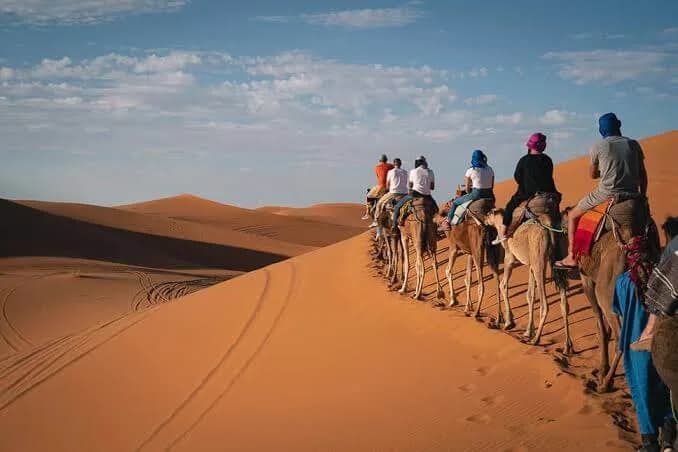
Arrival in Merzouga around 4 PM. Departure by dromedary (or by 4x4 if you value your back) to reach the bivouac.
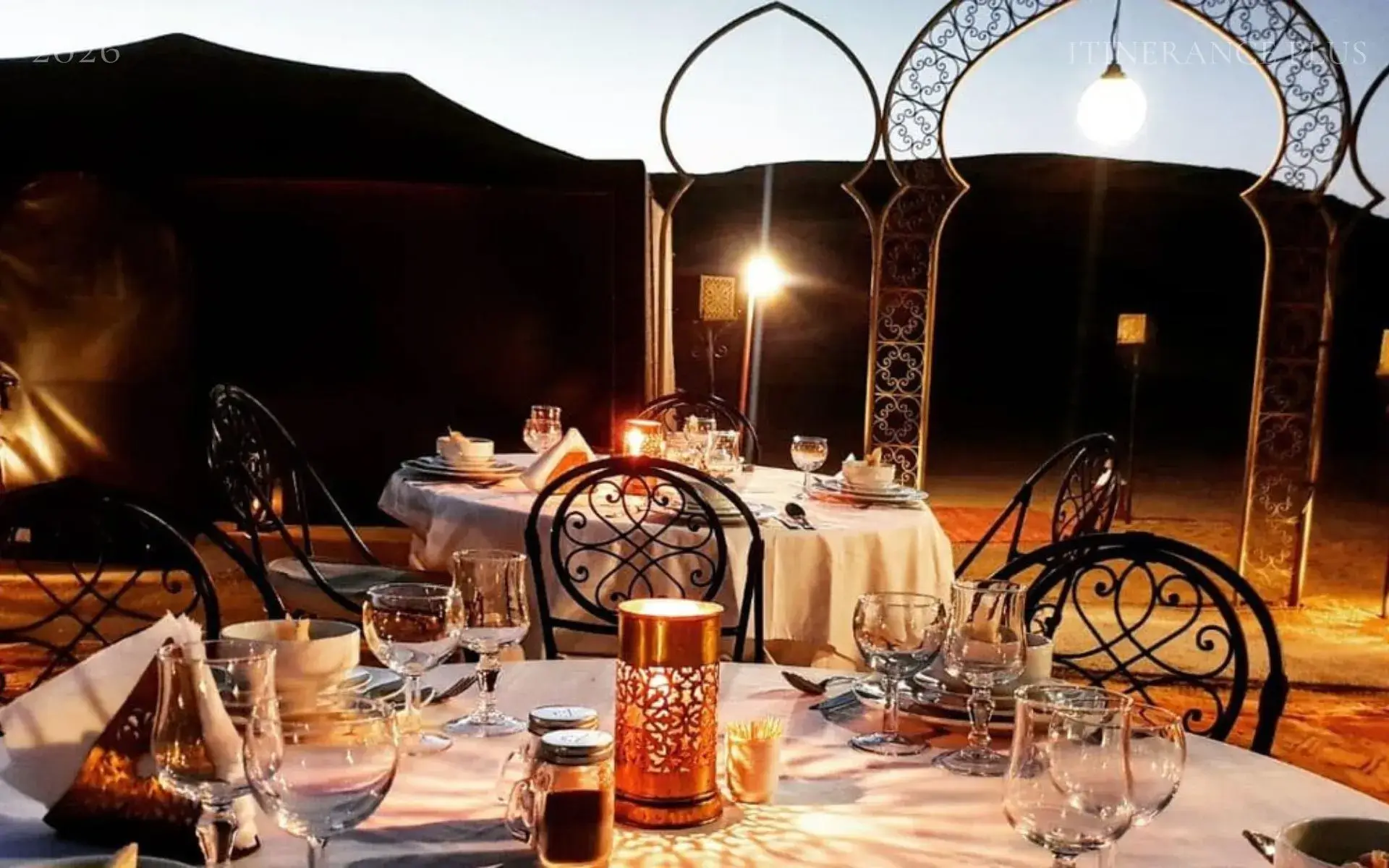
Sunset over the dunes, dinner under the tent, and music around the fire.
Transition: 4 hours of road.
The moment when the dromedary tilts to descend the first large dune.
Error to avoid: Not taking a backpack for the night. Leave your large suitcases in the car or at the inn.
Morning (05:30): Forced wake-up for the sunrise. It's the best time, don't stay in bed.
Long road back to Marrakech.
Late arrival (8 PM-9 PM) in Marrakech.
Transition: 9 to 10 hours of road. It's the hardest day.
The first "normal" coffee in Ouarzazate after the silence of the dunes.
Error to avoid: Underestimating the fatigue of the return journey. Don't plan anything important that same evening.
Comparison
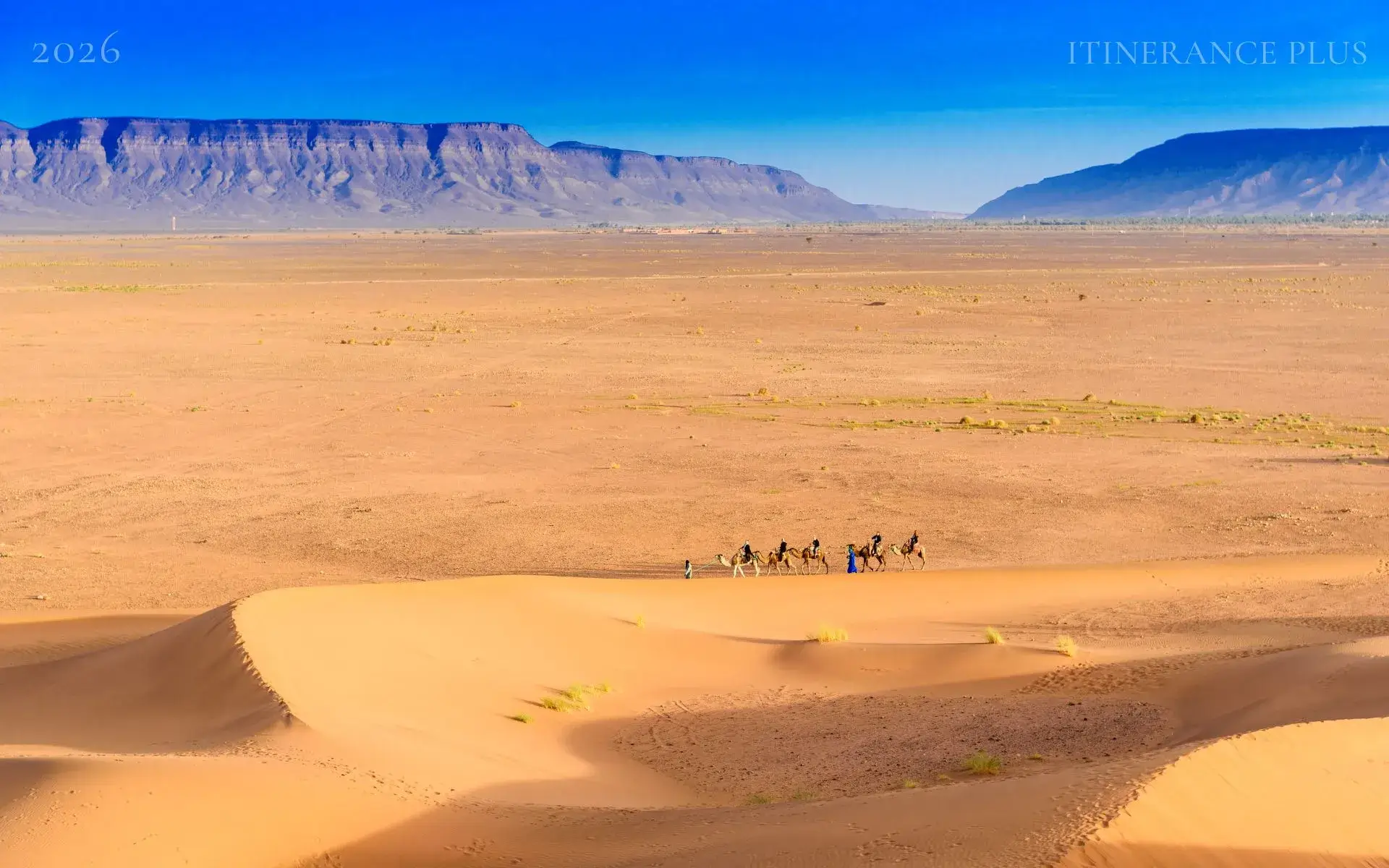
Merzouga (Erg Chebbi): The highest and most famous dunes. This is where the best luxury camps are located. It's beautiful but very busy. Ideal for those who want "postcard" photos.
Zagora (Erg Chigaga): Wilder, harder to access. The dunes are lower but the impression of immensity is more real. For travelers who accept more rustic comfort in exchange for fewer people.
Agafay: The "fake" desert. It's a stone desert 45 minutes from Marrakech. Practical if you only have one night, but don't expect to see sand. It's a setting, not an expedition.
Comparison
Eating: In standard camps, expect the "tourist triptych": Moroccan salad, Lemon-chicken tajine, Fruit. It's good the first time, boring the third. In luxury, you will be served finer dishes (pastillas, confit lamb).
My advice: taste "Madfouna" (Berber pizza) in Rissani before entering the dunes. Avoid cold buffets sitting in the sun.
Sleeping: In standard, you sleep on a thin mattress in a goat-hair tent. It's hot during the day and very cold at night. Sanitaries are shared and often rudimentary.
In luxury, you have real bedding, a private bathroom, and sometimes A/C. Warning: many camps call themselves "luxury" but only have the price of luxury. Check for the presence of real toilets in the tent.
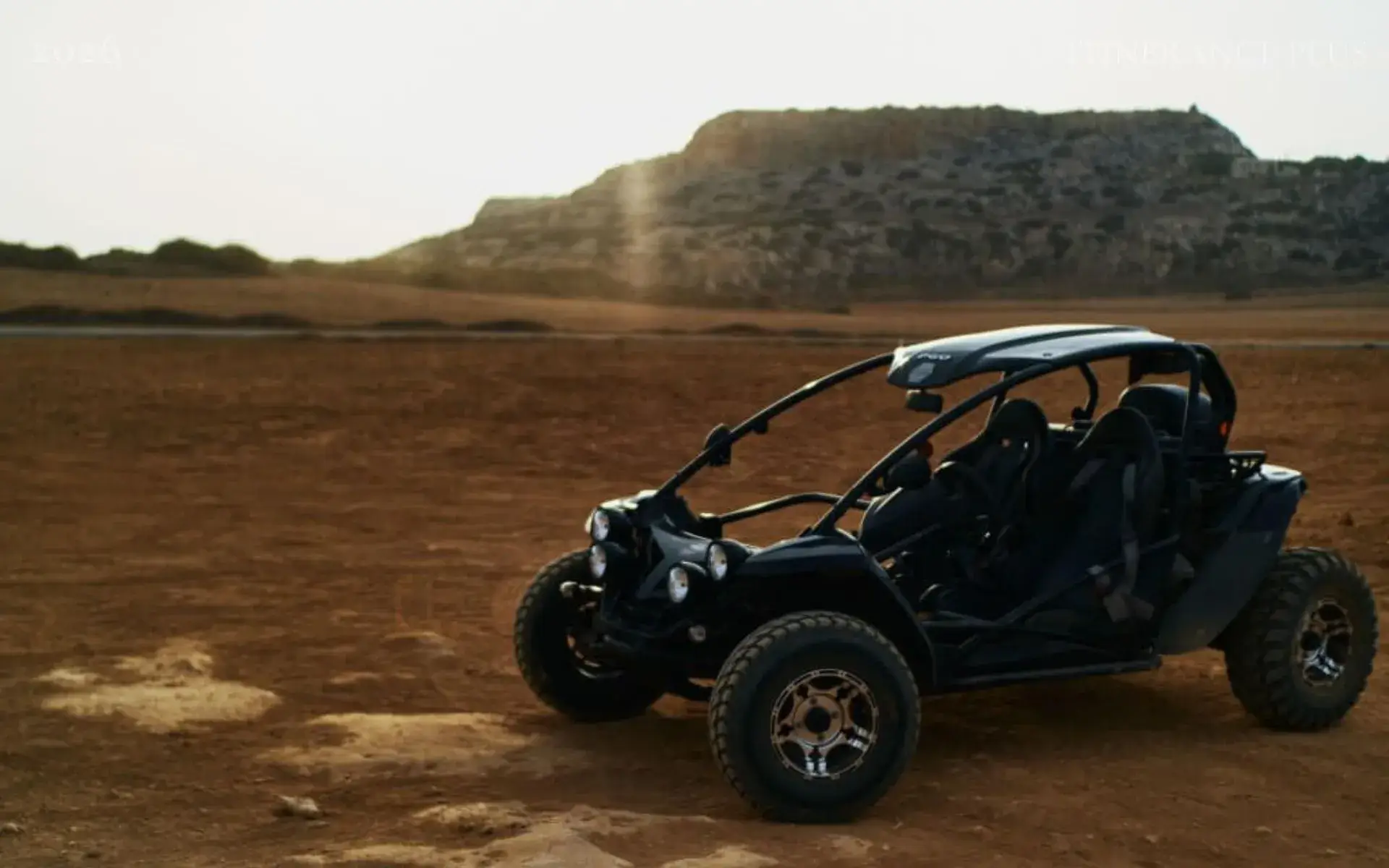
Moving around: 4x4 is the most efficient, but dromedary remains the classic experience. Know that one hour of dromedary is more than enough for most people (it's uncomfortable over time).
For the journey from Marrakech, renting a car is possible, but a private driver will save you a lot of stress with local gendarmerie and mountain roads.
Comparison
Solo travelers: Standard camp is great for meeting people. Luxury can be a bit isolating.
Couples: Luxury is unbeatable for romance. Avoid standard if you want privacy; tent walls are thin as paper.
Families: Merzouga is perfect with children (the sand is a huge sandbox). Prefer 4x4 over dromedary for little ones.
Tight budget: Standard is the only option. It's rustic, but the stars are the same for everyone.
People with reduced mobility: Very difficult. Only a few very high-end luxury camps are equipped for 4x4 access to the foot of the tent.
Comparison
The "Luxury" trap: Some operators sell standard tents with just a new rug as "Luxury. " If the price is below 100 €, it's probably not real luxury.
The fossil scam: In Erfoud, you will be shown fossil workshops. 90% of what is sold to tourists is made of resin. Only buy if you like the object, not for its "historical" value.
Travel times: Agencies say "7 hours. " Count 10 with stops and traffic. Don't be caught off guard.
Agafay desert sold as the Sahara: This is the most common lie in Marrakech. If you are promised sand dunes 1 hour from the city, you are being lied to.
Useful cue
The best time: Climb the dune 30 minutes before sunrise. The moment when the sand turns from gray to electric orange only lasts a few minutes.
Negotiation: Everything is negotiable except fuel prices and fixed meals. If you take a local walking guide at Aït-Ben-Haddou, fix the price beforehand (50-100 DH max).
The secret path: On the return, ask to go through the Draa Valley instead of taking exactly the same road. It's an infinite forest of palm trees.
Water: Buy your water packs in Ouarzazate or Merzouga village. In bivouacs, the price of a bottle can triple.
Comparison
If you have the budget, choose luxury without hesitation. The difference in thermal comfort and privacy radically changes the experience. The desert is magnificent, but sleeping in the cold with the noise of neighbors adds nothing to the magic.
If you don't have the budget, go anyway in standard, but prepare yourself mentally for an "adult summer camp. "
If you hate cars, don't go to Merzouga. Take a nice hotel in Agafay for the setting, or change destination. The Moroccan desert is earned by road.
Guide
Is it really worth the detour? The short answer is yes, but only if you are willing to sacrifice your comfort or your wallet. Many travelers imagine a mystical solitude under the stars as soon as they set foot in the sand.
The reality is that the desert has become an industry. If you choose the cheapest standard circuit, you will probably end up in a noisy camp with thirty other people, eating a lukewarm tajine after ten hours in a van.
If you pay for luxury, you will have the comfort of a five-star hotel, but you will sometimes lose that wild side that makes the adventure special.
The desert will not disappoint you, but the organization around it can turn a dream into a logistical chore if your expectations are not calibrated.
- Best time to go: March, April, October, and November. Absolutely avoid July and August (50°C) and prepare for night frost in December and January.
- Ideal stay duration: 3 days and 2 nights departing from Marrakech or Fes. Less is an exhausting race. More, you start going in circles.
Guide
- Realistic daily budget:
Small budget (Standard): 40 € to 60 € (shared transport, basic camp).
- Medium budget: 100 € to 150 € (private driver, quality camp).
Guide
- Comfort / Luxury: 250 € to 500 € (high-end bivouac, air-conditioned suites).
What people imagine: Absolute silence, total immersion with nomads, and dunes as far as the eye can see without any neighbors.
What they actually find: Dozens of camps lined up behind the first dunes, the noise of generators for light, and guides who are more often seasonal workers from
the city than real nomads.
The desert is not "empty. " In Merzouga, camps are sometimes so close to each other that you can hear the music from the neighboring bivouac. "Luxury" here is not just about having a hot shower; it's mostly about paying for distance.
The more you pay, the deeper your camp is in the dunes and far from the hustle and bustle. The standard desert is an intense social experience; the luxury desert is a bubble of comfort placed on the sand.
Guide
Day 1: Crossing the Atlas
- Morning (08:00): Departure from Marrakech. Crossing the Tizi n'Tichka. It's long, it's winding, plan for anti-nausea meds.
- Afternoon: Visit Aït-Ben-Haddou. It's beautiful but very touristy. Climb all the way to the top for the view, don't linger in the shops.
- Evening: Night in the Dades Valley or Skoura. The air is fresh, enjoy it.
- Transition: 6 hours of actual road.
Guide
- Highlight: Seeing the snow-capped peaks of the Atlas as you descend towards the palm groves.
- Error to avoid: Trying to push all the way to the dunes on the first day. You will arrive at night, exhausted, and you will miss everything.
Day 2: Entering the Arena
- Morning (09:00): Road to Todra Gorges. Walk for 20 minutes at the bottom of the gorges before the arrival of tourist buses.
- Afternoon: Arrival in Merzouga around 4 PM. Departure by dromedary (or by 4x4 if you value your back) to reach the bivouac.
- Evening: Sunset over the dunes, dinner under the tent, and music around the fire.
- Transition: 4 hours of road.
- Highlight: The moment when the dromedary tilts to descend the first large dune.
- Error to avoid: Not taking a backpack for the night. Leave your large suitcases in the car or at the inn.
Day 3: Return to Reality
- Morning (05:30): Forced wake-up for the sunrise. It's the best time, don't stay in bed.
- Afternoon: Long road back to Marrakech.
- Evening: Late arrival (8 PM-9 PM) in Marrakech.
- Transition: 9 to 10 hours of road. It's the hardest day.
- Highlight: The first "normal" coffee in Ouarzazate after the silence of the dunes.
- Error to avoid: Underestimating the fatigue of the return journey. Don't plan anything important that same evening.
Merzouga (Erg Chebbi): The highest and most famous dunes. This is where the best luxury camps are located. It's beautiful but very busy. Ideal for those who want "postcard" photos.
Zagora (Erg Chigaga): Wilder, harder to access. The dunes are lower but the impression of immensity is more real. For travelers who accept more rustic comfort in exchange for fewer people.
Agafay: The "fake" desert. It's a stone desert 45 minutes from Marrakech. Practical if you only have one night, but don't expect to see sand. It's a setting, not an expedition.
Eating: In standard camps, expect the "tourist triptych": Moroccan salad, Lemon-chicken tajine, Fruit. It's good the first time, boring the third. In luxury, you will be served finer dishes (pastillas, confit lamb).
My advice: taste "Madfouna" (Berber pizza) in Rissani before entering the dunes. Avoid cold buffets sitting in the sun.
Sleeping: In standard, you sleep on a thin mattress in a goat-hair tent. It's hot during the day and very cold at night. Sanitaries are shared and often rudimentary.
In luxury, you have real bedding, a private bathroom, and sometimes A/C. Warning: many camps call themselves "luxury" but only have the price of luxury. Check for the presence of real toilets in the tent.
Moving around: 4x4 is the most efficient, but dromedary remains the classic experience. Know that one hour of dromedary is more than enough for most people (it's uncomfortable over time).
For the journey from Marrakech, renting a car is possible, but a private driver will save you a lot of stress with local gendarmerie and mountain roads.
- Solo travelers: Standard camp is great for meeting people. Luxury can be a bit isolating.
- Couples: Luxury is unbeatable for romance. Avoid standard if you want privacy; tent walls are thin as paper.
- Families: Merzouga is perfect with children (the sand is a huge sandbox). Prefer 4x4 over dromedary for little ones.
- Tight budget: Standard is the only option. It's rustic, but the stars are the same for everyone.
- People with reduced mobility: Very difficult. Only a few very high-end luxury camps are equipped for 4x4 access to the foot of the tent.
The "Luxury" trap: Some operators sell standard tents with just a new rug as "Luxury. " If the price is below 100 €, it's probably not real luxury.
The fossil scam: In Erfoud, you will be shown fossil workshops. 90% of what is sold to tourists is made of resin. Only buy if you like the object, not for its "historical" value.
Travel times: Agencies say "7 hours. " Count 10 with stops and traffic. Don't be caught off guard.
Agafay desert sold as the Sahara: This is the most common lie in Marrakech. If you are promised sand dunes 1 hour from the city, you are being lied to.
- The best time: Climb the dune 30 minutes before sunrise. The moment when the sand turns from gray to electric orange only lasts a few minutes.
- Negotiation: Everything is negotiable except fuel prices and fixed meals. If you take a local walking guide at Aït-Ben-Haddou, fix the price beforehand (50-100 DH max).
- The secret path: On the return, ask to go through the Draa Valley instead of taking exactly the same road. It's an infinite forest of palm trees.
- Water: Buy your water packs in Ouarzazate or Merzouga village. In bivouacs, the price of a bottle can triple.
- How many days are really enough? 3 days is the vital minimum. In 2 days, you will spend 20 hours in a van for 1 hour of dromedary ride.
- Can you go with young children? Yes, from 4-5 years old. Below that, the car journey is a torture for them.
- Is it feasible without a guide? Yes, if you rent a car, but you will miss explanations and good eating spots.
- Do you need to book in advance? For luxury camps, yes, absolutely. For standard, you will always find a place arriving in Merzouga.
- Is there mobile signal? Surprisingly, yes. 4G often works at the top of the dunes, but try to unplug.
If you have the budget, choose luxury without hesitation. The difference in thermal comfort and privacy radically changes the experience. The desert is magnificent, but sleeping in the cold with the noise of neighbors adds nothing to the magic.
If you don't have the budget, go anyway in standard, but prepare yourself mentally for an "adult summer camp. "
If you hate cars, don't go to Merzouga. Take a nice hotel in Agafay for the setting, or change destination. The Moroccan desert is earned by road.
Frequently asked questions
Useful reading before booking
Excursions & activities
Other strong guides can support the next booking.
View journalDestination guides
These destination pages extend the guide with practical information, excursions and places to visit.
Practical guides
More guides to refine preparation and compare options based on pace and preferences.