Zagora and the Draa Valley: Saharan heritage and Southern Moroccan oases
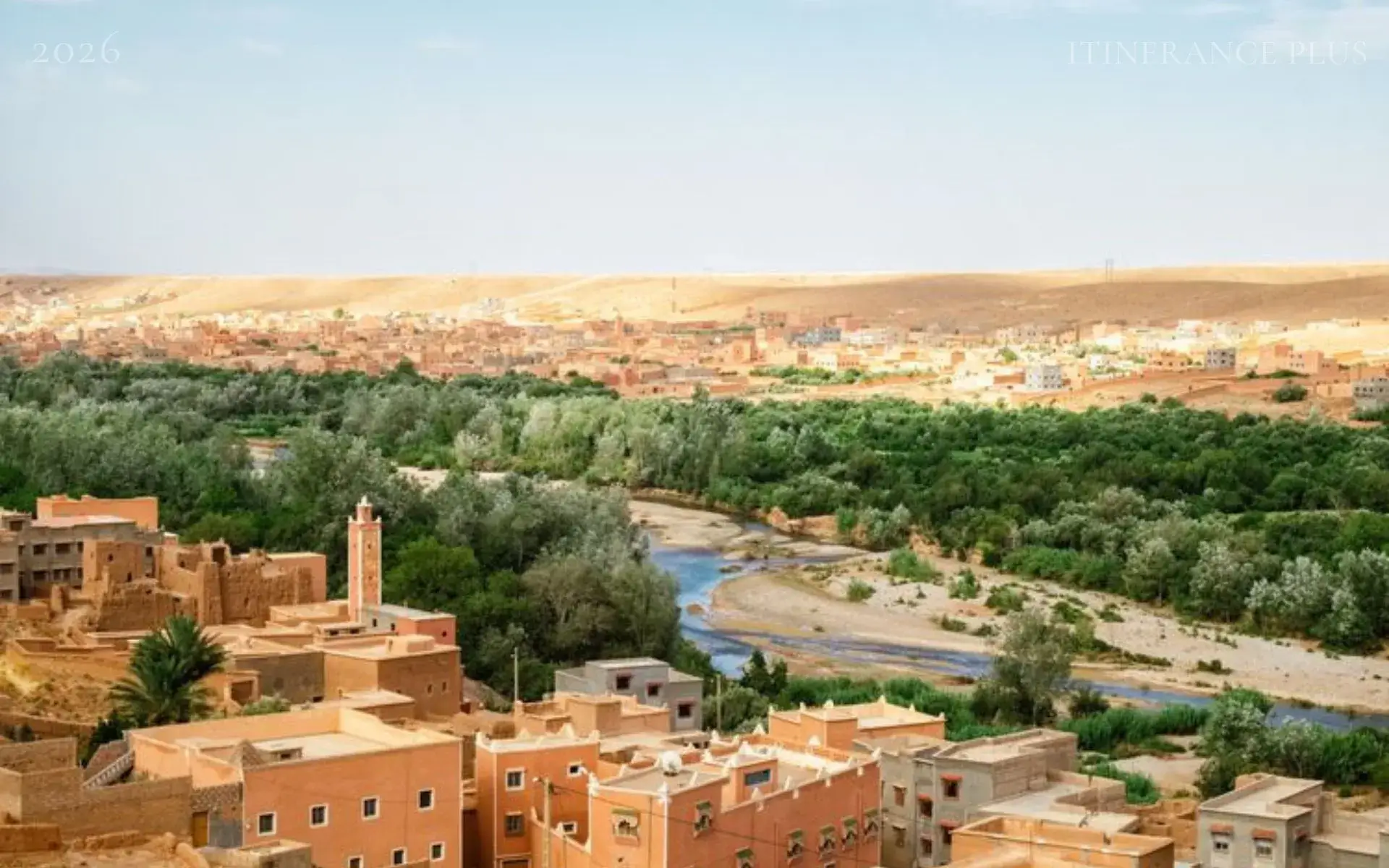
Zagora, the historic cradle of the Draa Valley: a dense palm grove, earthen kasbahs, the famous Timbuktu sign, and the gates of the rocky desert.
Live reputation
Check our public profiles before booking.
Open source
Location
Why visit
Zagora, the historic cradle of the Draa Valley: a dense palm grove, earthen kasbahs, the famous Timbuktu sign, and the gates of the rocky desert.
- History and heritage enthusiasts curious about ksour, green pottery, and medieval manuscripts
- Travellers with limited time who want a concrete first glimpse of the Moroccan South without the drive to Merzouga
- Adventurers seeking off-road expeditions, using Zagora as the last supply point before Erg Chegaga
Practical info
Practical information for your stay in Zagora
Climate: choose October to April. Summer (June–August) often exceeds 45°C. Winter nights stay mild, rarely dropping below 5°C.
Duration: one night and two days are enough for the town, the palm grove and Tamegroute. Plan at least three days to reach the large dunes of Erg Chegaga.
Access: 360 km from Marrakech, a fully paved road via Ouarzazate, accessible with a standard car. A regional airport also connects Zagora to Casablanca.
Quick read
Before you go
Useful cues
Climate: choose October to April. Summer (June–August) often exceeds 45°C. Winter nights stay mild, rarely dropping below 5°C.
Duration: one night and two days are enough for the town, the palm grove and Tamegroute. Plan at least three days to reach the large dunes of Erg Chegaga.
Access: 360 km from Marrakech, a fully paved road via Ouarzazate, accessible with a standard car. A regional airport also connects Zagora to Casablanca.
History
The oasis heritage of the Draa Valley: a centuries-old ecosystem
Morocco's longest river oasis, farmed on three tiers.
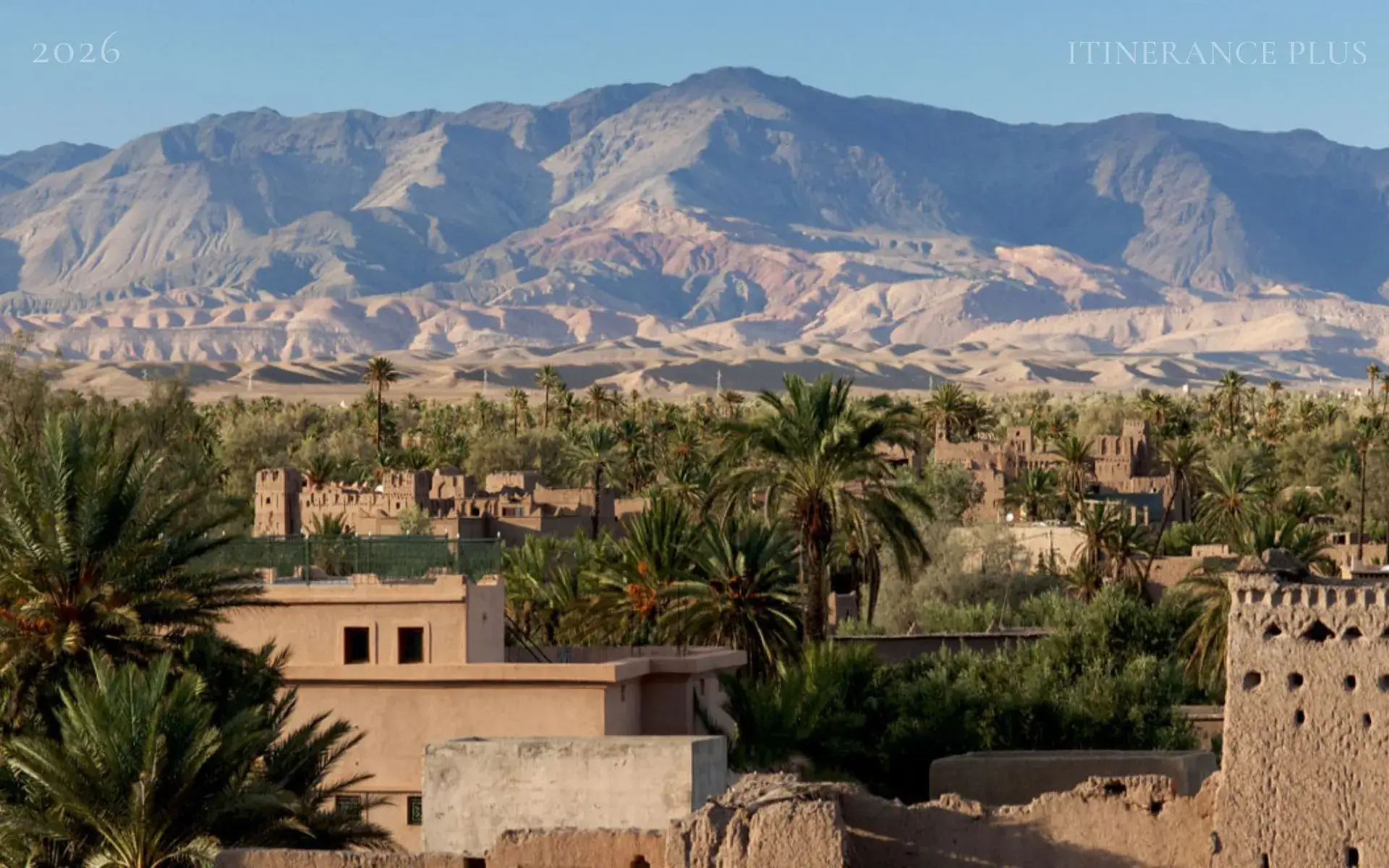
Zagora draws its beauty from the incredible green ribbon of the Draa Valley, Morocco's longest river oasis.
The ecosystem works on three tiers: the shade of tall date palms allows smaller fruit trees like pomegranates, figs and almonds to grow, under which market crops and alfalfa for livestock grow in turn.
Walking or cycling along paths irrigated by traditional seguias reveals an agricultural life unchanged for generations.
Dates of the Mezouati and Boufeggous varieties are the main local resource, harvested each autumn during festive celebrations.
This oasis farming faces real water challenges today, which makes a visit all the more useful to understand how fragile this balance is against the advancing desert.
Logistics
Tamegroute: medieval manuscripts and the secrets of green pottery
A spiritual and craft centre twenty kilometres south.
Twenty kilometres south of Zagora lies Tamegroute, a spiritual and craft centre of real historical weight.
Since the seventeenth century, the village has housed the Zaouia Naciria, a religious brotherhood with an exceptional scientific library: thousands of old manuscripts on parchment, gazelle skin or Chinese paper, covering theology, astronomy, mathematics and medieval medicine.
Tamegroute is also known for its open-air pottery workshops. Local artisans still use a glazing technique based on manganese, silica and copper, giving pieces their characteristic green tone.
The traditional kilns, fired with dry palm fronds, work the same way they always have, making each dish or jar a one-of-a-kind piece.
Destination guide
The Tinfou landscape and the call of the real Erg Chegaga desert
From easy small dunes to wild, remote ones, at two different levels.
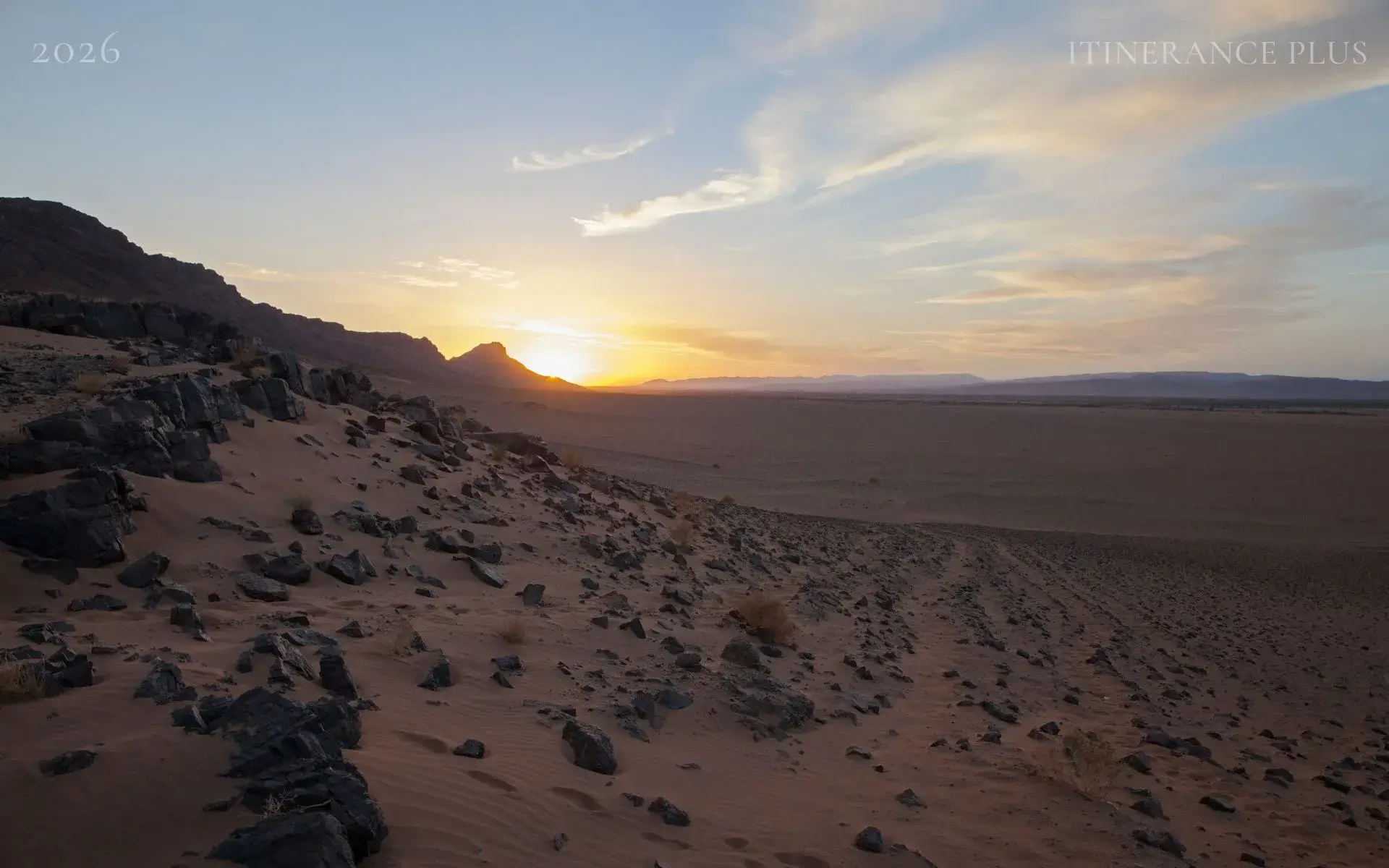
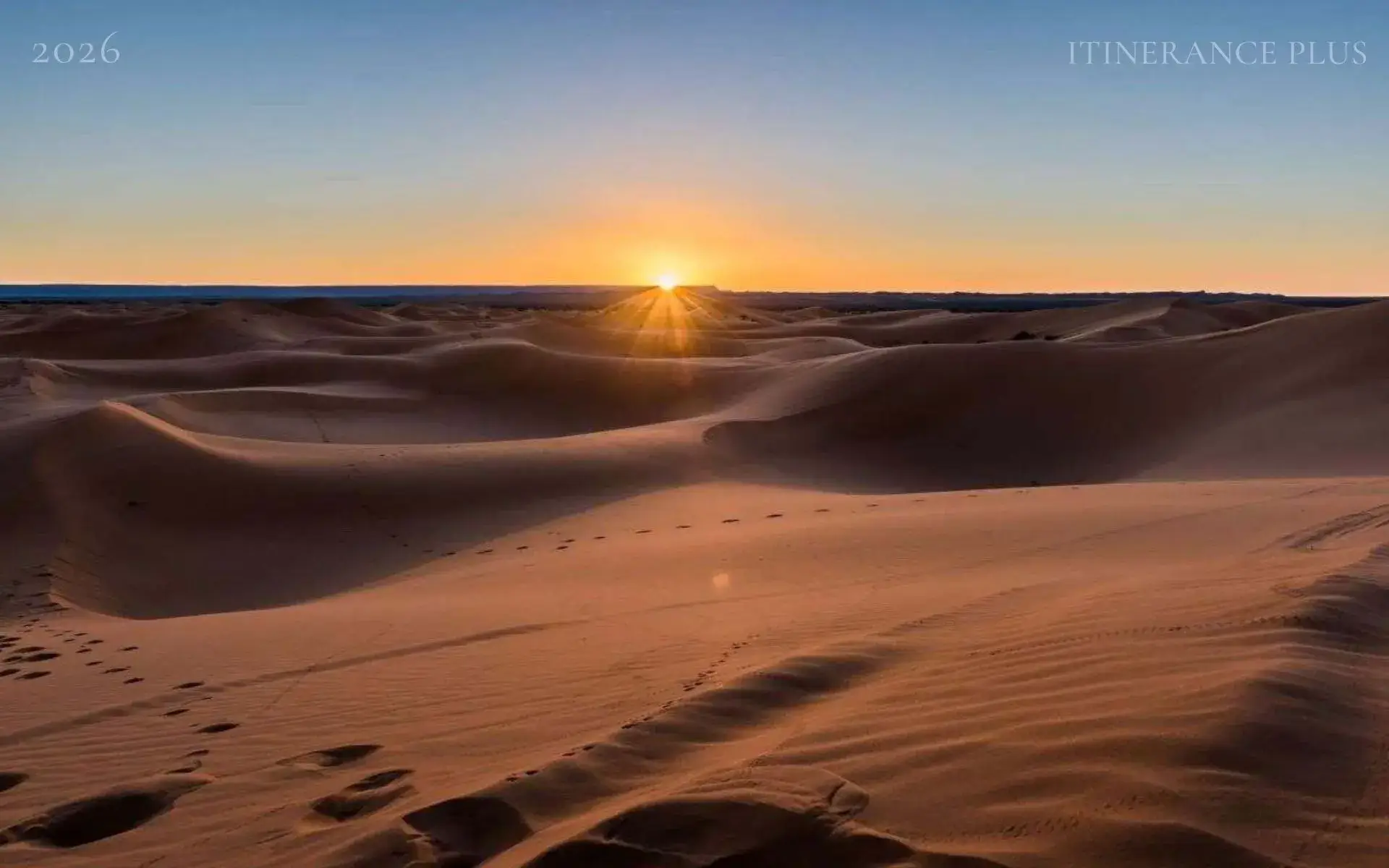
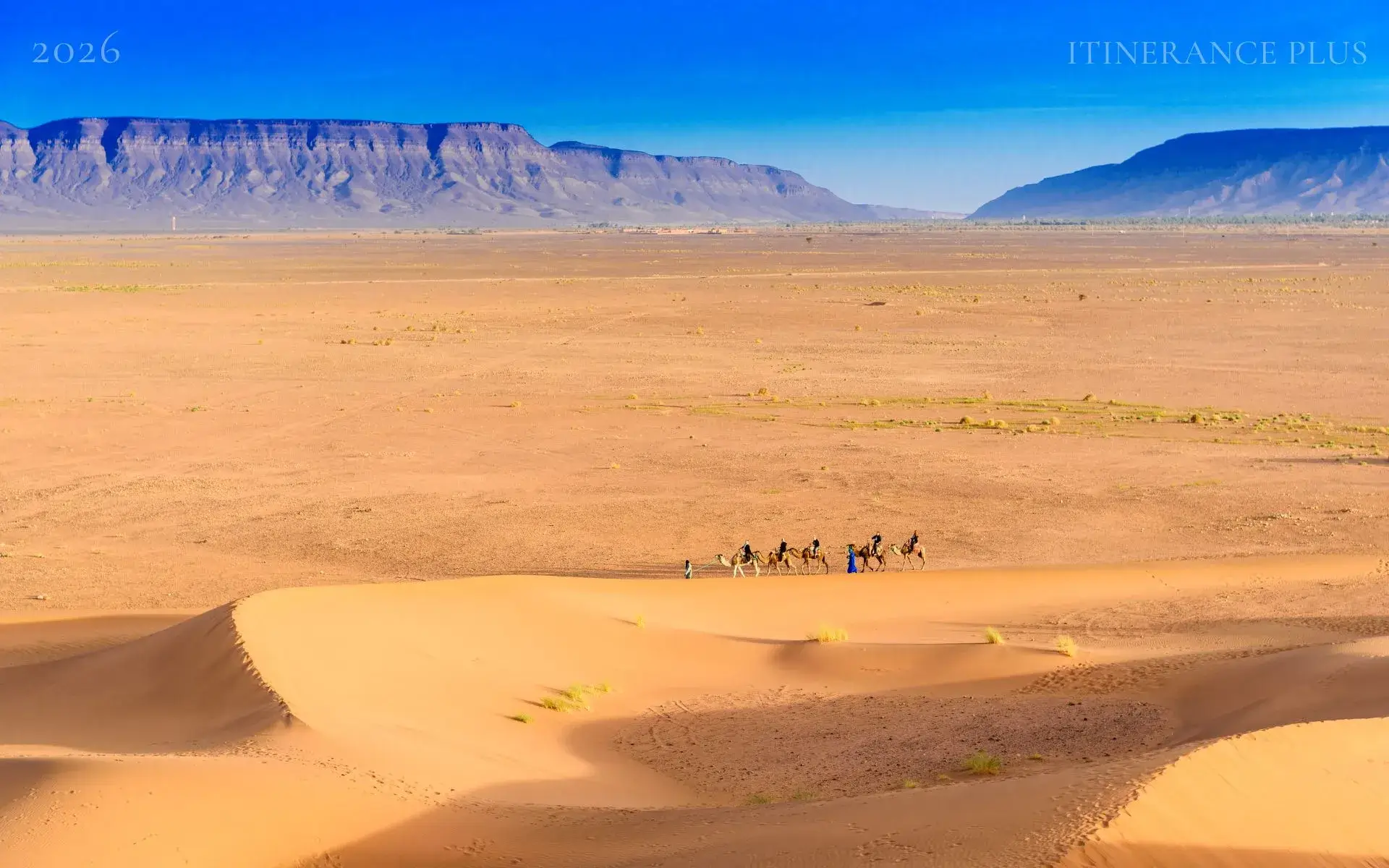
Zagora itself sits in a mostly rocky, mountainous desert, but offers a couple of levels of dune immersion. Less than thirty kilometres from the centre, the small Tinfou dunes allow a first camel ride and a sunset from a sand mound.
For the real Saharan adventure, Zagora is the starting point toward Erg Chegaga, further west near M'hamid El Ghizlane.
This massif, the largest and wildest in Morocco, stretches around forty kilometres with dunes reaching sixty metres.
Unlike Merzouga, where hotels sit right against the sand, reaching Erg Chegaga takes several hours on 4x4 tracks across the dried-up Lake Iriqui — near-total isolation, far from any infrastructure.
Logistics
Road logistics: fitting Zagora into a Southern Moroccan circuit
From Marrakech to the Draa Valley, via Ouarzazate and Agdz.
Reaching Zagora from Marrakech is one of Morocco's best road trips, provided travel time is planned properly. The road crosses the High Atlas via the Tizi n'Tichka pass at over two thousand two hundred metres, before dropping toward Ouarzazate.
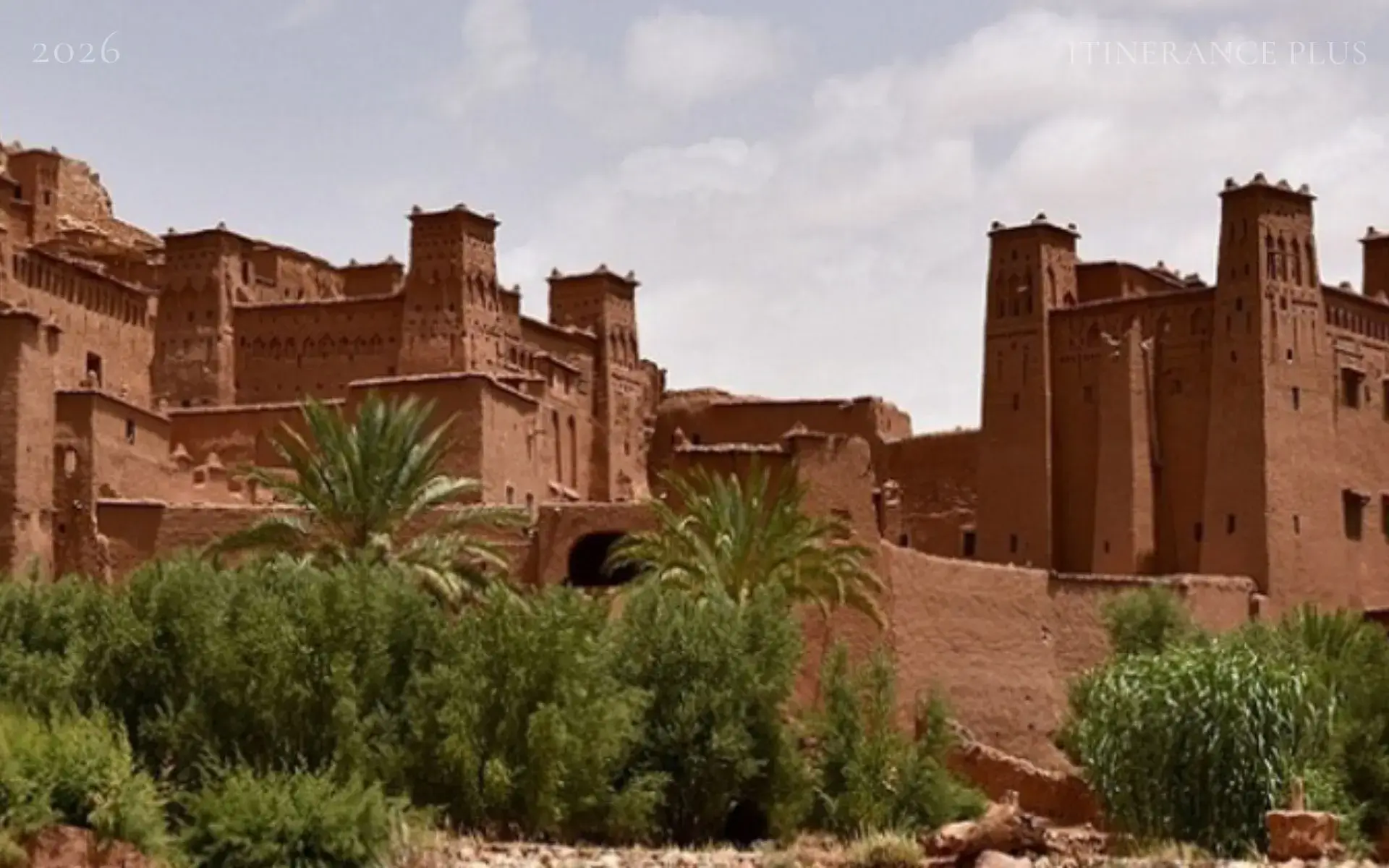
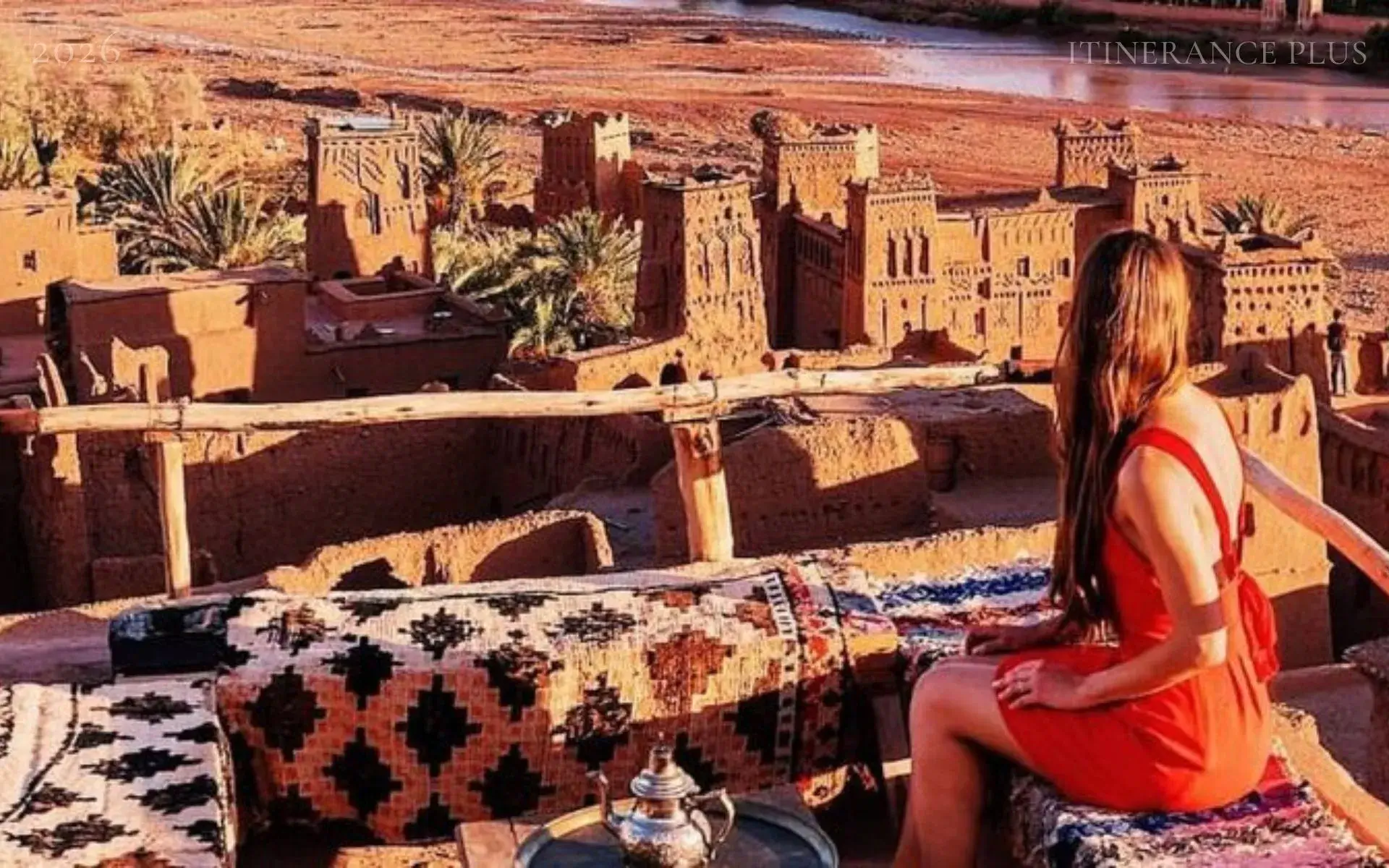
The Draa Valley show really starts around Agdz, with dozens of fortified earthen ksour, like Tamnougalt, worth a visit for its defensive architecture.
For a balanced itinerary, Zagora can be worked into a loop including the Foum Zguid oasis, or combined with the Valley of the Roses and the Dades Gorges.
This avoids redundant return trips and covers the full geological range of the pre-Saharan provinces in one journey.
History
Zagora, the Moroccan South through its history
Cultural history outweighs simple dune entertainment here.
Zagora stands out as a major destination for anyone after an authentic Moroccan South, where cultural history matters more than plain dune entertainment.
Its huge palm grove, preserved earthen architecture and proximity to places like the Tamegroute library make it a valuable cultural stop. Less crowded than the big Erg Chebbi resorts, it keeps a calm that suits real encounters with local and nomadic people.
Whether Zagora is the final stop of a short getaway from Marrakech or the base for an expedition toward the wild dunes of Erg Chegaga, it leaves an impression.
Our specialists can help handle the desert-track logistics and build a trip that fits what you're after.
Frequently asked questions
Everything about Zagora and the Draa Valley: Saharan heritage and Southern Moroccan oases
Yes, closer to Marrakech (340 km, 5-6 hours), Zagora offers a less spectacular sand dune desert than Merzouga but accessible in 2 days / 1 night. Ideal for shorter stays.
Experiences to prioritize
The strongest options for this destination
Zagora 2 Jours depuis Marrakech
Dunes de sable, palmeraies et nuit étoilée dans le désert.
Destination guide
Go further from this destination
Once the destination is clear, the next useful step is to choose the pace, comfort level and experiences that truly fit the trip you want.
Destination guides
Other destinations to explore
These complementary destinations help compare different travel atmospheres and refine the route.
Practical guides
Guides to read before booking
These guides help compare, plan and choose the right pace based on available time and travel preferences.
.webp&w=1920&q=75&dpl=dpl_7yHqte5YpN2EWkMpGL2WXt7k7LAf)

Practical guides
Deepen your preparation
More guides to refine practical details and choose the best experience based on travel profile.