Back to Marrakech
Madrasa
Ben Youssef Madrasa: a quest for light and knowledge
Before visiting
Key takeOnce you cross the cedar wood threshold, the tumult of the Marrakesh souks fades away as if by magic, replaced by a mineral freshness that seems to spring from the walls.
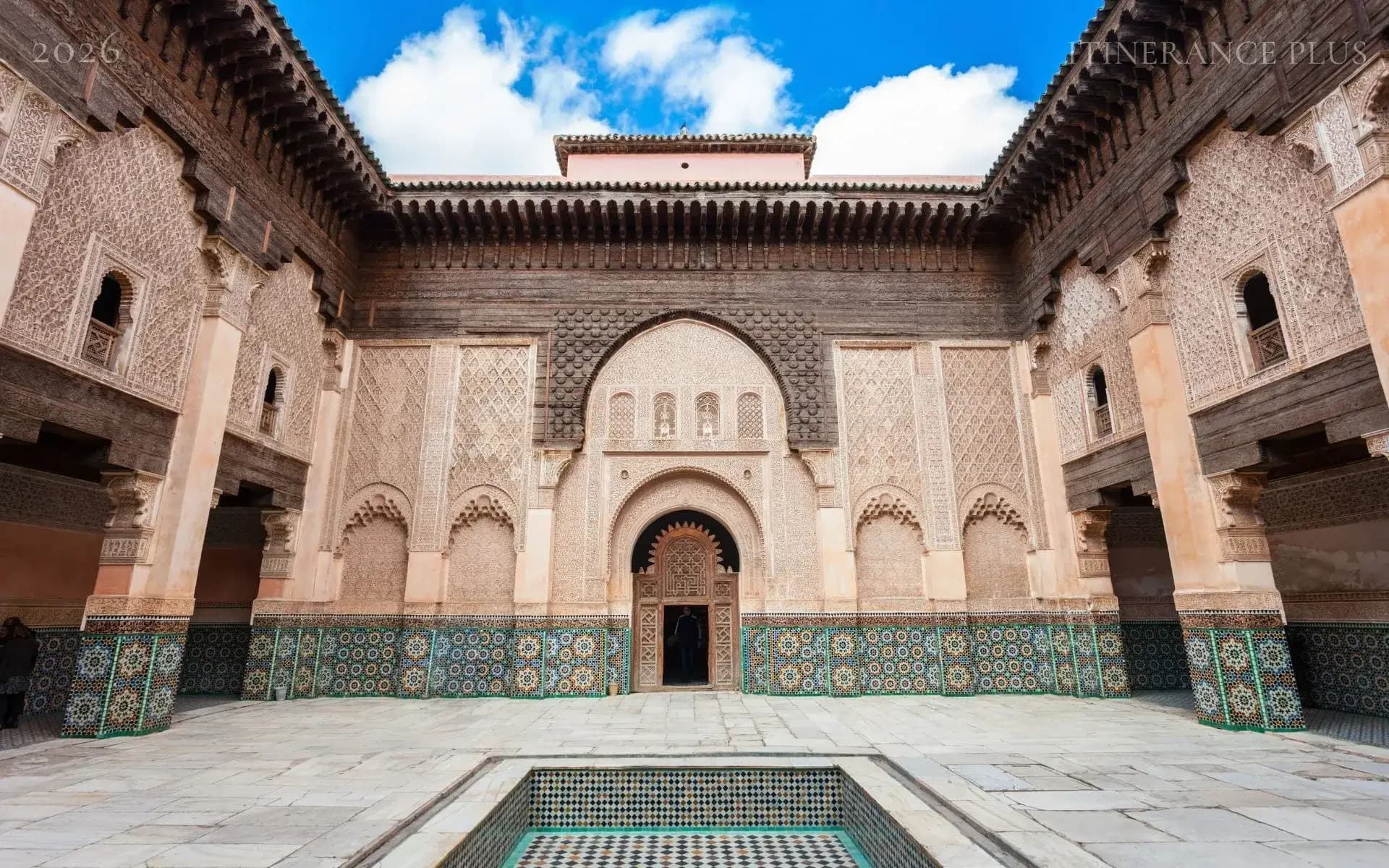
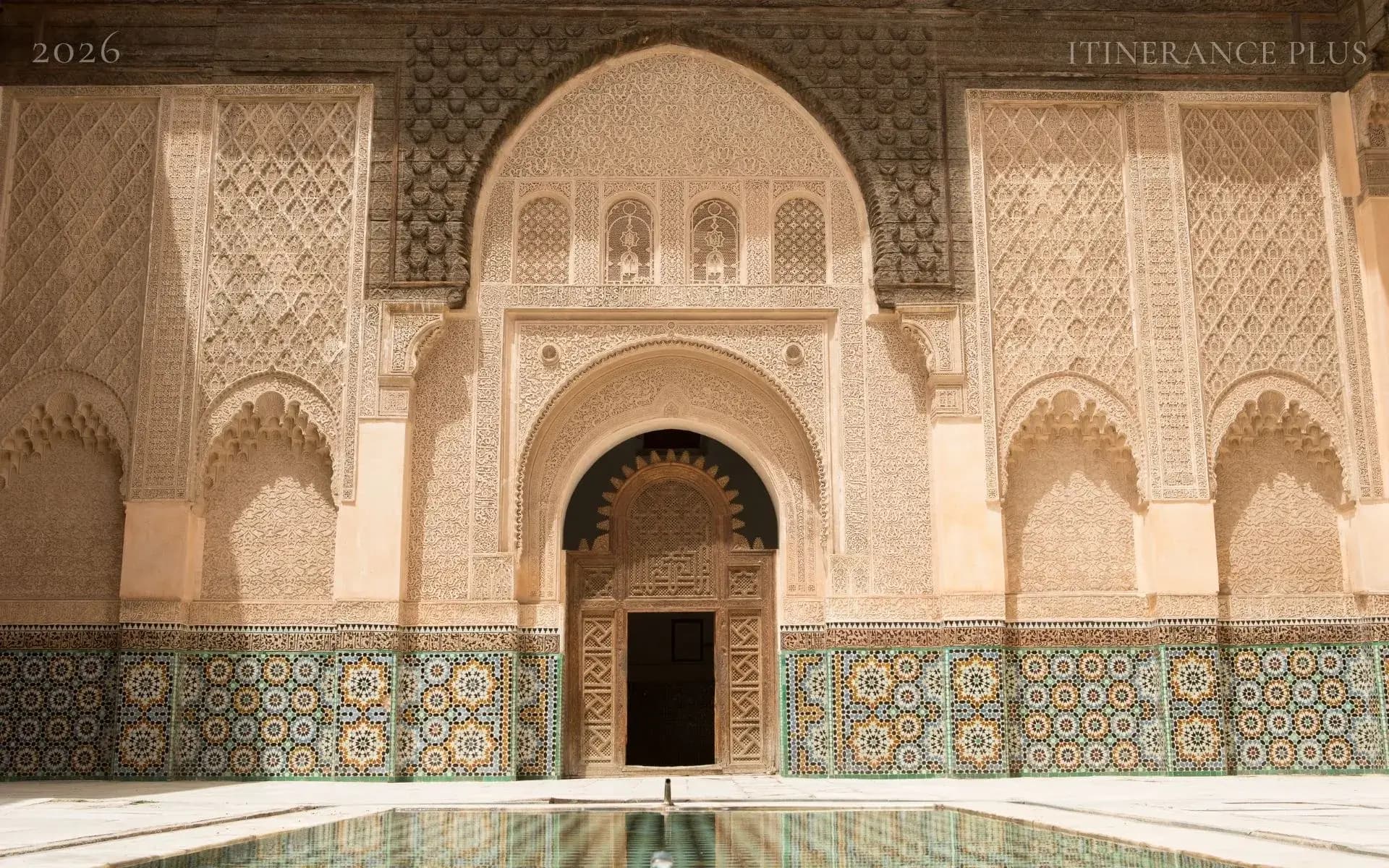
Your eyes take a few seconds to adjust to the dimness of the entrance corridor before being caught by the blinding brilliance of the large patio.
There, in the center of the Ben Youssef Madrasa, the sky is reflected in a marble basin of absolute clarity, creating an inverted mirror where the stucco lace seems to float between two worlds.
The scent of old wood, a resinous and noble fragrance, permeates the still air. You are no longer in a simple construction, but in the belly of secular knowledge where each turquoise zellige tells of the devotion of past students.
The texture of the chiseled plaster, as fine as silk embroidery, invites touch, while the silence, only disturbed by the distant cry of a swift, imposes a serene gravity.
In this sacred enclosure, the stone has learned to speak the language of poetry and sacred geometry, offering the visitor a break out of time, an immersion in the Marinid splendor that has survived the assaults of centuries.
Location
Insight
First impressions
Once you cross the cedar wood threshold, the tumult of the Marrakesh souks fades away as if by magic, replaced by a mineral freshness that seems to spring from the walls.
Your eyes take a few seconds to adjust to the dimness of the entrance corridor before being caught by the blinding brilliance of the large patio.
There, in the center of the Ben Youssef Madrasa, the sky is reflected in a marble basin of absolute clarity, creating an inverted mirror where the stucco lace seems to float between two worlds.
The scent of old wood, a resinous and noble fragrance, permeates the still air. You are no longer in a simple construction, but in the belly of secular knowledge where each turquoise zellige tells of the devotion of past students.
The texture of the chiseled plaster, as fine as silk embroidery, invites touch, while the silence, only disturbed by the distant cry of a swift, imposes a serene gravity.
In this sacred enclosure, the stone has learned to speak the language of poetry and sacred geometry, offering the visitor a break out of time, an immersion in the Marinid splendor that has survived the assaults of centuries.
Architecture
What secret does the fascinating geometry of the zelliges hide?
Approaching the walls surrounding the central basin of the Ben Youssef Madrasa, you discover a chromatic labyrinth of surgical precision. The zelliges, these small hand-cut glazed terracotta tiles, form star patterns that seem to extend infinitely.
Fez blue, Islamic green, and saffron yellow intertwine in a mathematical dance where nothing is left to chance.
One cannot help but be struck by the patience of the artisans who, for years, assembled these thousands of pieces to create a visual harmony intended to reflect the order of the universe.
Each color has its own vibration, its own light, varying according to the angle of the sun entering the courtyard.
Touch is an integral part of the experience here. Run your hand over these mosaics: they are smooth and cold, offering a striking contrast to the roughness of the brick sections supporting the building. The geometric patterns are not simple decorations;
they are a form of visual meditation. Students, leaving their theology or law lessons, would let their gaze get lost in these interlacings to soothe their minds.
It is an architecture that heals the soul through the repetition of beauty, a human will to rise toward perfection through pure craftsmanship.
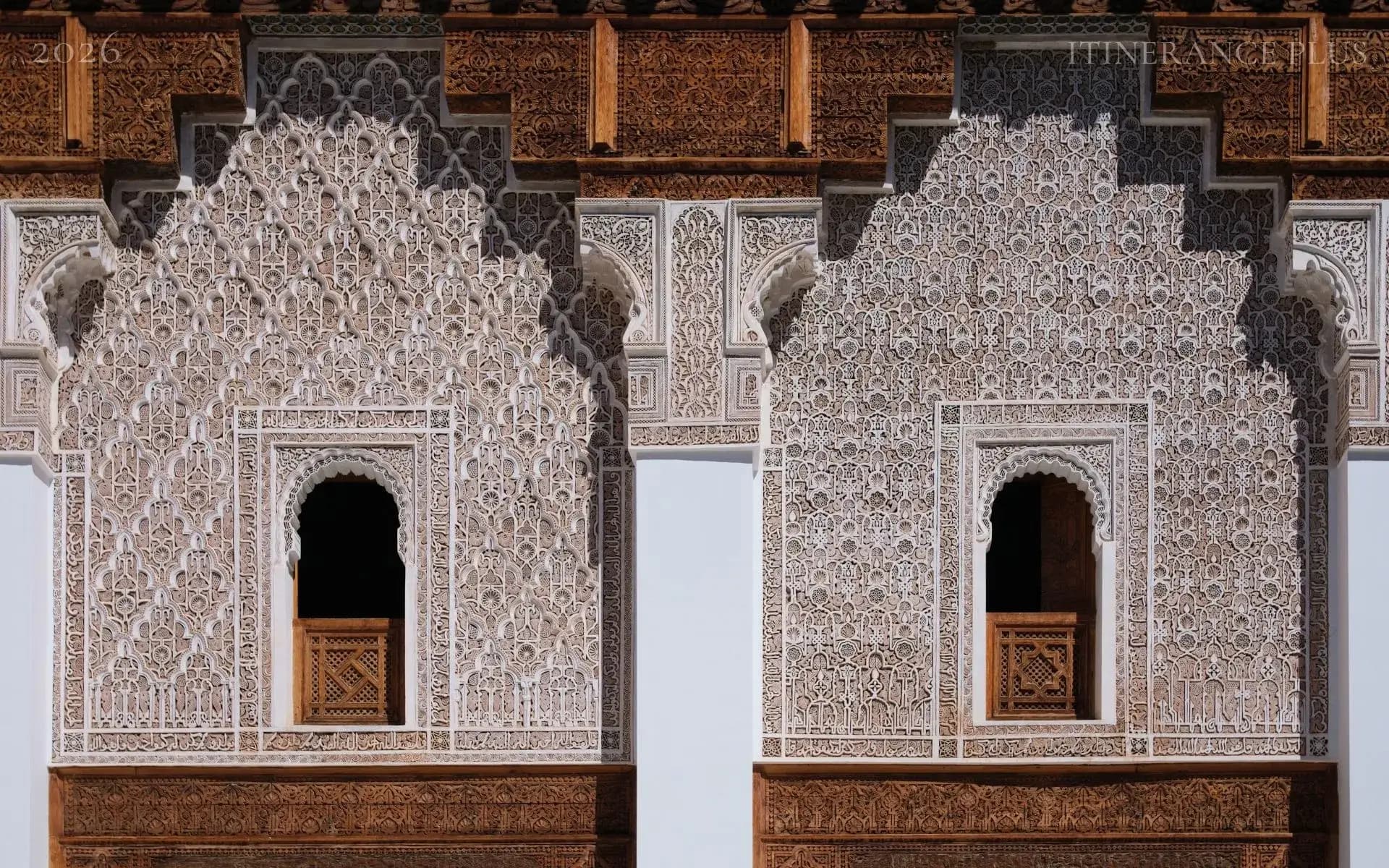
The plasterwork, located just above the zelliges, takes sophistication even further. This is called chiseled stucco. The floral motifs and calligraphic inscriptions in Kufic script seem to have been sculpted in cream.
In reality, it is a mixture of lime, plaster, and marble powder, worked while still wet. The shadows cast by the reliefs change throughout the day, giving the impression that the walls breathe with the rhythm of the light.
It is a permanent dialogue between solid matter and the immateriality of the day, a demonstration of quiet strength that defines Moroccan aesthetics at its peak.
Insight
How did students live in the upstairs cells?
To understand the soul of this place, one must leave the clarity of the patio and take one of the hidden staircases leading to the upper galleries. There, the decor changes radically.
The vast spaces give way to a network of narrow corridors distributing more than a hundred small cells. This is where up to nine hundred students from all over the Maghreb stayed to study at the neighboring mosque.
Entering one of these alcoves, one is struck by the narrowness and bareness of the places. A small window sometimes overlooking the inner courtyard, a mat on the floor, and silence as the only companion.
Life here was an asceticism dedicated to knowledge. One imagines the candles burning late into the night, the murmur of memorized verses, and the smell of ink on paper.
The bare brick walls bear witness to a life stripped of all material artifice in favor of intellectual wealth. Leaning out of one of the carved cedar wood windows, you have a direct view of the patio.
From up there, the structure of the Ben Youssef Madrasa appears in all its coherence: a cloister of knowledge protected from the outside world by ramparts of wisdom.
This contrast between the ornamental richness of the common spaces and the poverty of the private cells is full of lessons. It reminds us that in this city, luxury is often internal, hidden behind austere facades.
The upstairs galleries also allow a closer look at the cedar ceilings, whose massive beams are adorned with polychrome motifs.
The wood, after centuries of existence, has taken on a dark patina, almost black in places, giving off that characteristic old manor smell that makes the atmosphere so special.
It is a journey through time that projects you into the daily life of a learned elite who shaped the history of the region.
Insight
What is the spiritual power of the prayer hall?
At the back of the patio, facing the entrance, opens the prayer hall, a true sanctuary of the building.
Unlike the courtyard which is open to the sky, this hall is an enclosed space, with a cedar wood ceiling rising very high, supported by noble marble columns.
The central element is the mihrab, a richly decorated niche indicating the direction of Mecca. The stucco work there reaches heights of delicacy, with calligraphic inscriptions that seem to dance on the stone.
This is where students and masters gathered for moments of collective devotion.
The light that enters this hall is soft, filtered by high openings, creating a chiaroscuro atmosphere conducive to reflection. You feel a different vibration in this space, a historical and spiritual density that commands respect.
The carved motifs on the mihrab are not only aesthetic; they are charged with symbolism, representing the Garden of Eden and access to divinity. You are at the beating heart of the institution, where the transmission of knowledge met the practice of faith.
Observing the details of the dome surmounting the mihrab, one discovers an eight-pointed star, a symbol of balance and perfection. The transition from the luminous courtyard to this dark room acts as a rite of passage, an invitation to interiority.
One cannot remain indifferent to the majesty of the place, even if one is a stranger to the religion that birthed it. Beauty here is universal; it speaks to the senses before addressing the intellect.
It is undoubtedly in this hall that one best understands why this construction has remained a major monument of Western Islamic civilization.
Architecture
Why is cedar wood the soul of this architecture?
Cedar wood, omnipresent in the Ben Youssef Madrasa, plays a much more complex role than a simple supporting structure.
Coming from the forests of the Middle Atlas, this material is considered sacred for its resistance and its persistent smell that repels insects.
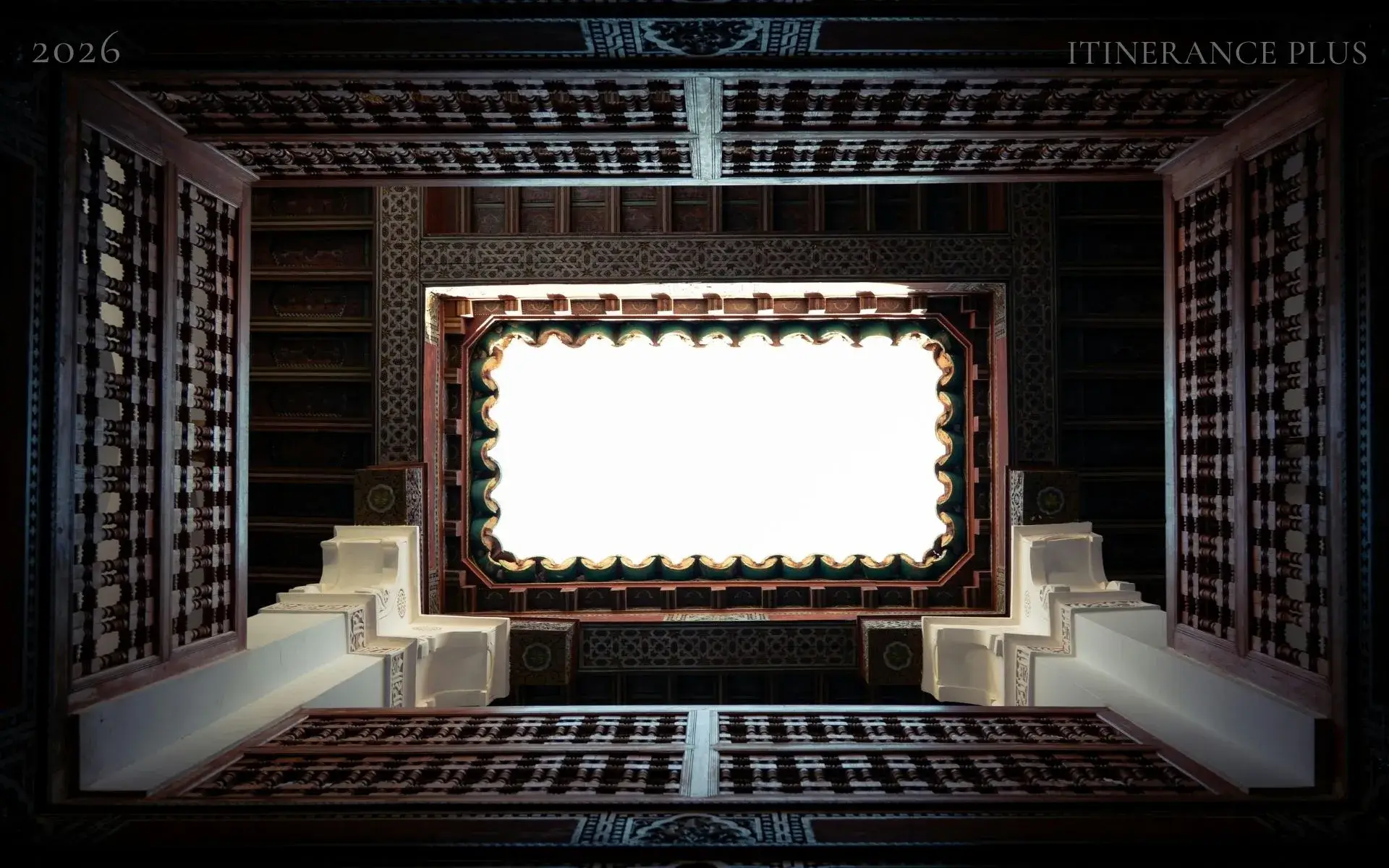
In the galleries, lintels, corbels, and moucharabiehs, the wood is carved with a virtuosity that defies imagination. The patterns are of such finesse that they seem to have been modeled in a malleable material rather than carved from a robust species.
Observing the large doors that close the access to the cells, you notice the patina of time. The wood has moved, reacted to the dryness of the Marrakesh climate, but it has never given way.
The moucharabiehs, these openwork wooden screens, allowed students to observe the courtyard without being seen, while promoting natural air circulation. It is an architecture of sight and breath.
Cedar brings a chromatic warmth that counterbalances the coldness of the marble and zellige, creating a palette of brown and golden tones that soothes the eye.
The woodwork reaches its peak in the coffered ceilings of the prayer hall and the vestibules. Each piece is fitted without nails, according to ancestral assembly techniques that ensure the building's flexibility in case of an earthquake.
This technical ingenuity is doubled by a constant aesthetic search. One feels that every notch, every groove was designed to capture light and create relief.
Wood here is the link between the Moroccan land and the building's celestial aspirations, a living material that continues to tell its story to those who know how to listen.
Atmosphere
How to soak up the atmosphere of the neighborhood around the madrasa?
Best time to visit: The spring months (March to May) and autumn months (September to November) are the most pleasant to enjoy the light without the overwhelming heat of summer which can make the patio stifling. Arriving at the opening at 9:00 AM allows you to enjoy the place in relative calm before the influx of groups.
Average daily budget: Entry to the building is very accessible (about 50 to 70 Dirhams). Plan about 150 Dirhams for a full lunch in the neighborhood stalls and a few Dirhams for tips if you use a spontaneous local guide.
How to get there: Located in the heart of the Medina, about 15-20 minutes on foot from Jemaa el-Fna square. The easiest way is to follow the signs to the Marrakesh Museum or the Ben Youssef Mosque. By taxi, ask for the "Place de la Liberté" or "Bab Doukkala" stop and finish on foot.
Ideal length of stay: A whole morning is necessary to explore the details of the architecture, go up into the cells, and soak up the atmosphere of the surrounding neighborhood.
Frequently asked questions
Everything about Ben Youssef Madrasa: a quest for light and knowledge
Other places to discover
More places to explore nearby
Garden
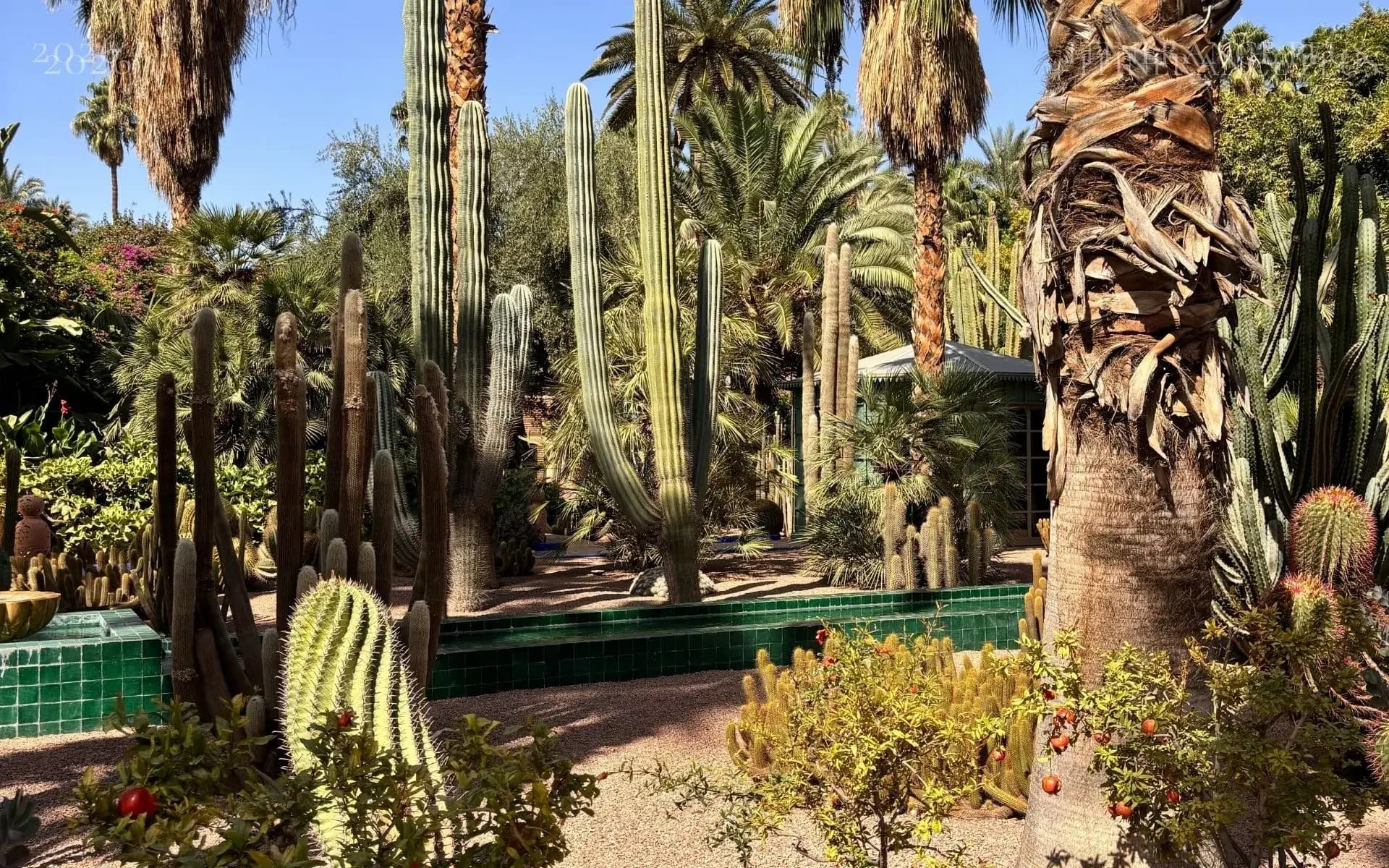
Majorelle Garden: an immersion in the cobalt blue of Marrakech
A sanctuary of freshness and color in the heart of Guéliz, where rare botany, Yves Saint Laurent's legacy and precise light meet.
Square
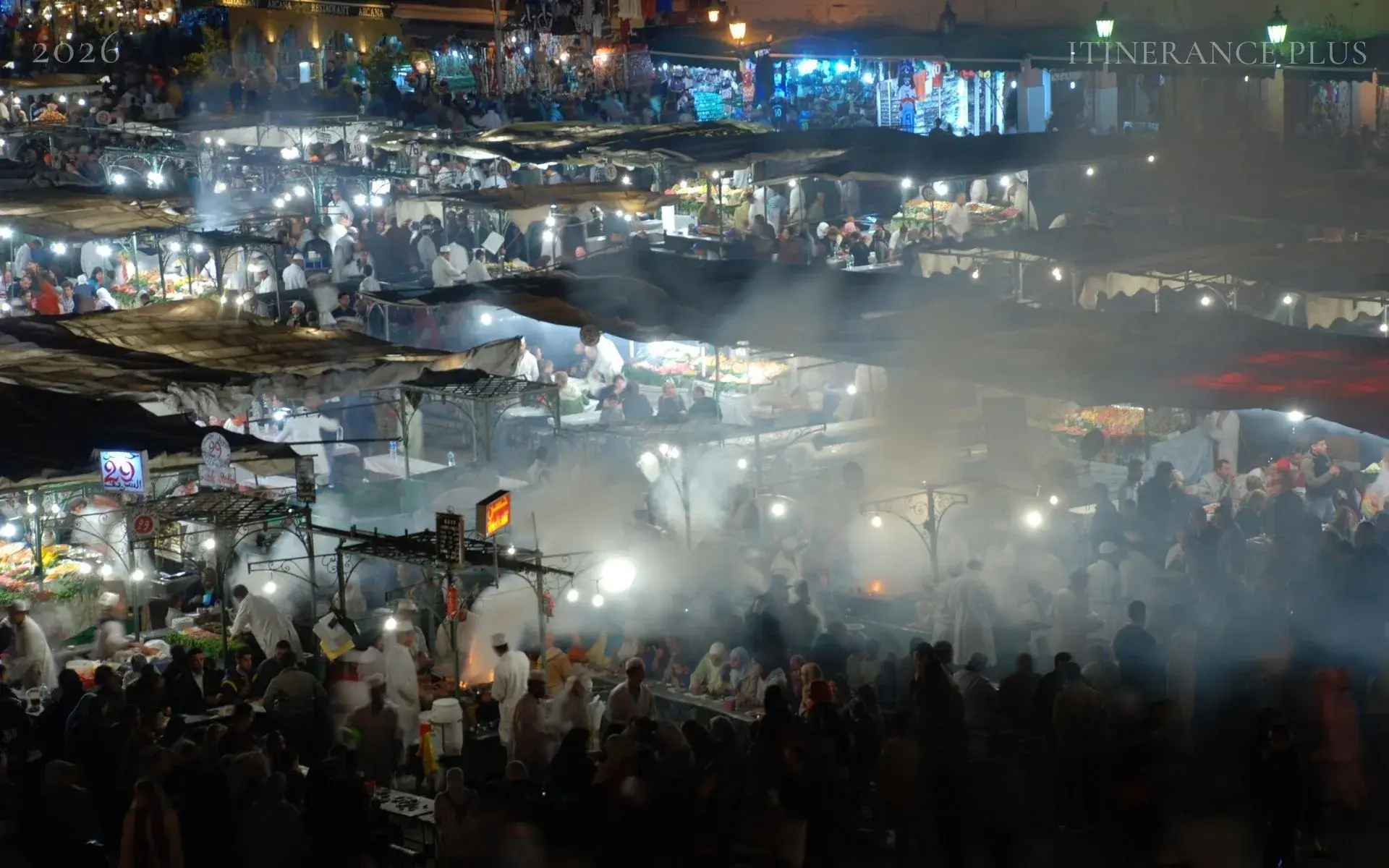
Jemaa el-Fna: diving into the vertigo of Marrakech
The smell of cedarwood smoke mixes with the scent of freshly pressed oranges, creating a dense, almost tangible atmosphere. In the distance, the first Maghreb call to prayer rises, filtered through the minarets of the...
Practical guides
Useful guides around this place
These guides help compare rhythms, formats and practical choices before shaping the visit.


Related experiences