Back to Marrakech
Garden
Majorelle Garden: an immersion in the cobalt blue of Marrakech
Before visiting
Key takeA sanctuary of freshness and color in the heart of Guéliz, where rare botany, Yves Saint Laurent's legacy and precise light meet.
Location
Insight
Why does this intense blue fascinate travelers so much?
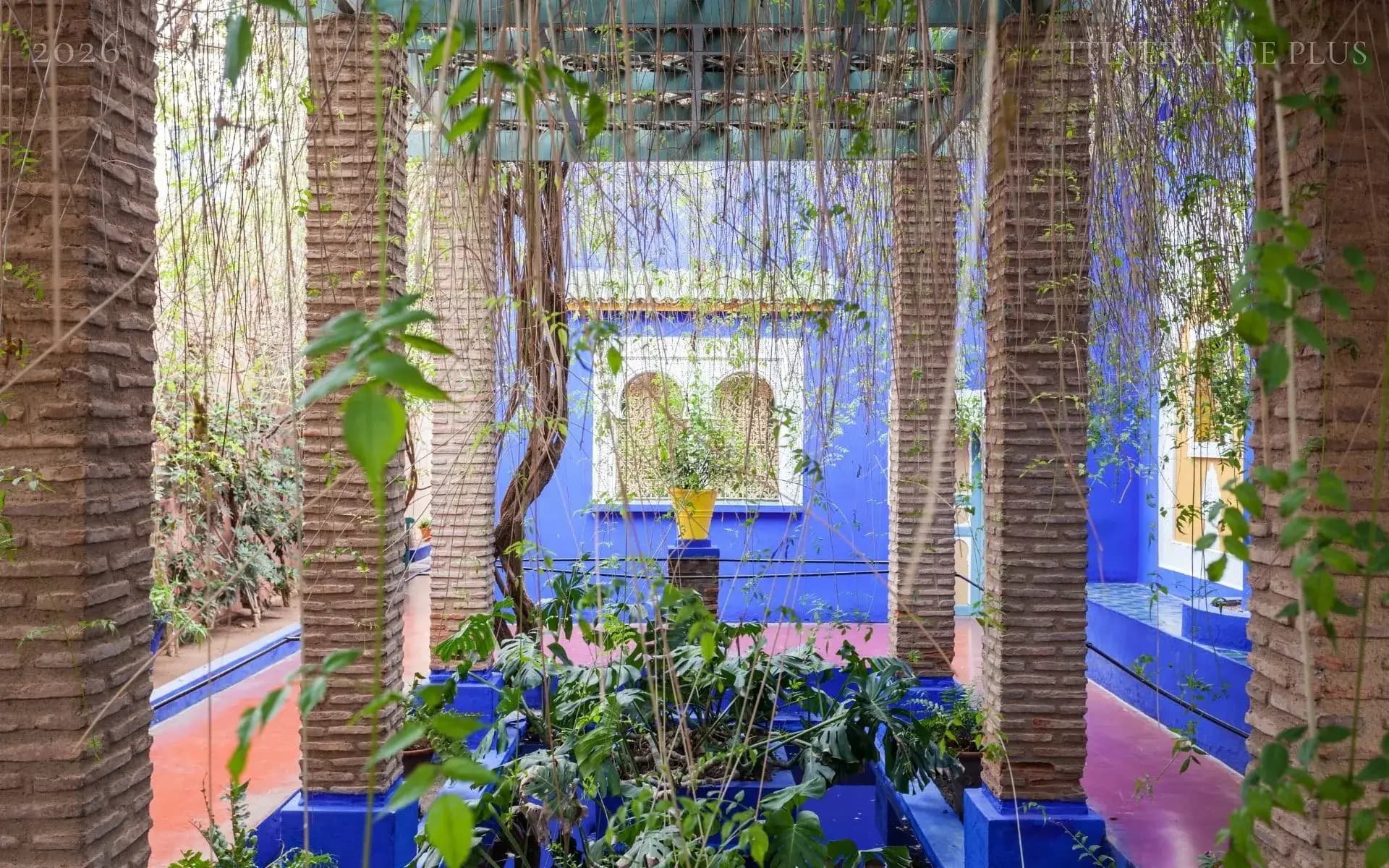
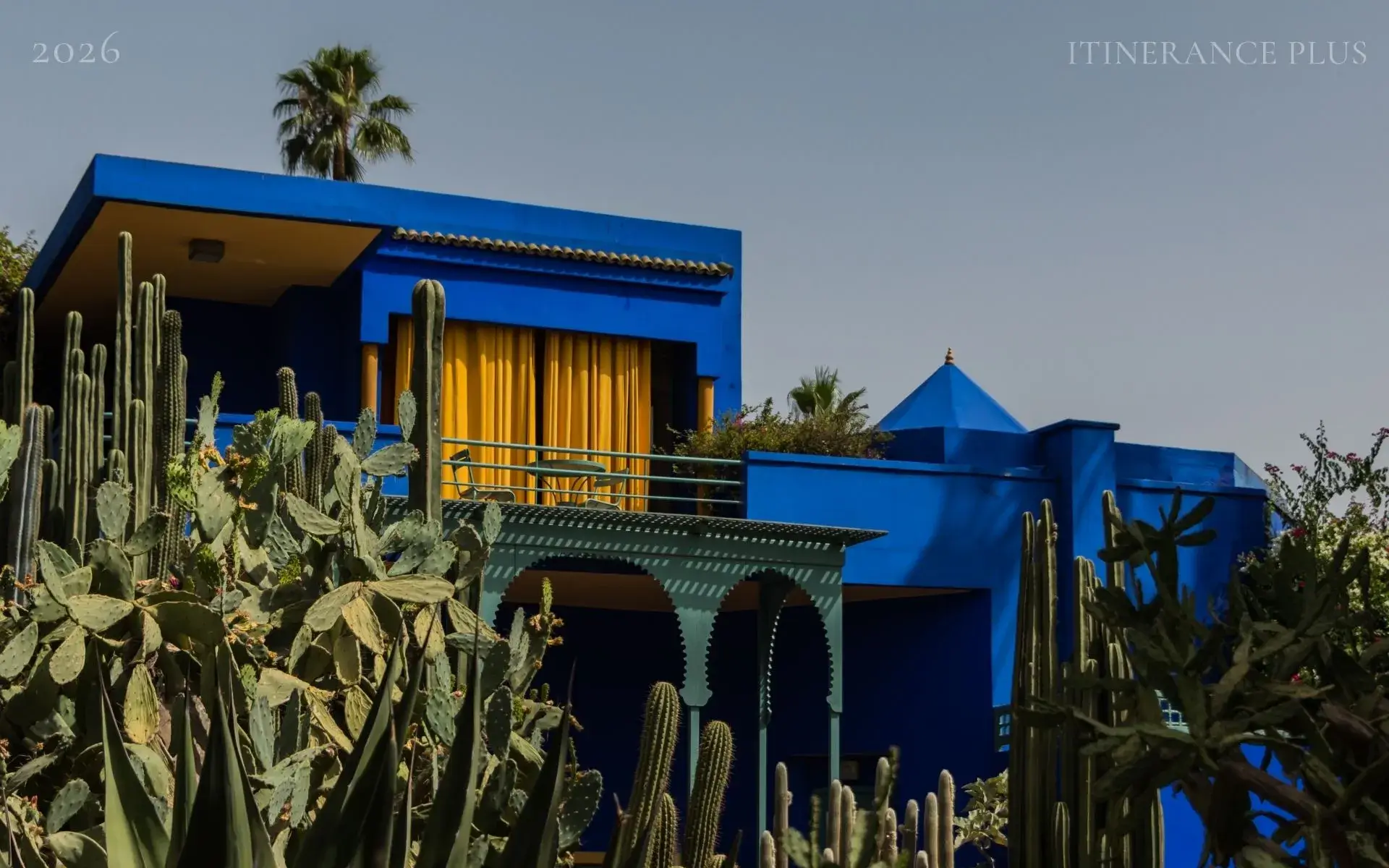
The secret of this place lies in a nuance that exists nowhere else with such intensity. The blue that adorns the villa's walls and the structures of the main pool possesses a magnetic depth.
Jacques Majorelle, the French painter who settled here in the 1920s, spent years perfecting this pigment. It's neither sky blue nor navy, but a saturated, almost electric ultramarine hue that seems to absorb heat and transform it into serenity.
Observing the facades of Villa Oasis, you notice how this color interacts with the acid green of the cacti and the burnt orange of the pathways. It's a vibrant yet harmonious chromatic dialogue.
The artist wanted a color that could rival the intensity of the Marrakech sun without ever appearing washed out. This cobalt blue, now known as Majorelle blue, serves as a backdrop to the graphic shadows of the exotic plants.
As you stroll along the covered walkways, the feeling of coolness is visual before it is physical. The contrasts are so sharp they seem unreal, as if you were walking inside an oil painting whose paint has never dried.
The pigment reacts differently depending on the time of day, shifting from a vibrant brilliance at midday to a velvety softness at dusk.
This obsession with color doesn't stop at the walls. It permeates the terracotta planters, the benches, and the window frames. It creates a guiding thread that leads your steps through the verdant labyrinth.
It's said that Majorelle considered this garden his most accomplished work, far surpassing his paintings of the Atlas kasbahs . Sitting on one of the benches facing the large pool, you understand that this blue is a bulwark against the chaos outside.
It's a visual signature that has transcended decades without aging a day, retaining its ability to surprise even the most jaded eye.
Gardens
How does the vegetation of the Majorelle Garden defy the desert?
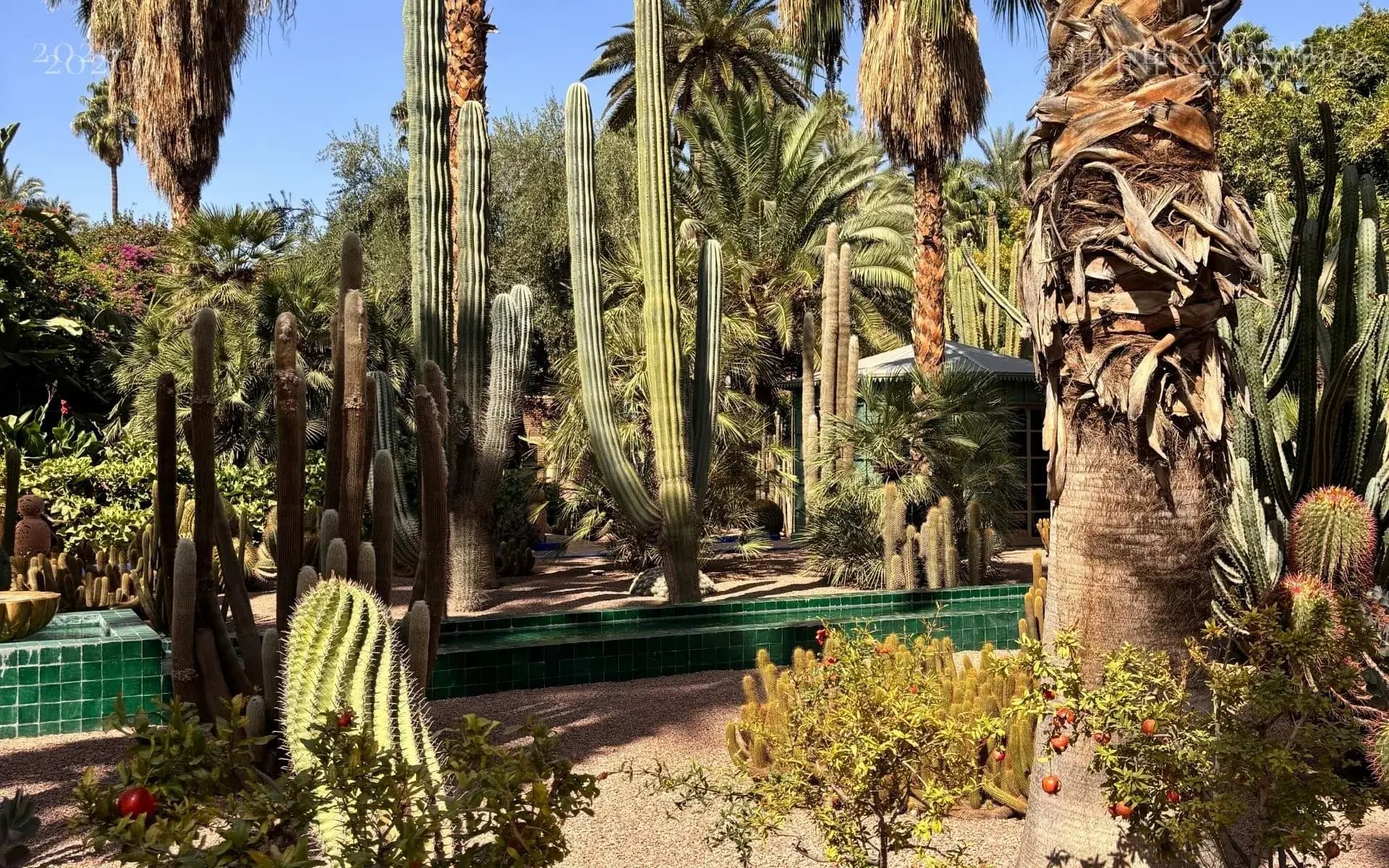
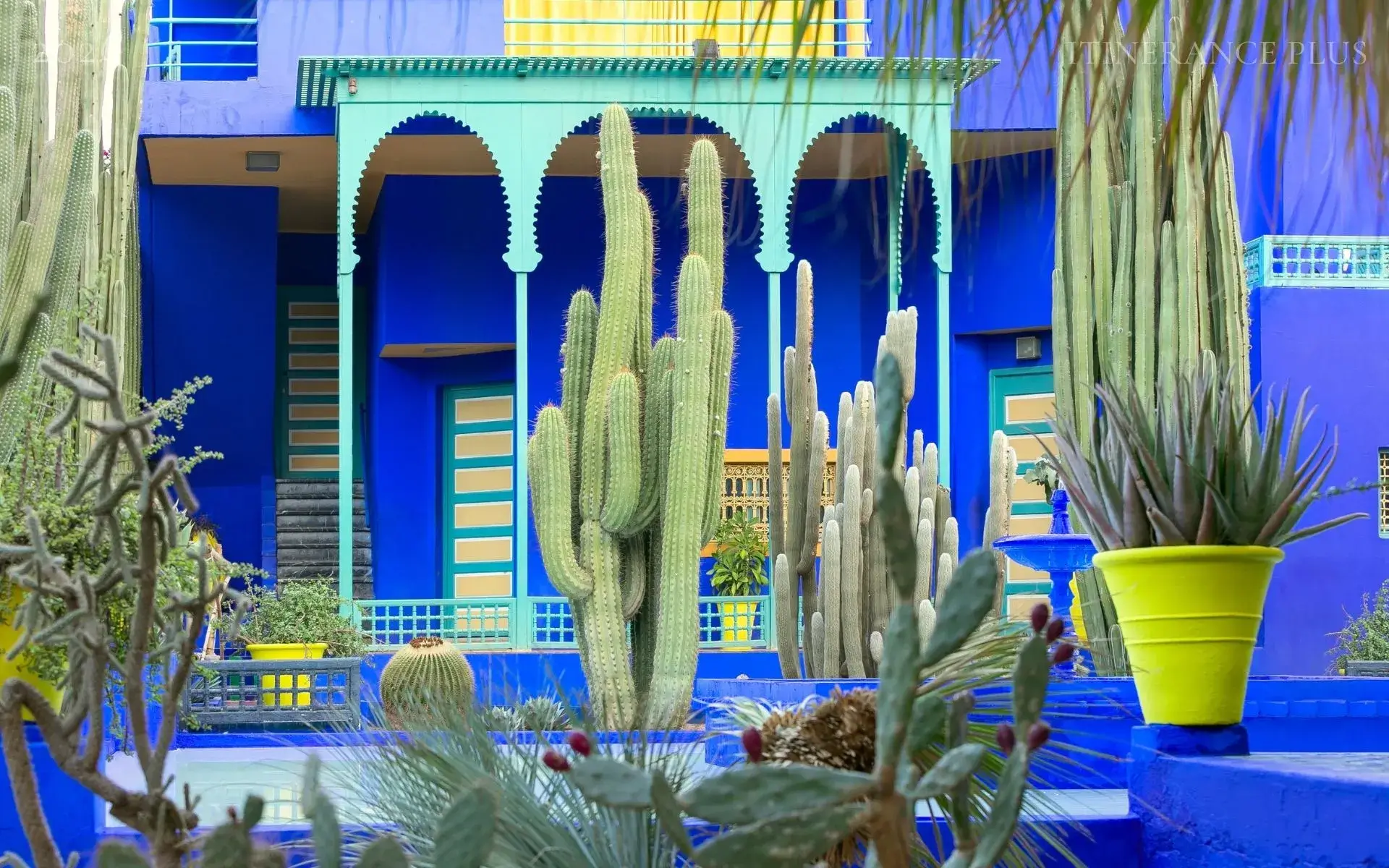
The arrangement of plants in this space is a feat of acclimatization and landscape design. Jacques Majorelle was a passionate collector, bringing back specimens from all corners of the globe during his expeditions.
The result is an urban forest where species that, naturally, would never cross paths coexist. Upright and proud Mexican cacti stand alongside giant ferns native to the rainforests of Asia.
This mix creates a hybrid aesthetic, both wild and perfectly controlled by the gardeners who are busy every morning before opening time.
The bamboo groves form tunnels of greenery where the temperature drops several degrees in just a few meters. Their pale green or golden-yellow stalks rustle together with a hollow, woody sound as soon as the wind picks up.
Looking up, you see palm trees of various varieties, from imposing Washingtonia palms to more delicate Phoenix palms, structuring the space and providing perches for garden bulbuls.
The ground is carpeted with succulents in geometric shapes, some resembling living stones, others velvet rosettes.
Water plays a crucial role in this plant life. It circulates through a complex system inspired by traditional irrigation channels, watering each plot with surgical precision.
The water lilies and lotuses that cover the ponds are not merely decorative. They maintain a humid ecosystem essential to the surrounding plants.
Observing the water's surface, you'll see koi carp gliding among the stems, adding a touch of mobile life to this otherwise static scene.
This water management is a lesson in engineering inherited from the builders of Marrakech, adapted here to a Western aesthetic vision.
The dense foliage creates a natural sound barrier. Even though the garden is located on the edge of vibrant neighborhoods like the new town, the silence is profound.
You hear only the buzzing of pollinating insects and the distant call of swifts. This lush vegetation acts as a lung for the city, a refuge where the air seems purer and lighter.
Each plant was chosen for its texture, color, and ability to withstand the region's contrasting climate, from cool winters to scorching summers.
Insight
What mark did Yves Saint Laurent leave within these walls?
The history of this place could have ended in the 1960s, when the estate was threatened with destruction by real estate development projects. It was the arrival of Yves Saint Laurent and Pierre Bergé that saved this heritage from certain disappearance.
For the couturier, this place was an inexhaustible source of inspiration, a laboratory of forms and colors that influenced many of his collections. He loved to retreat there to sketch, far from the pressures of Parisian fashion shows.
His presence is still palpable, particularly near the discreet memorial erected in his memory in the shade of a miniature palm grove.
The couple's purchase of the property in 1980 marked the beginning of a meticulous restoration. They respected Majorelle's vision while introducing a new level of rigor in the conservation of the botanical species.
The villa, formerly an artist's studio, was transformed to house the Pierre Bergé Museum of Berber Arts. This choice was not insignificant: it underscores the couturier's deep connection to the culture of Morocco, his adopted country.
Inside, jewelry, textiles, and traditional costumes are displayed with understated elegance that highlights the craftsmanship of the High Atlas tribes.
Strolling through the gardens is also like following in the footsteps of the man who said he found here "the colors he carried within him.
" One can easily imagine the designer wandering at dusk, observing how the pink of the bougainvillea harmonizes with the blue of the villa.
His passion for Morocco shines through in every detail, from the choice of new plant species to the layout of the galleries. The connection between haute couture and gardening becomes clear: a constant quest for balance, proportion, and visual surprise.
Today, a foundation ensures the preservation of the work. It manages not only the garden, but also the museum dedicated to the work of Yves Saint Laurent located right next door.
This cultural complex makes this neighborhood a gathering place for art lovers from all over the world. When you visit the space, you don't just see plants;
you explore a love story between a man and the land, a relationship that has allowed the preservation of one of the most iconic spaces in North Africa.
Insight
Can one still find peace and quiet in this highly sought-after place?
The site is so popular that finding solitude can seem difficult. Yet, by choosing your timing wisely, its charm always works.
The trick is to arrive right when it opens, when the dew still glistens on the philodendron leaves and the first rays of sunlight pierce the morning mist.
At this hour, the paths are deserted, and you can hear the quiet work of the gardeners pruning and watering. It's the perfect time to soak up the energy of the place without the distraction of crowds.
The path is circular, but nothing prevents you from lingering in the less exposed areas. The benches near the exit, often overlooked by visitors hurrying to the shop, offer a panoramic view of the villa.
You can spend hours there observing the changing shadows on the blue stucco. The movement of the banana leaves, as wide as fans, creates a hypnotic, swaying sensation.
The secret is to forget your watch and let yourself be carried away by the immediate sensations: the coolness of the wrought iron beneath your fingers, the scent of damp earth, the croak of a frog hidden under a lotus leaf.
Even during peak times, some corners retain a surprising sense of intimacy. The cactus garden, with its narrow paths, imposes a slower pace. The verticality of the plants creates natural partitions that isolate visitors from the surrounding noise.
By turning away from the main thoroughfares, one discovers unexpected perspectives, perfect framing of glazed pottery or details of painted woodwork.
It is in these small details that the soul of Majorelle's initial project resides: to offer a sanctuary sheltered from the world.
To prolong this blissful state, a break at the café located within the grounds is highly recommended. Under the shaded arcades, you can enjoy a perfectly brewed mint tea, accompanied by a few orange blossom pastries.
The clinking of cups and hushed conversations add to the ambiance of a private garden lounge. It's a necessary respite to digest the abundance of visual information received during the walk.
Insight
What treasures does the museum dedicated to Berber culture hold?
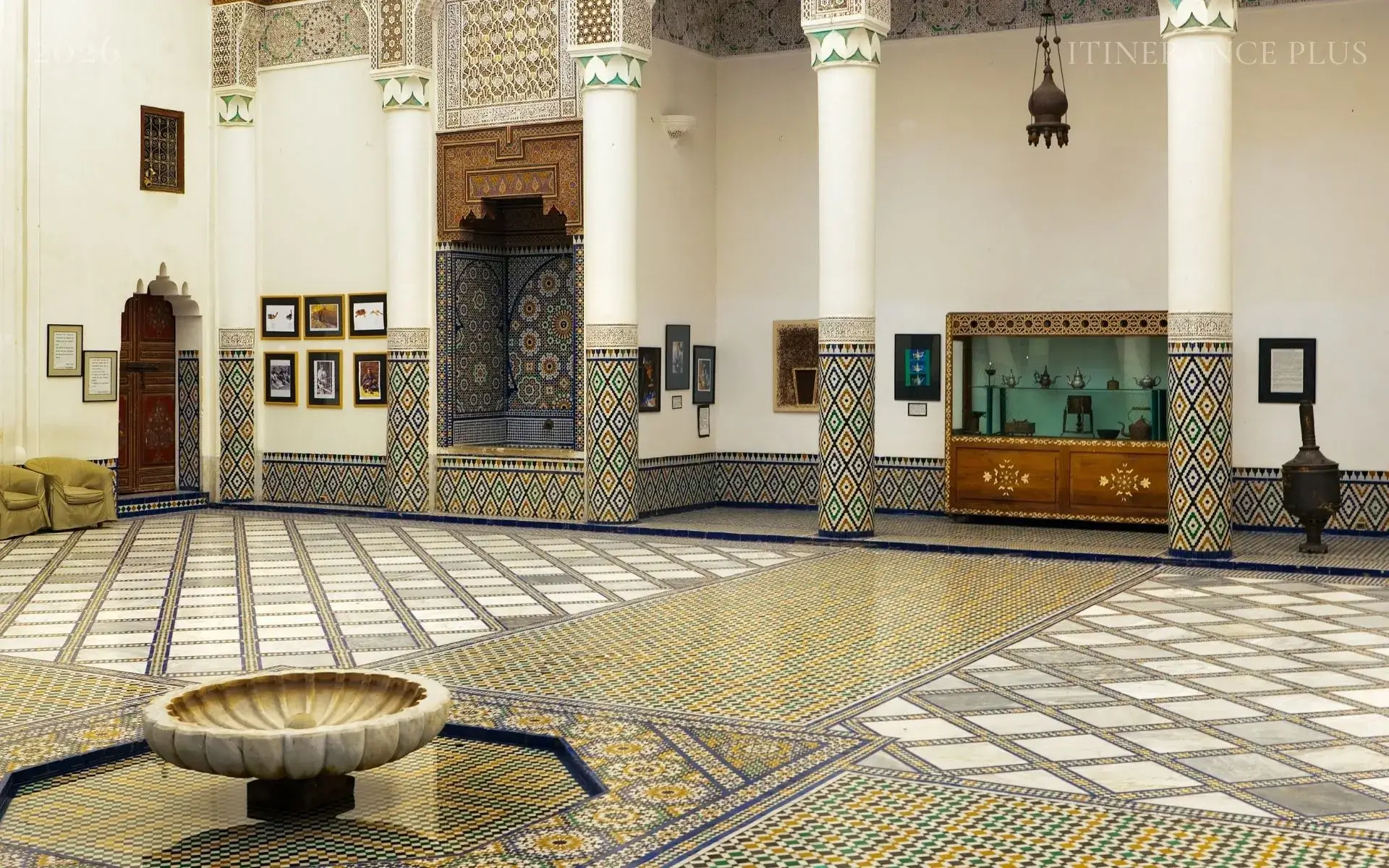
Housed in Jacques Majorelle's former painting studio, the museum is an essential stop for understanding the garden's local roots. The collection assembled by Pierre Bergé and Yves Saint Laurent is exceptionally rich.
From the moment you enter, the scenography immerses you in a dark and hushed atmosphere, where only the objects are illuminated by precise beams of light.
Here, you discover the history of the Amazigh people through their everyday objects, which are veritable works of art.
The jewelry section is the most impressive. Massive necklaces of amber, coral, and sterling silver testify to the importance of adornment in the social and spiritual hierarchy of the tribes.
Each engraved motif, each chosen stone, possesses a protective or symbolic meaning. You are struck by the modernity of these ancestral forms, which fueled the imagination of the French couturier.
The exquisite silverwork of the artisans of southern Morocco is celebrated here in all its glory.
Further on, the textiles reveal another facet of this culture. The handwoven rugs, with their intricate geometric patterns, are maps for understanding the land and the family history of their creators.
The natural fibers, dyed with henna, madder, or indigo, resonate curiously with the colors of the garden outside.
It becomes clear that the blue and yellow used by Majorelle are not foreign inventions, but echoes of pigments used for millennia by the inhabitants of these regions.
A visit to the museum adds an anthropological dimension to the botanical stroll. It reminds us that this garden is not an isolated island, but is deeply connected to the Atlas Mountains, which can be glimpsed in the distance on a clear day.
Upon leaving the building, the contrast between the cool darkness of the exhibition hall and the bright light of the pathways is striking.
This reinforces the sacred aspect of the place, as if you had just passed through a temple dedicated to human and natural beauty.
Insight
A necessary breath
Before plunging back into the raw energy of Marrakech.
The climate of the Red City is a major element of the visit. The light there is exceptionally pure, capable of saturating colors beyond reality. Within this green space, this clarity is filtered, shaped, and staged by the vegetation.
At midday, when the sun is at its zenith, the shadows are short and dense, creating a stark contrast with the illuminated areas. This is when the cobalt blue vibrates with the most energy, almost seeming to emit its own light.
Frequently asked questions
Everything about Majorelle Garden: an immersion in the cobalt blue of Marrakech
Other places to discover
More places to explore nearby
Square
Jemaa el-Fna: diving into the vertigo of Marrakech
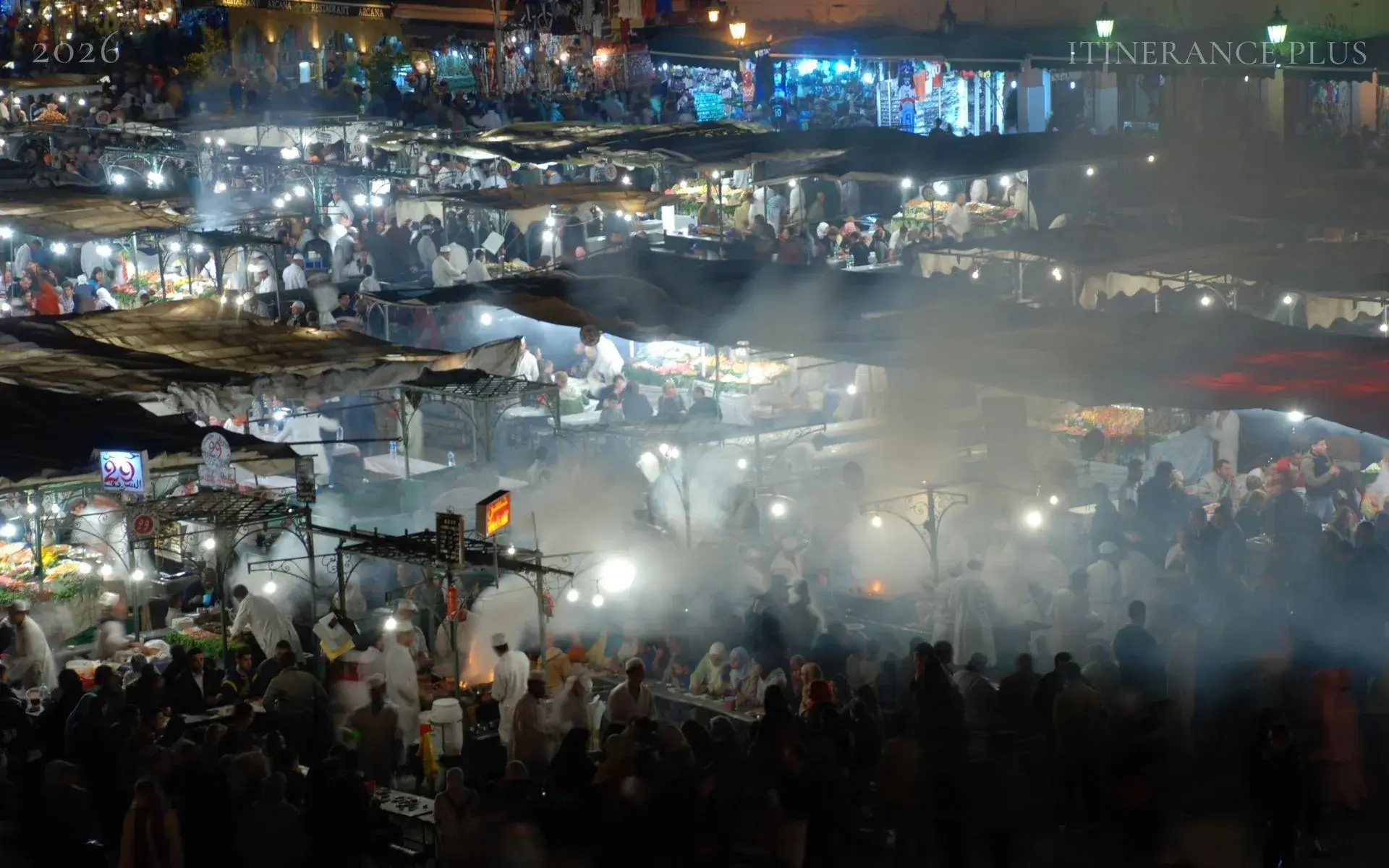
The smell of cedarwood smoke mixes with the scent of freshly pressed oranges, creating a dense, almost tangible atmosphere. In the distance, the first Maghreb call to prayer rises, filtered through the minarets of the...
Monument
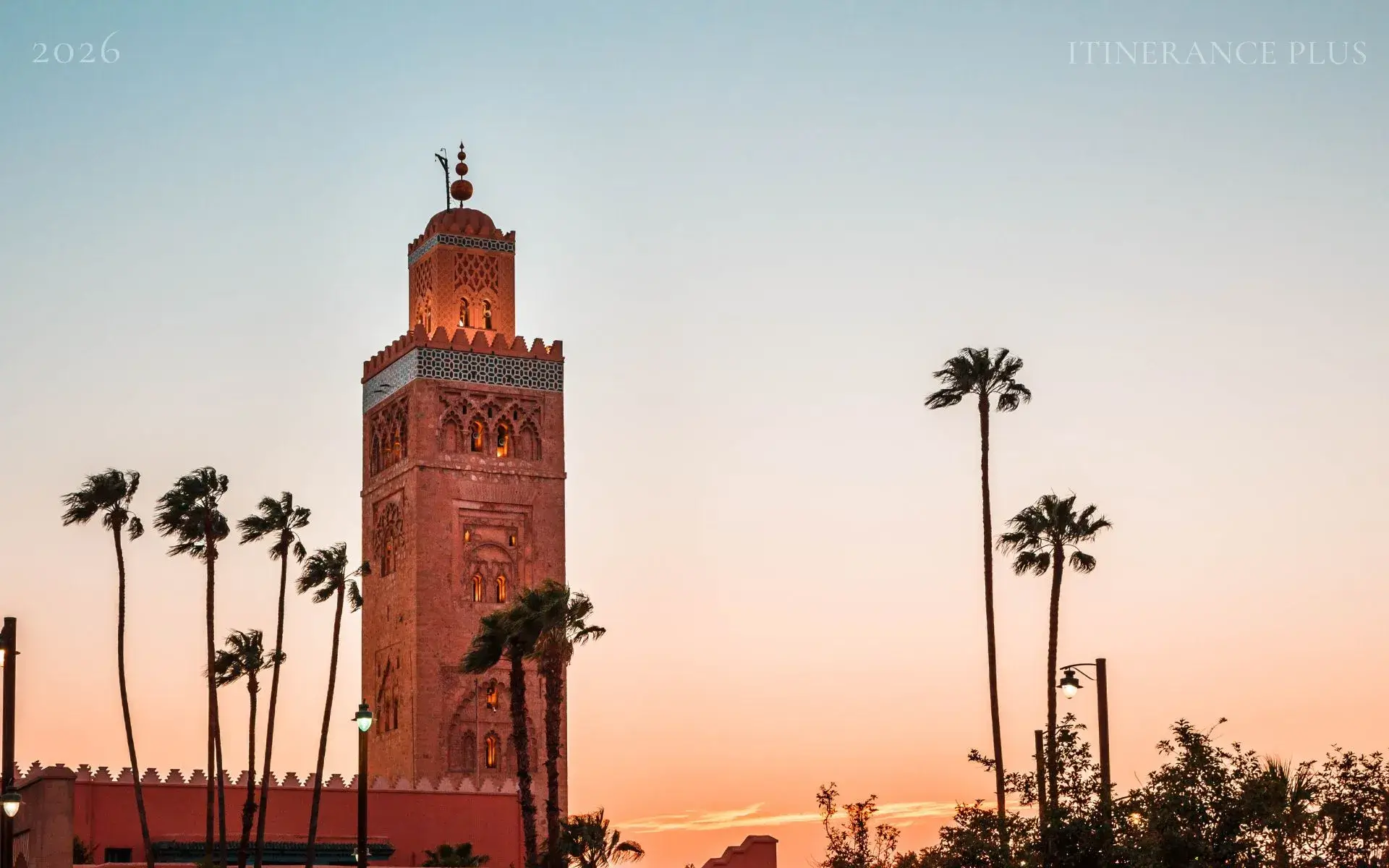
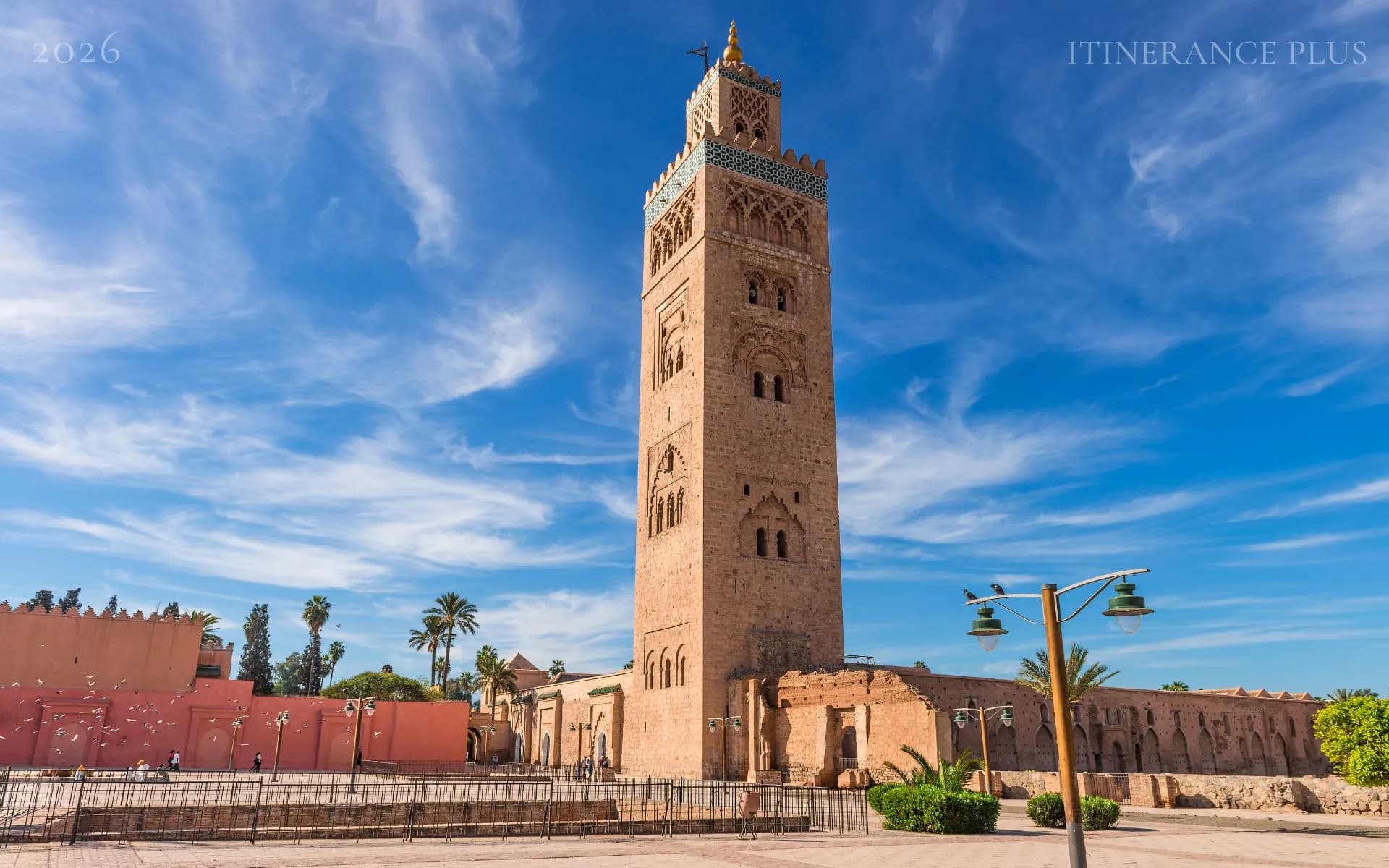
Koutoubia: contemplating the rose-stone soul of Marrakech
The tower rising in front of you is not only a technical achievement, but the living narrative of a dynasty determined to leave its mark on the world. The Almohads, rigorous builders, raised this minaret with a geomet...
Practical guides
Useful guides around this place
These guides help compare rhythms, formats and practical choices before shaping the visit.

Related experiences