
Marrakech: the best base to explore Morocco
Marrakech combines culture, logistics and fast access to the désert, the mountains and the coast. Here is why it remains the strongest premium base for a smooth Morocco journey.
Live reputation
Check our public profiles before booking.
Open source
Why visit
Marrakech combines culture, logistics and fast access to the désert, the mountains and the coast. Here is why it remains the strongest premium base for a smooth Morocco journey.
- Premium city breaks
- First-time Morocco trips
- Couples, families and tailor-made stays
Practical info
Good to know
Ideal base for day trips
Fast access to Agafay, Ourika and Essaouira
Perfect for combining riad stays, expériences and private transfers
Quick read
Before you go
Marrakech combines culture, logistics and fast access to the désert, the mountains and the coast. Here is why it remains the strongest premium base for a smooth Morocco journey.
Useful cues
Ideal base for day trips
Fast access to Agafay, Ourika and Essaouira
Perfect for combining riad stays, expériences and private transfers
Neighborhoods
Marrakech: entering the heartbeat of the medina
The city is understood first through the senses, long before maps and plans.
The air thickens as the sun begins to fall, taking on that apricot tone that feels native to the terracotta ramparts. The smell of grilled cumin escapes from a stall while the rhythmic hammering of metalworkers bounces through narrow lanes.
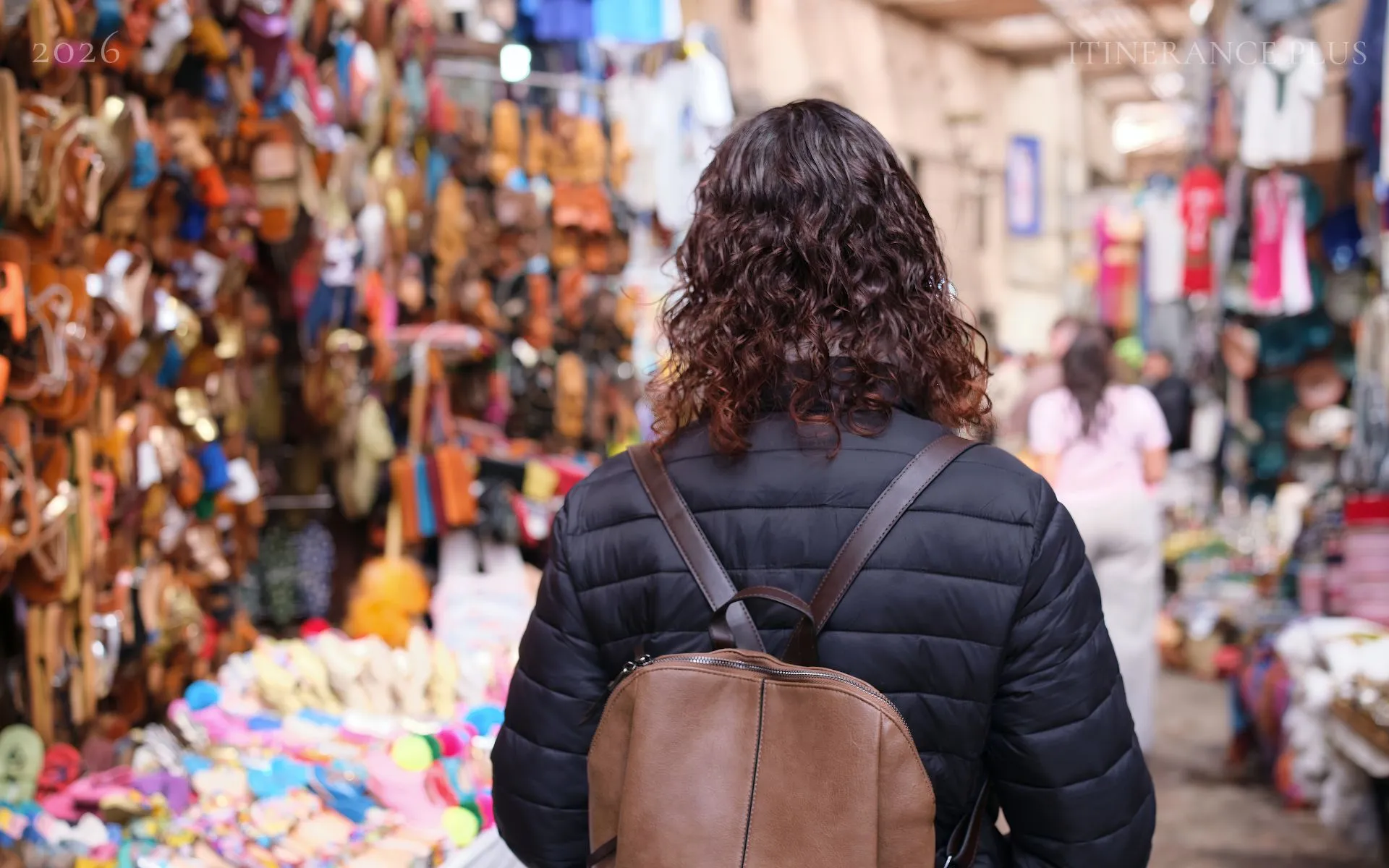
You walk with no precise aim, brushing fresh tadelakt with your fingertips and passing hanging silks that soften the harshness of the stone. In Marrakech, light is never neutral.
It filters through souk roofs and sketches geometric lines on the dusty ground.
Then the call to prayer rises and time seems to pause. Jemaa el-Fna begins its nightly transformation as grill smoke climbs toward a sky turning cobalt blue. You do not come here simply to tick landmarks off a list.
You come to accept disorientation and to let the city reassemble your rhythm. Marrakech asks for surrender, because its most refined beauty often hides behind rough wooden doors in the oldest quarters.
Light
Why does the light over Jemaa el-Fna feel so magnetic?
The square becomes truly itself in the passage from late afternoon to night.
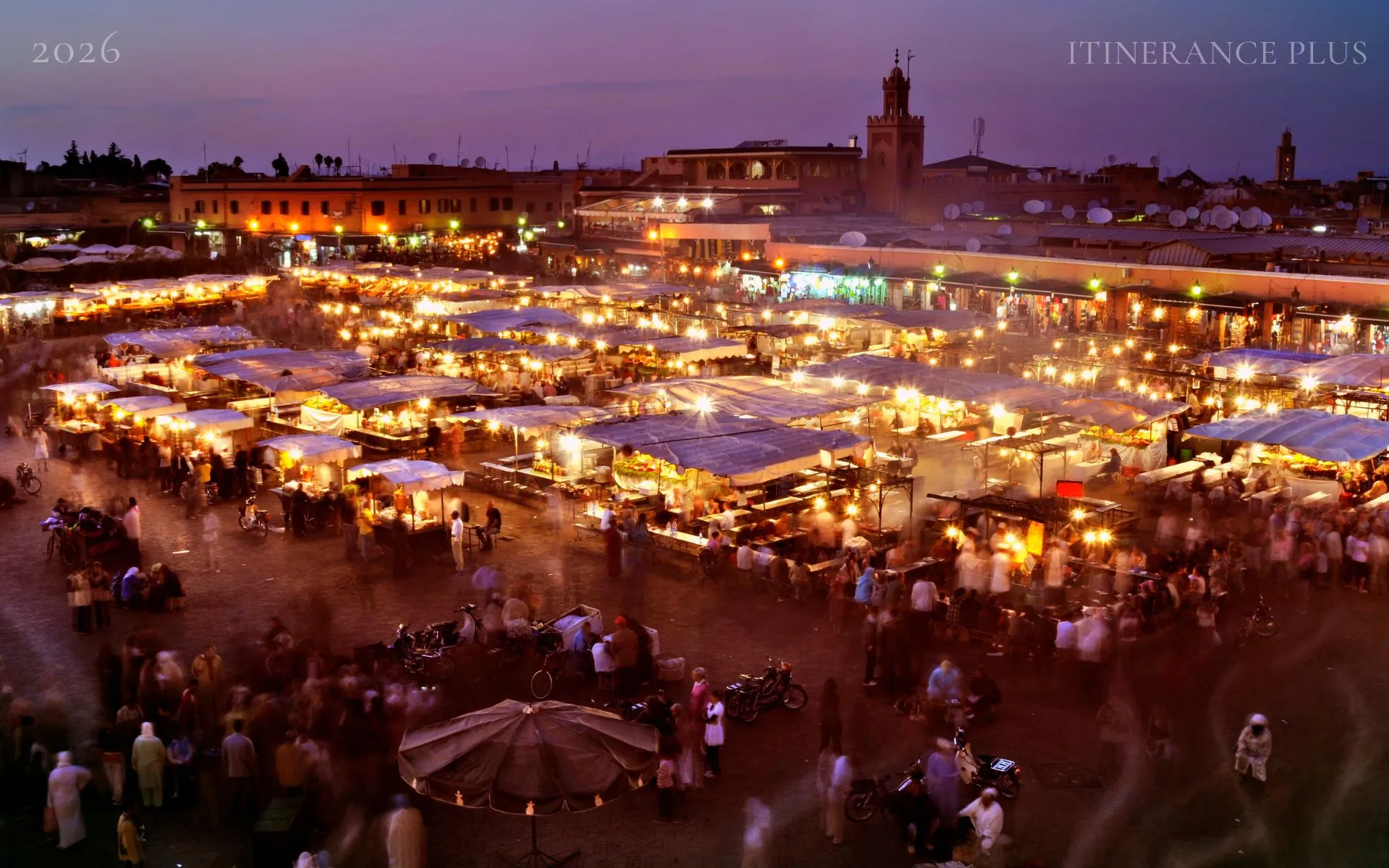
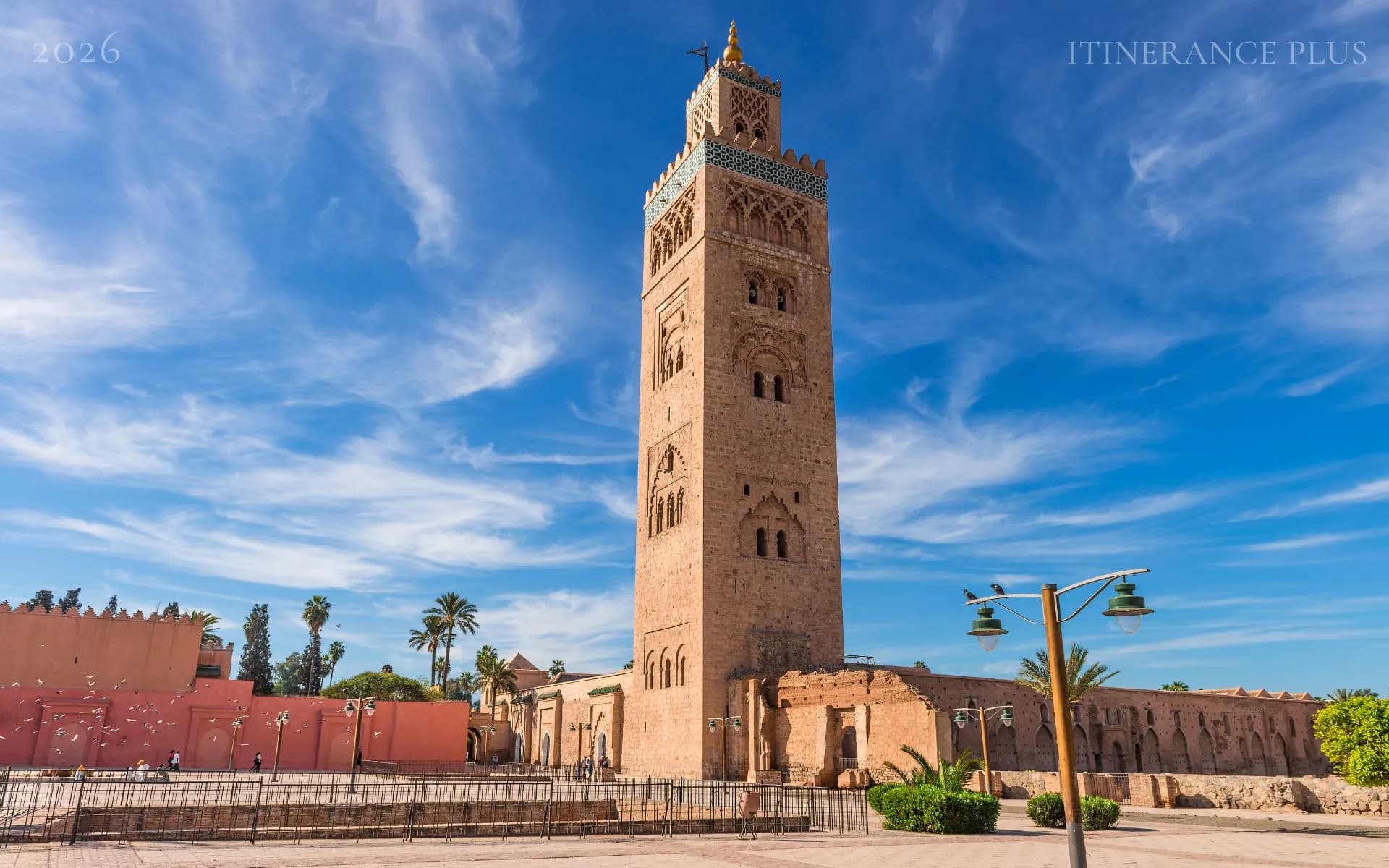
Watching dusk settle over Jemaa el-Fna is one of the great rituals of Marrakech. As the shadow of the Koutoubia stretches across the esplanade, the whole energy of the square changes.
What was an open and almost empty surface under the heat becomes an open-air theatre filled with sound, smoke and anticipation.
From a terrace above, you see temporary restaurants appear in waves, lights switch on one after another and human movement organize itself into a choreography that feels both improvised and ancient.
The smell of very sweet mint tea mixes with stronger spices coming from steaming pots. Inside that turbulence there is a curious form of calm: the calm of being one anonymous witness inside a tradition much bigger than yourself.
Food is part of the ritual. Soup, skewers, snails and bread served in dense proximity are not secondary details but extensions of the place itself.
And beyond the food, storytellers, musicians and water sellers keep the square linked to an oral, popular and living culture that still resists flattening.
Destination guide
How do you move through the souks without losing yourself completely?
The souks reward observation, patience and a slower way of reading the city.
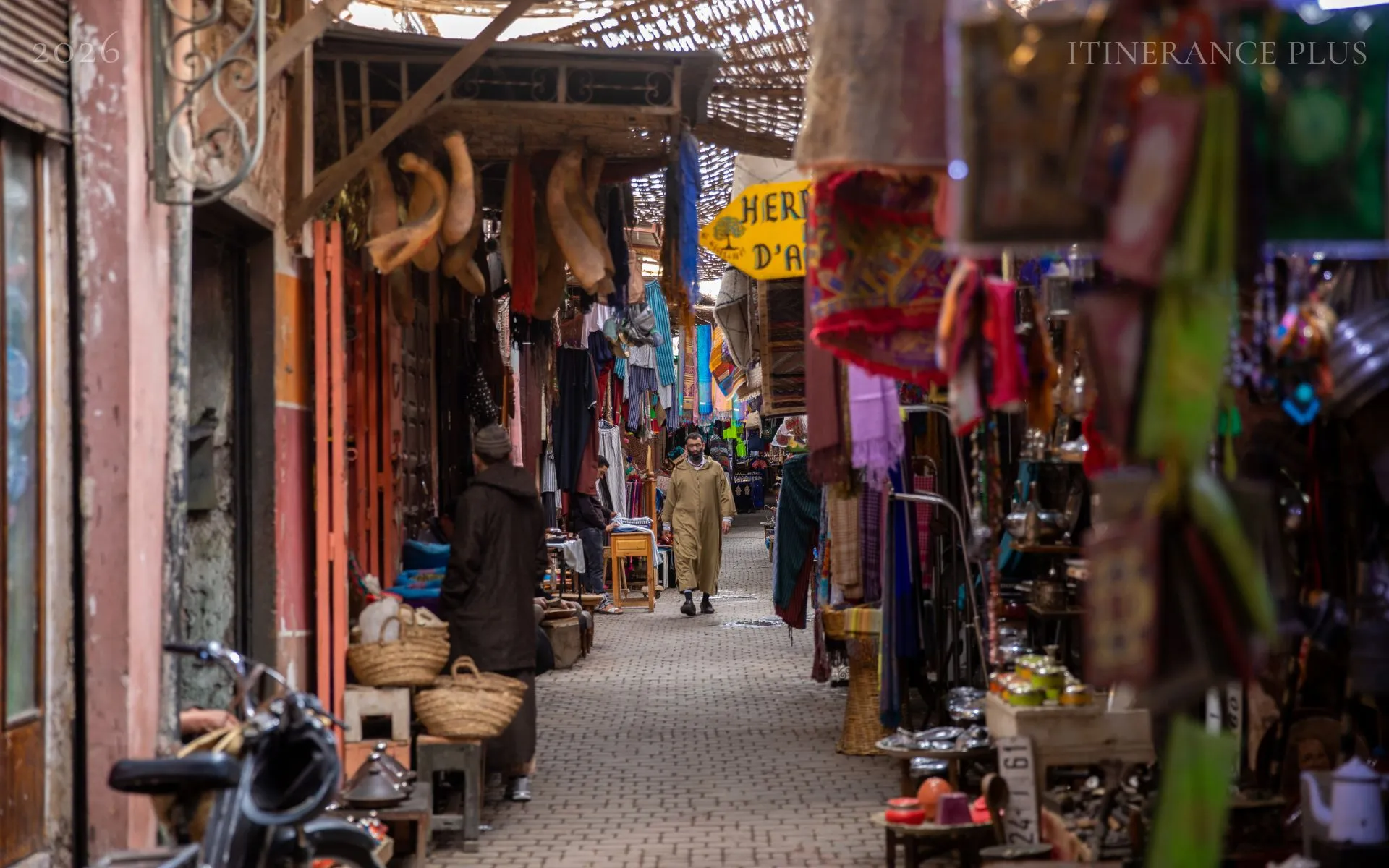
Entering the souks means entering a living network where each section has its own cadence, smell and material language. Near Semmarine you find fabrics and sweets, but the real magic often begins deeper inside, where tourism thins out and craft takes over.
Dyed wool, cedar wood, leather and hammered metal all produce their own visual and sensory territories.
The best way to orient yourself is not only by memory of turns, but by learning to read architectural clues and workshop atmospheres. Reed roofs soften the sun and create shafts of light that help structure your perception.
In places such as the cedar workshops, every object speaks of patience and transmission.
Negotiation is not merely a price discussion here; it is a social exchange. Sitting down, accepting tea and showing respect for the time that went into an object changes the quality of the encounter.
That slower rhythm is part of what makes the souks memorable rather than exhausting.
Destination guide
Where does Marrakech hide its deepest calm?
Palaces and gardens reveal the city’s quieter intelligence behind the outer density.
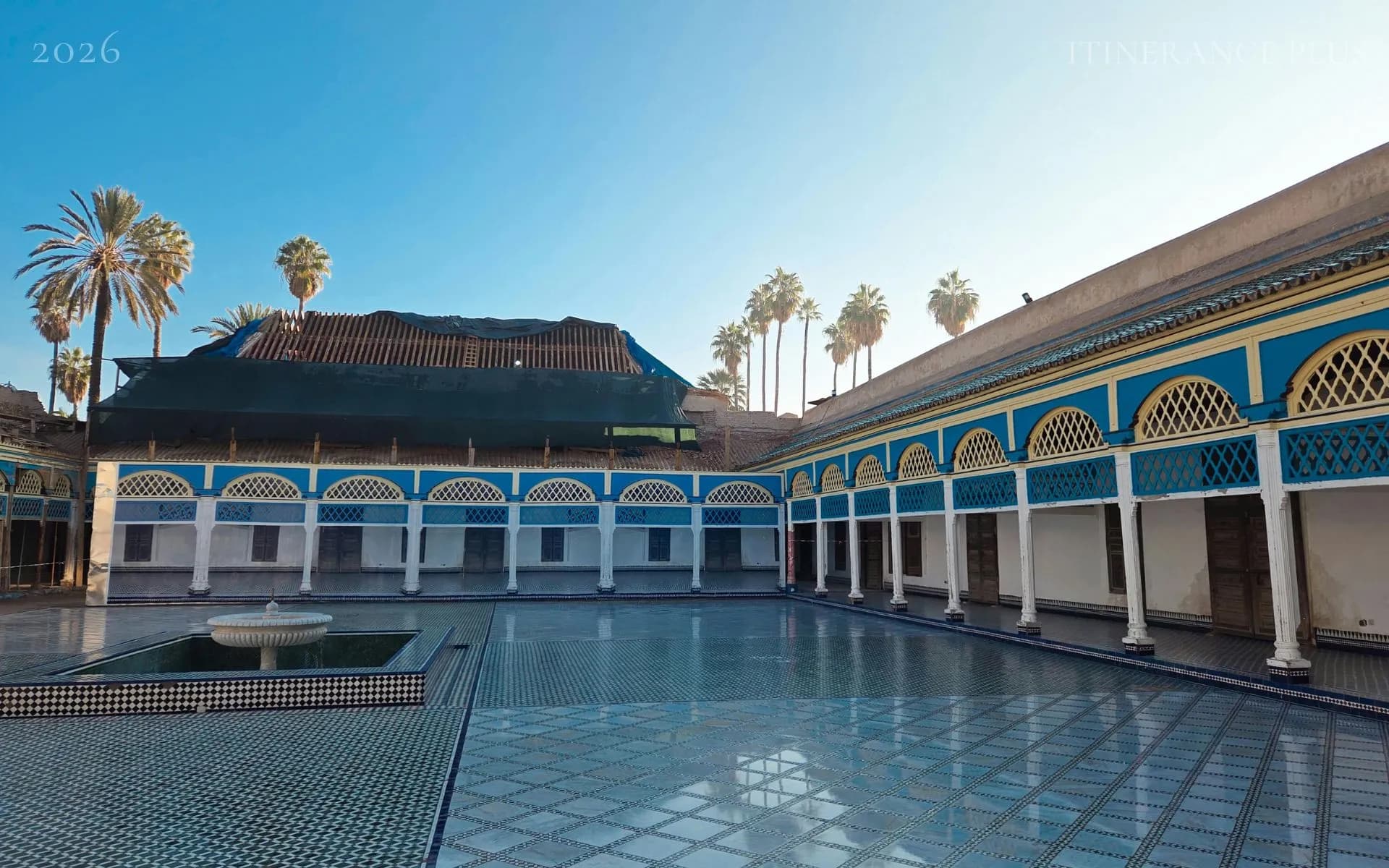
Behind blank medina walls, Marrakech keeps spaces of astonishing calm. Bahia Palace is the clearest example, with decorated courtyards, cool marble, orange trees and a scale of composition that immediately slows the body down.
After the tension of the narrow streets, that silence feels almost physical.
The Saadian Tombs offer another register: one of solemnity, history and refined detail. Light moves gently across carved surfaces and columns, turning the site into an invitation to contemplation rather than quick consumption.
It is one of the places where Marrakech’s imperial depth becomes tangible.
Majorelle, on the other hand, speaks through color and controlled contrast. Even if it is more visited, it remains a strong visual argument for how Marrakech has inspired artists and designers. The city is not only red and mineral;
it also knows how to stage green, blue and shade with extraordinary precision.
Destination guide
Where do you find the most honest taste of Marrakech?
The city reveals itself as much through its tables and stalls as through its monuments.
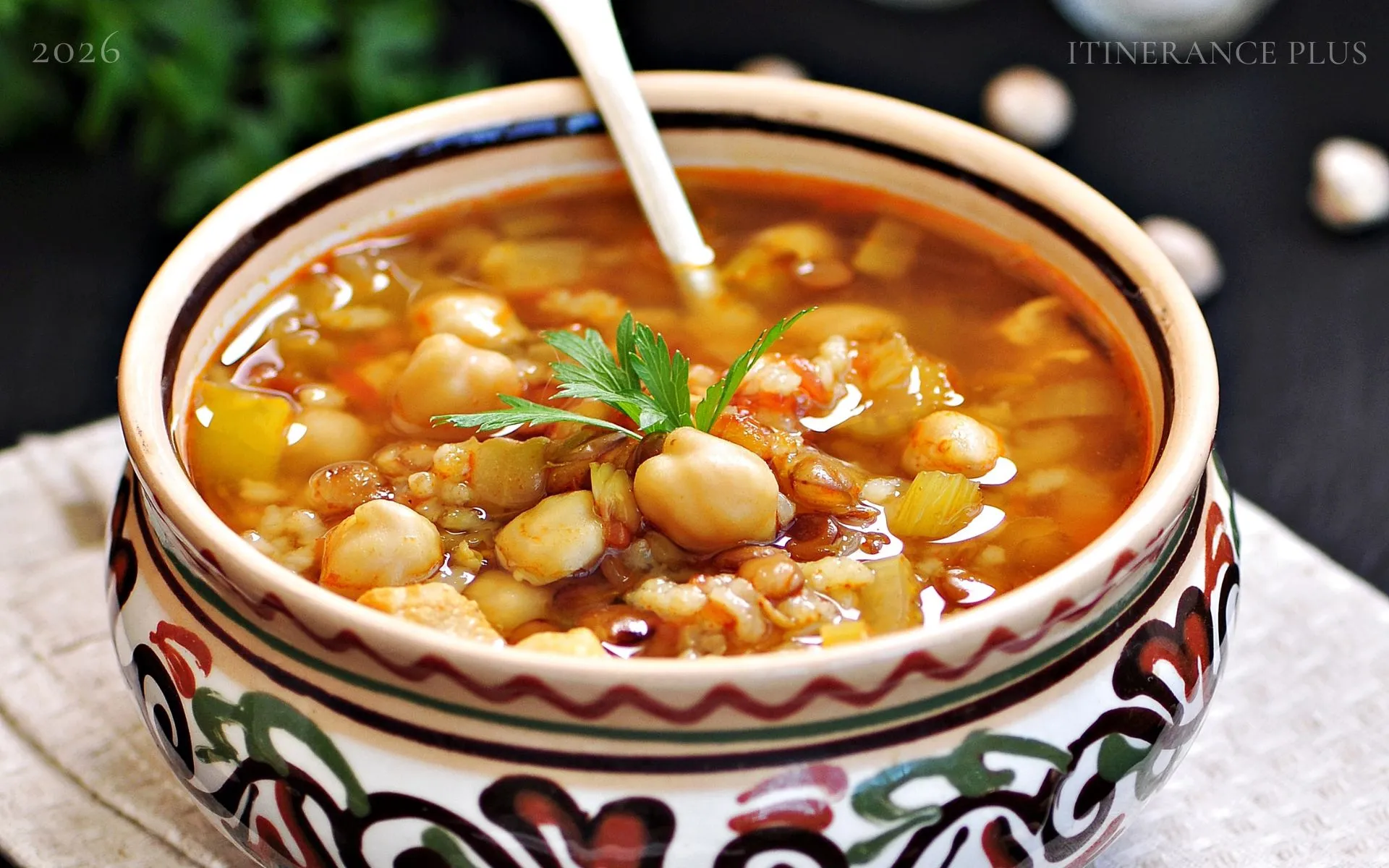
Food in Marrakech is never only functional. Breakfast pastries, bowls of harira, slow tagines and mint tea all belong to the city’s daily choreography.
The strongest meals are often found not in the most visible places but in modest upstairs rooms and local counters where smoke, time and repetition have done their work.
Tagine teaches patience. Tanjia teaches something even deeper about the city’s craft memory and masculine social rituals. And pastries with tea show another side of Marrakech: one of sweetness, pause and carefully repeated gesture.
Destination guide
Why is the hammam more than a wellness stop?
It is one of the most direct ways to understand the social rhythm of the city.
A neighborhood hammam is not simply a spa. It is a social institution, a place of purification, fatigue release and shared routine. Steam, soap, the kessa glove and clay all belong to a sequence that leaves the body lighter and the mind quieter.
Even in more refined settings, the logic remains the same: water, time and care are treated as essential urban elements. After long walks through the medina, the hammam becomes less a luxury than a necessary reset.
Destination guide
What opens up once you leave the city walls?
Marrakech becomes even stronger when lived as a base toward Atlas valleys, Agafay and Essaouira.
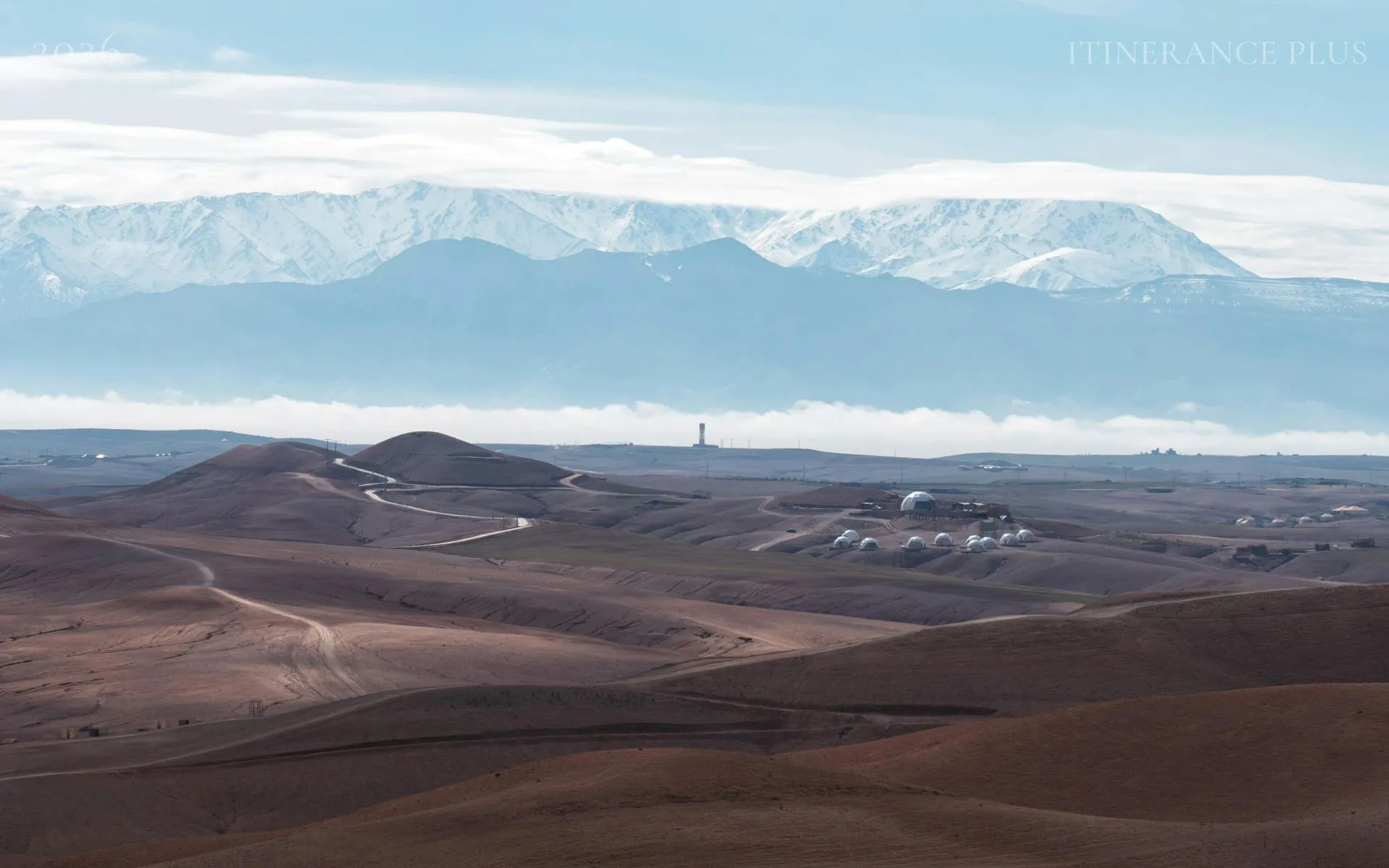
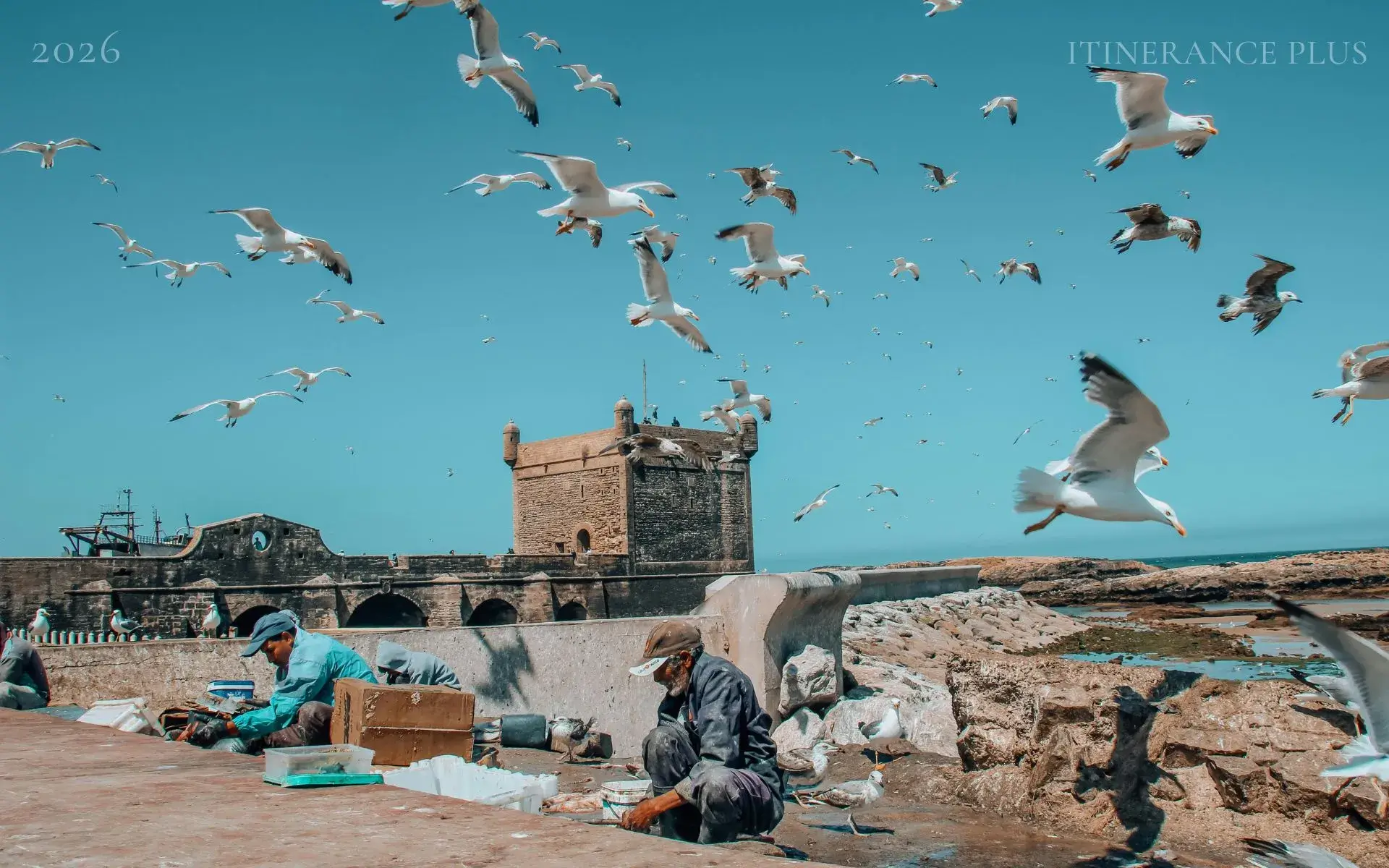
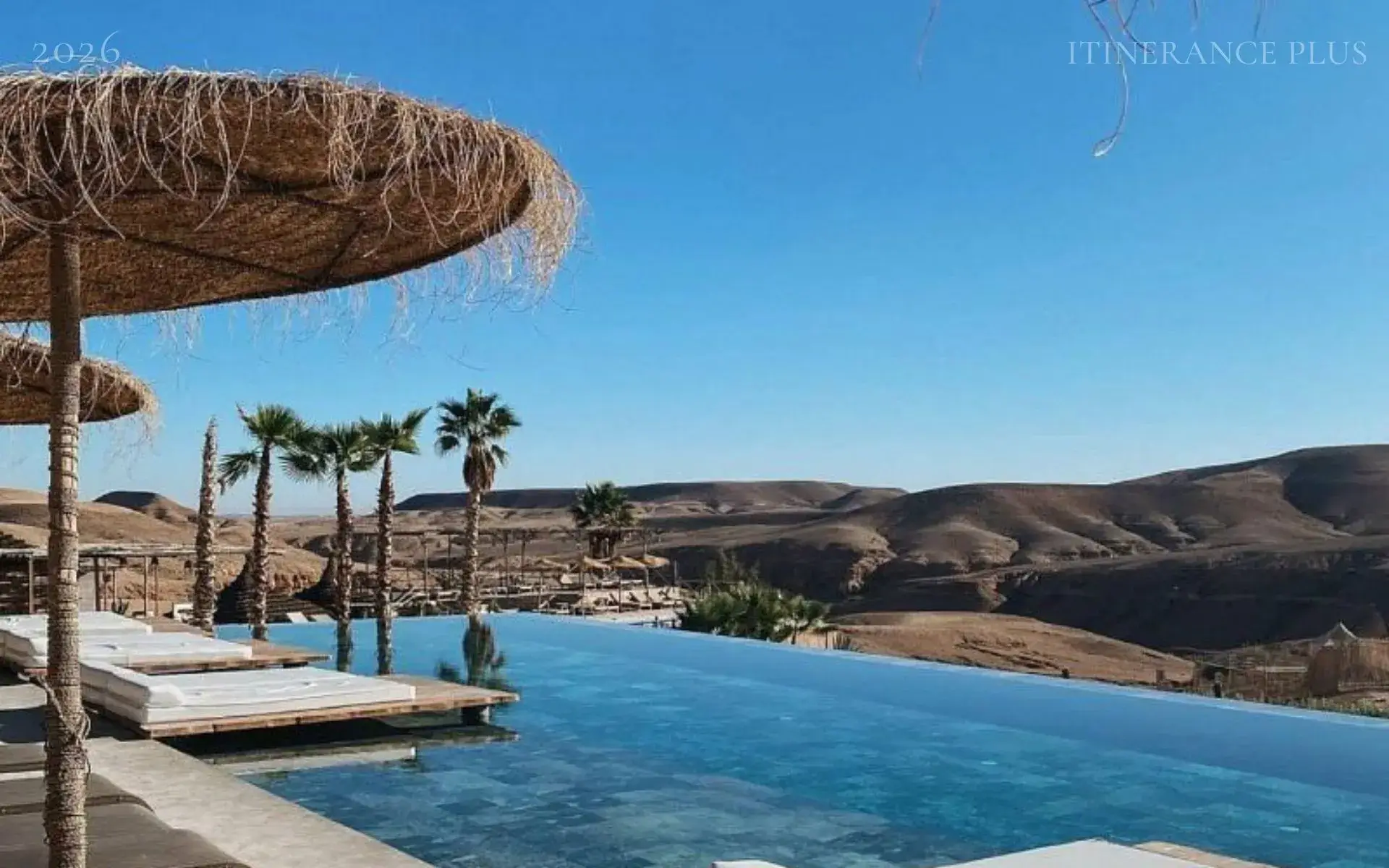
One of Marrakech’s greatest strengths is what surrounds it. Within a short drive you can move from dense urban texture to the coolness of the Atlas foothills, the mineral emptiness of Agafay or the Atlantic air of Essaouira.
Very few cities offer that range without breaking the comfort of the stay.
That is why Marrakech works so well as a premium base. It allows travelers to combine medina, food, hammam, architecture and landscapes inside one coherent journey. The city is not only a destination in itself;
it is also a platform that unlocks several Moroccos at once.
Useful cue
Practical frame before booking Marrakech
A few decisions change the whole quality of the trip.
Keep these four points in mind
Best period: March to May and September to November for more balanced temperatures.
Comfortable daily budget: around 600 to 800 dirhams per person depending on your level of dining and transport.
Arrival: Marrakech-Menara is well connected and local taxis remain practical for the city.
Ideal stay length: four to five days for the medina plus at least one excursion beyond the city.
How to choose
Conclusion: why Marrakech remains such an exceptional base
The city matters not only for its landmarks, but for the density of experience it can hold within one coherent stay.
Leaving the ramparts while the last light fades behind the High Atlas always feels unfinished. You carry the grain of silk, the taste of fresh mint and that singular light that turns every earthen wall into something almost precious. Marrakech rarely leaves a traveler completely. That is its strength: it makes the trip feel less like consumption and more like an intensified way of being present to the world.
Frequently asked questions
Everything about Marrakech: the best base to explore Morocco
Three days minimum for the medina, gardens and one excursion. Five days allow you to combine the city with Agafay and a trip towards the Atlas or Essaouira.
Experiences to prioritize
The strongest options for this destination
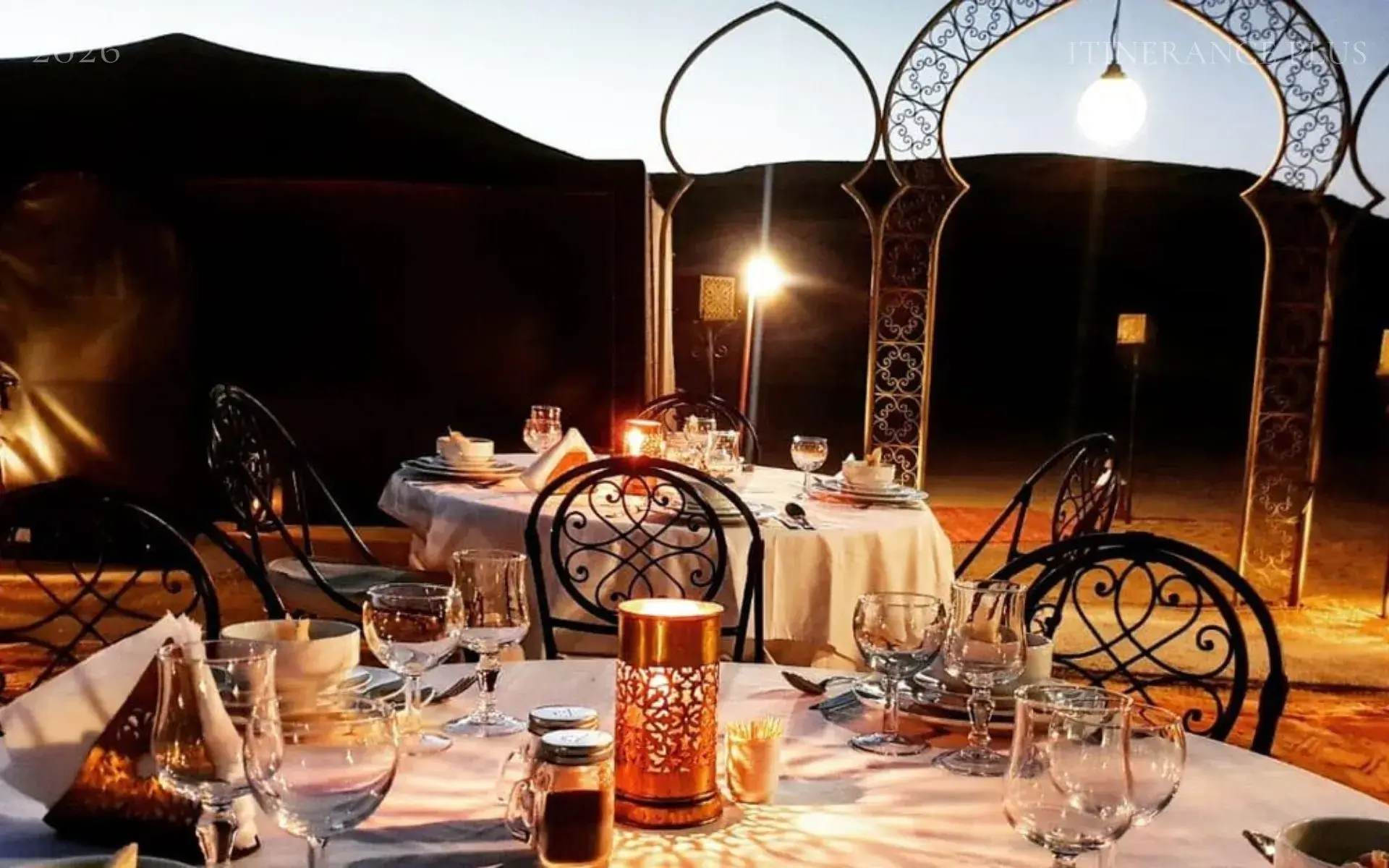
Diner Spectacle Agafay : Soirée Magique sous les Étoiles depuis Marrakech
Vivez une soirée magique sous les étoiles avec diner spectacle dans le désert d'Agafay
Destination guide
Go further from this destination
Once the destination is clear, the next useful step is to choose the pace, comfort level and experiences that truly fit the trip you want.
Destination guides
Other destinations to explore
These complementary destinations help compare different travel atmospheres and refine the route.
Practical guides
Guides to read before booking
These guides help compare, plan and choose the right pace based on available time and travel preferences.

Practical guides
Deepen your preparation
More guides to refine practical details and choose the best experience based on travel profile.