Back to Marrakech
Ruins
El Badi Palace: the splendor of ruins in the heart of Marrakesh
Before visiting
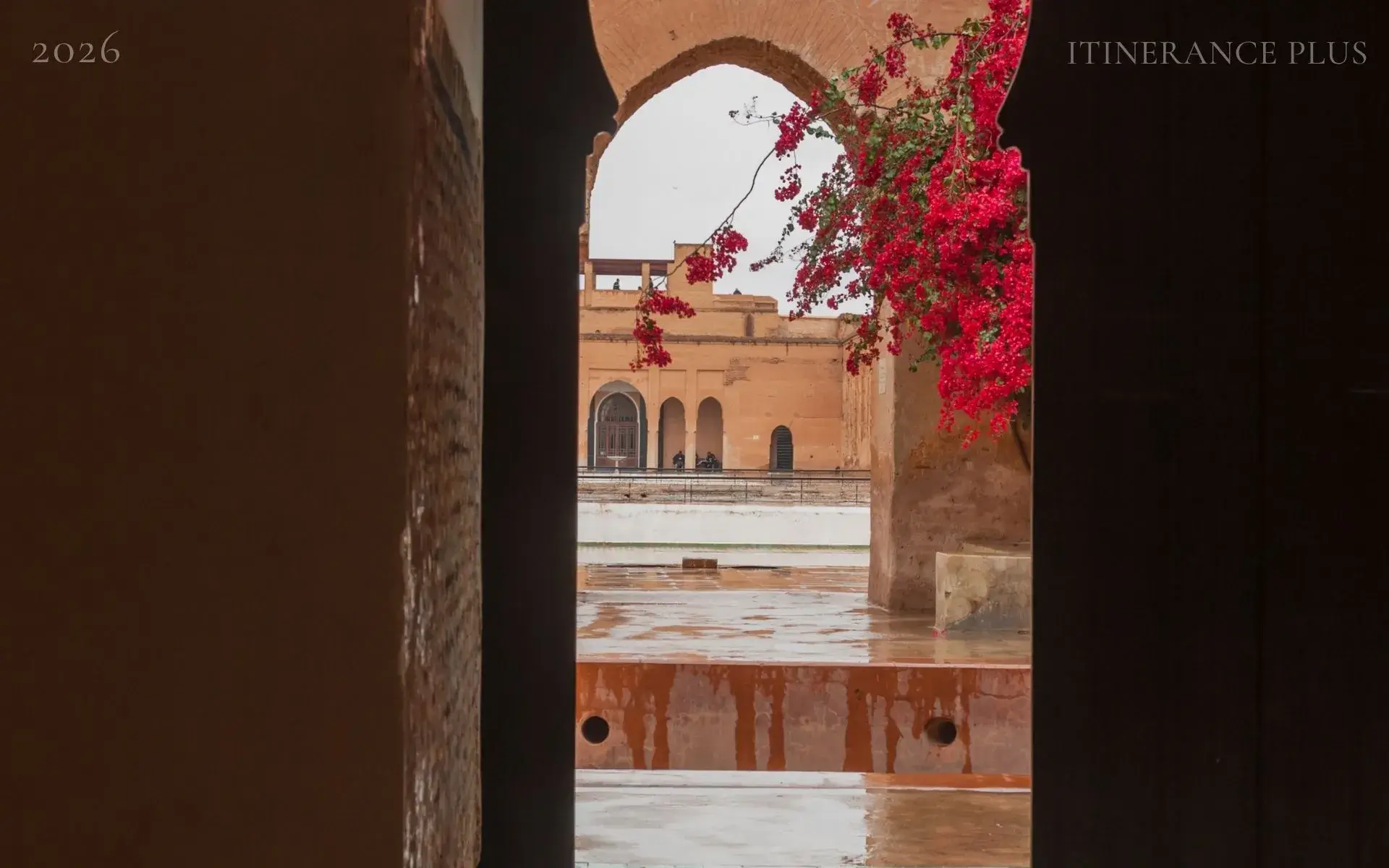
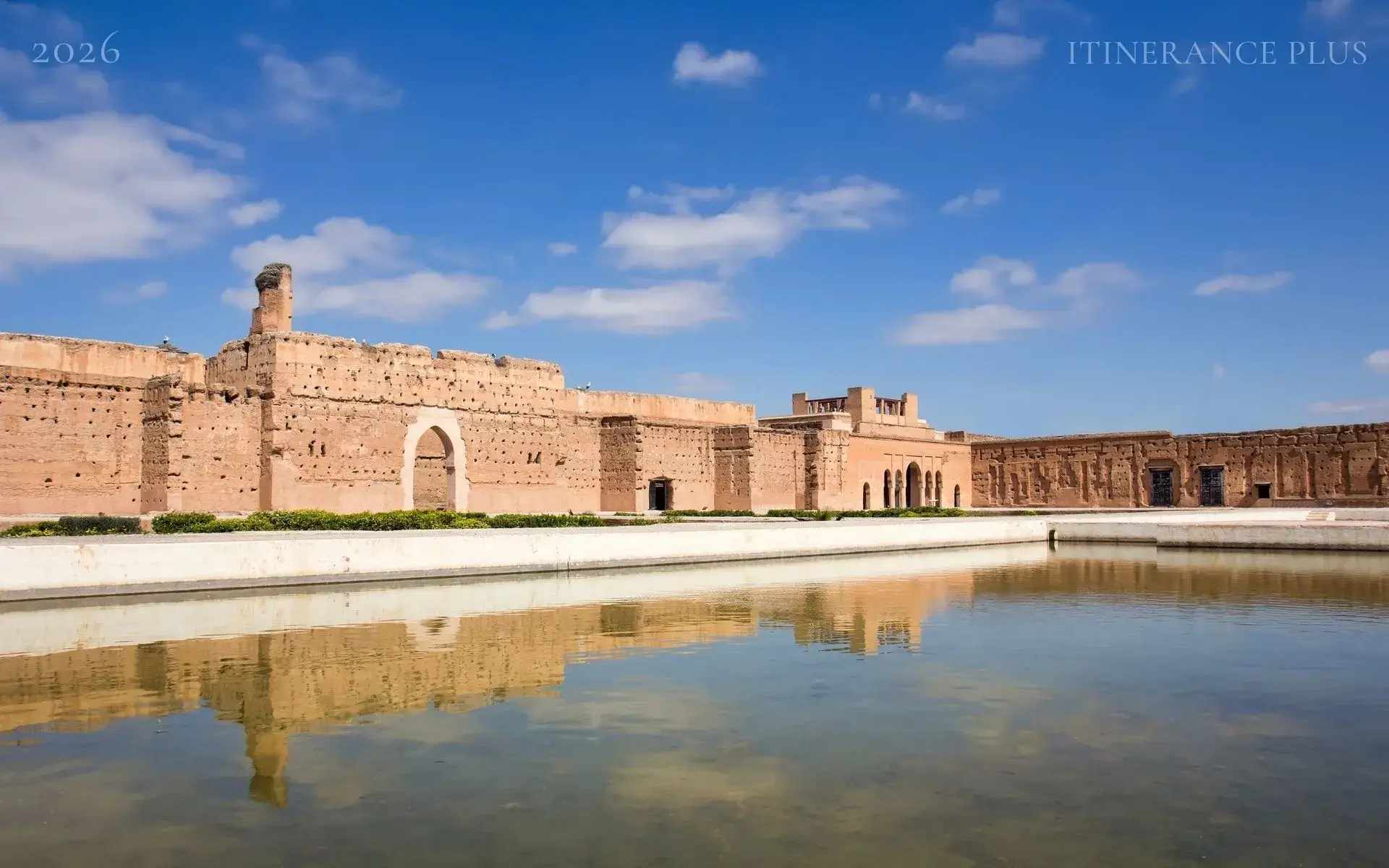
Key takeThe crunch of gravel under your footsteps echoes strangely in the vastness of this red earth courtyard, where the silence is broken only by the dry clattering of storks' beaks from their nests atop the walls.
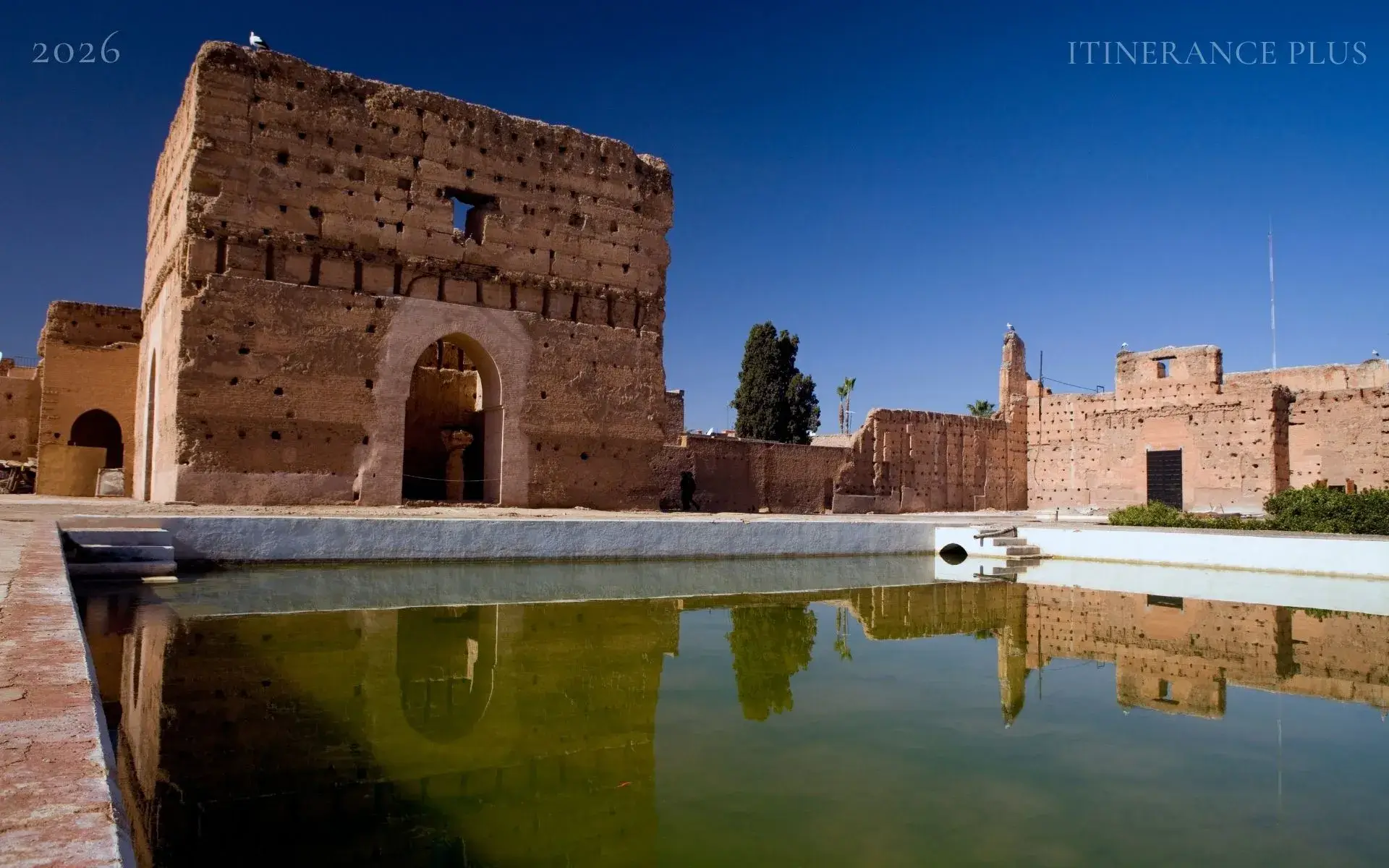
Looking up, you see these black and white silhouettes, motionless sentinels overlooking a landscape of bricks stripped of their former splendor. The air, heavy with a dry heat and a slight scent of terracotta, seems to vibrate over the vast, now-empty basins.
The El Badi Palace does not welcome you with gilding or silks, but with the raw strength of its rammed-earth skeleton. Yet, in this spectacular bareness, you still sense the echo of the Saadian dynasty's festivals.
The name of the El Badi Palace , "the Incomparable," whispers a promise of grandeur that, despite centuries of looting, infuses every corner of this open-air labyrinth.
Here, excess is no longer measured by the richness of ornaments, but by the infinite space that opens between the massive walls, inviting a melancholy drift under the implacable Marrakesh sun.
Location
Insight
First impressions
The crunch of gravel under your footsteps echoes strangely in the vastness of this red earth courtyard, where the silence is broken only by the dry clattering of storks' beaks from their nests atop the walls.
Looking up, you see these black and white silhouettes, motionless sentinels overlooking a landscape of bricks stripped of their former splendor. The air, heavy with a dry heat and a slight scent of terracotta, seems to vibrate over the vast, now-empty basins.
The El Badi Palace does not welcome you with gilding or silks, but with the raw strength of its rammed-earth skeleton. Yet, in this spectacular bareness, you still sense the echo of the Saadian dynasty's festivals.
The name of the El Badi Palace , "the Incomparable," whispers a promise of grandeur that, despite centuries of looting, infuses every corner of this open-air labyrinth.
Here, excess is no longer measured by the richness of ornaments, but by the infinite space that opens between the massive walls, inviting a melancholy drift under the implacable Marrakesh sun.
Insight
Why was this clay skeleton once the wonder of the world?
To understand the aura surrounding this place, one must go back to the end of the 16th century, when Sultan Ahmed el-Mansour, nicknamed "the Golden One," decided to build a residence worthy of his victory over the Portuguese.
At the time, the El Badi Palace was an unprecedented display of luxury.
Chronicles tell that the walls were covered with gold from Sudan, that the capitals of the columns were made of Carrara marble exchanged for its weight in sugar, and that zellige mosaics with patterns of mathematical complexity covered every square centimeter of the floor.
It is said that even the Sultan, contemplating his work, was warned by his jester that this palace would make a magnificent ruin.
This prophecy came true a century later, when the Alaouite dynasty, wanting to erase the trace of its predecessors, ordered the systematic dismantling of the building to construct the imperial city of Meknès.
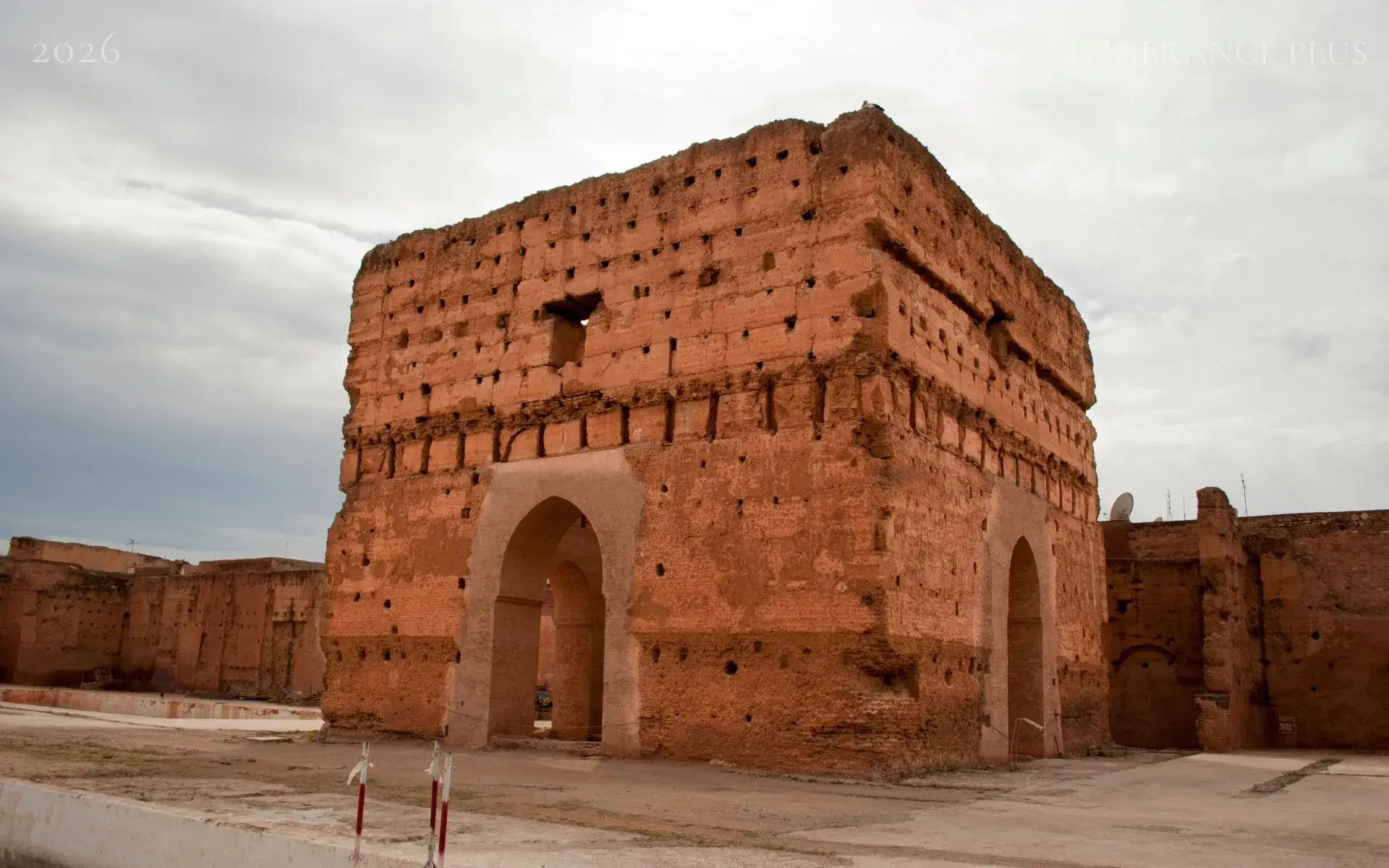
What you see today is the result of a meticulous stripping that lasted more than ten years. The columns disappeared, the stuccoes were torn down, and the gold was melted. Yet, the very structure of the building resisted.
These rammed-earth walls, several meters thick, retain a telluric power.
Walking through the underground galleries that once served as kitchens and prisons, you feel the coolness of the earth and the solidity of an architecture designed for eternity, even when stripped of its finery.
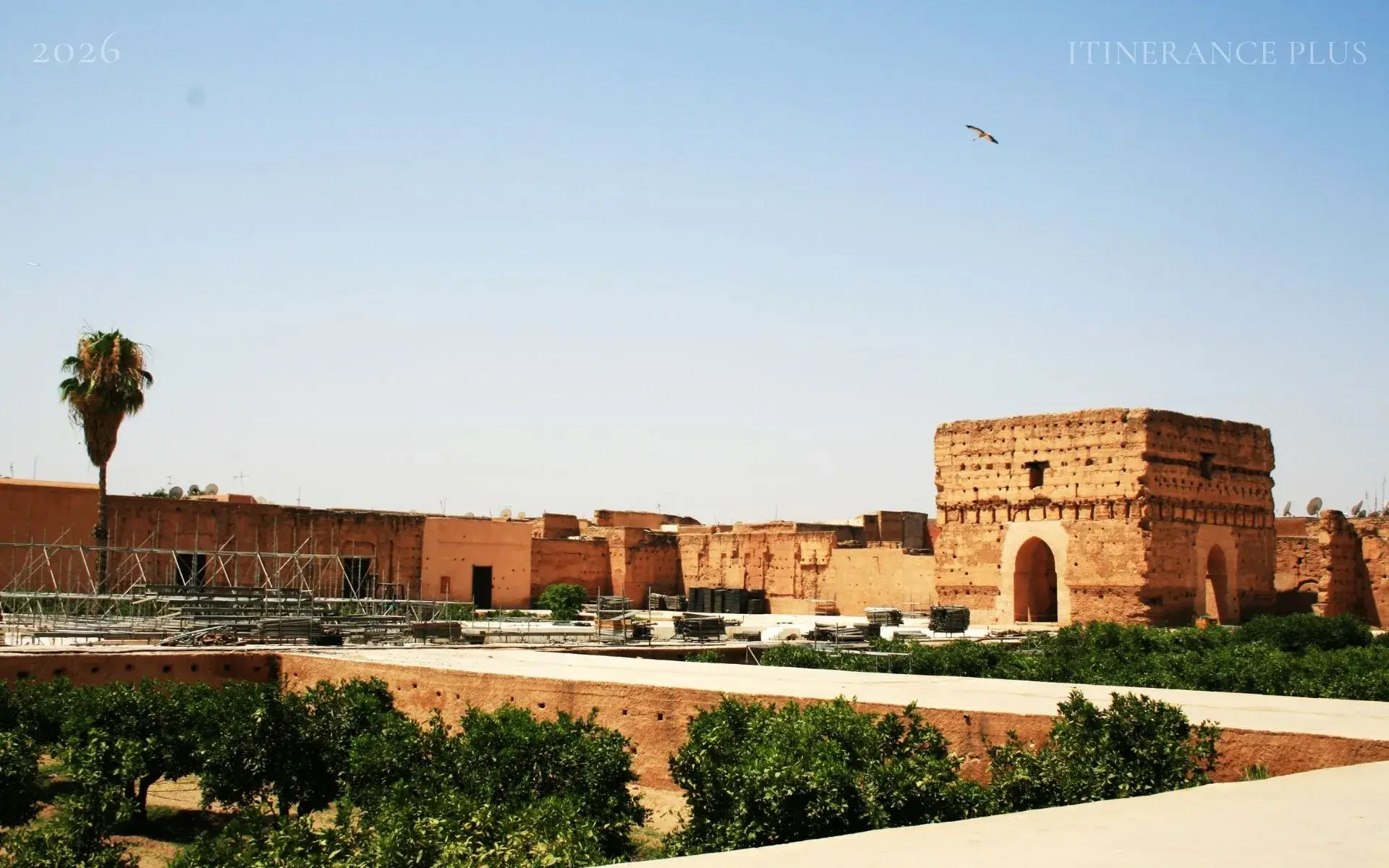
The visit is an exercise in constant imagination. Before every gaping hole in the wall, before every dried-up basin where bitter orange trees now grow, you try to mentally reconstruct the crystal pavilions and hanging gardens.
It is this duality between absence and presence that makes the experience so singular. The palace does not cheat. It exposes its fragility and fallen pride with a dignity that commands respect.
One does not come here for the perfect photo of a fairytale palace, but to touch the skin of time and understand that even the most flamboyant empires eventually return to dust.
Insight
How did the storks become the true masters of the site?
The most fascinating spectacle of the El Badi Palace is not at ground level, but on the ridgeline of the ramparts. Dozens of stork nests, tangled masses of branches, crown the ocher walls.
These migratory birds, respected and protected in Morocco, have found an ideal sanctuary here. Their presence brings organic and sonic life to this mineral setting.
Their clattering, like distant applause, punctuates your visit with a strange, almost ceremonial rhythm. Observing their incessant ballets in the azure sky, you realize that the palace has found new inhabitants, more permanent than sultans.
These birds seem indifferent to the flow of travelers crossing the esplanades. They go about their business, feeding their young or smoothing their feathers with sovereign elegance.
Their vantage point from the heights encompasses not only the ruins but also the entire Marrakesh Medina, from the flat roofs of the Mellah district to the Koutoubia minaret.
This cohabitation between dead stone and living feathers creates an atmosphere of deep peace. There is something reassuring about seeing nature reclaim its rights over a work of human power, transforming a symbol of political domination into a giant nursery.
For the photographer, the silhouette of a stork against the sky above a rammed-earth arch is the site's emblematic image. It embodies perseverance. In winter, the number of birds decreases, but the nests remain, like promises of return.
In spring, activity redoubles, and the square becomes the theater of a joyful agitation that contrasts with the solemnity of the site.
Sitting on one of the stone benches facing the large basins, you can spend long minutes observing these masters of the sky, understanding that in these ruins, life has simply changed form to become freer and more aerial.
Insight
What secret does the famous Koutoubia minbar hide?
In one of the restored rooms of the palace, sheltered from direct light, lies a treasure of incredible finesse: the minbar of the Koutoubia Mosque. This mobile prayer throne, made in 12th-century Cordoba, is a global masterpiece of marquetry.
Approaching the protective glass, you discover goldsmith-like work on cedar wood, inlaid with ebony and bone, forming geometric interlacings of millimeter precision.
Every square millimeter of this sacred furniture bears witness to a patience and craftsmanship that seem to belong to another world today.
This minbar traveled and was used by generations of faithful before being retired from the mosque for conservation.
Its presence within the ruins of the El Badi Palace creates a temporal bridge to the time when Marrakesh was the center of an empire stretching to Spain.
The carved patterns reflect themes of stylized nature and divine infinity, concepts that echo the structure of the surrounding palace. It is a necessary moment of reflection in the middle of the visit, a parenthesis of delicacy in an ocean of beaten earth.
Observing this minbar is also about understanding the importance of calligraphy and geometry in Islamic art. The inscriptions, almost invisible at first glance, run along the uprights, carrying messages of faith and wisdom.
The conservation of such a piece, made of wood and organic materials, is a miracle after eight centuries.
Emerging from the dimness of the exhibition room back into the blinding brilliance of the central courtyard, the finesse of the carved wood remains engraved in your mind, offering a striking contrast to the roughness of the rammed-earth walls surrounding you.
Gardens
Can one still feel the freshness of the lost gardens?
The palace's layout is centered around four immense gardens dug below the main esplanade. Today, one mainly finds orange trees and some wild grass, but the scent rising from these plant pits during spring mornings remains one of the site's subtlest pleasures.
Originally, these gardens were designed to be contemplated from elevated pavilions. Water circulated abundantly, feeding jets and cooling the air through evaporation.
It is one of the few places in Marrakesh where one can still feel the monumental scale of Saadian princely gardens.
Descending the few steps to the level of the plantations, you change perspective. The palace walls suddenly seem much higher, more imposing. The temperature drops a few degrees, protected by the shade of the low walls and the tree foliage.
One can easily imagine the court's poets and musicians gathering here for oratorical contests, while the scent of jasmine and rose flowers saturated the atmosphere. The garden was not just an ornament;
it was the spiritual center of the palace, an image of earthly paradise.
Even if the botanical splendor is no longer what it once was, the structure remains. The wide paths separating the plots allow an understanding of the circulation of the time.
Refined local dishes were sometimes served during outdoor banquets, such as lamb with prunes or pigeon pastillas, whose aromas mingled with the plant scents.
Today, the simplicity of the bitter orange trees, whose fruits punctuate the dark green leaves with orange spots, offers a more sober, monachal beauty that perfectly matches the complex's ruined state.
Viewpoint
How does the panoramic terrace transform your vision of the Medina?
One of the highlights of the discovery consists of climbing the narrow staircase leading to the palace's upper terraces. Emerging at the top of the ramparts, the view is striking.
Before you lies the Mellah district, with its tightly packed tin and tile roofs. In the distance, the peaks of the Atlas, often snow-capped until late spring, mark the horizon with an immaculate white line.
It is here that you grasp the royal residence's strategic location, at the crossroads of caravan routes and at the heart of power.
From this promontory, the chaos of Marrakesh becomes organized. You spot the minarets of neighborhood mosques, the hidden gardens of riads, and the distant bustle of Jemaa el-Fna square.
The wind blows stronger here, sweeping away the heat accumulated in the lower courtyards. You feel like a lookout of old, scanning for the arrival of emissaries or troops. The sense of space is dizzying.
You realize that the El Badi Palace occupies an immense place in the urban fabric, an enclave of silence and history in the middle of a city that never stops.
It is also the best place to observe the detail of stork nests up close. You see them preparing for departure or arrival, superbly ignoring the visitors photographing them.
The contrast between the ocher red of the walls, the deep blue of the sky, and the white of the mountains is a lesson in natural color.
Staying motionless for a few minutes on this terrace, you perceive the city's breath, its muffled sounds rising from the alleys, while being protected by the millennial thickness of these walls.
it is a viewpoint that gives perspective, in both the literal and figurative sense, on your journey.
Insight
What mysteries still haunt the underground corridors?
For a more intimate and sometimes slightly oppressive experience, one must venture into the network of underground galleries winding beneath the northern part of the palace.
This is where the utilitarian heart of the imperial machine beat. In a dimness pierced only by a few light wells, one crosses vaulted rooms where precious food was stored and hundreds of servants worked. The acoustics are particular;
sounds echo off the dark brick walls, creating an atmosphere of mystery that contrasts with the solar brilliance of the upper courtyards.
It is said that these corridors also served as prisons for high-ranking captives. Observing the iron rings still sealed in some walls, one shudders thinking of the harshness of the time. Yet, the quality of construction is also remarkable here.
The vaults are perfectly designed, capable of supporting the immense weight of the pavilions that stood above. It is a journey into the bowels of power, where intrigues were woven away from prying eyes.
The air is more humid, heavy with a scent of old stone and staleness that stimulates the imagination.
Walking through these galleries, you also discover remains of the complex hydraulic system that fed the gardens and basins. Terracotta pipes still run through the foundations, testifying to the genius of Saadian engineers in mastering water.
Emerging from these undergrounds back into the blinding light of day is an intense physical sensation.
It reinforces the idea that the El Badi Palace is a building with several dimensions, a superposition of worlds waiting to be explored by those who agree to leave the beaten path.
Insight
Practical Inset: Preparing your exploration
Best time to visit : The months of March to May and October to November are ideal for enjoying the light without overwhelming heat. Prefer the early morning hours (9:00 AM) or late afternoon for the golden light on the ramparts.
Average daily budget : Entry costs about 70 Dirhams (approximately 7 Euros). For a day including the nearby Saadian Tombs and a lunch in the Mellah, plan about 400 Dirhams per person.
How to get there : Located south of the Medina, 10 minutes on foot from Jemaa el-Fna Square. The entrance is near the Place des Ferblantiers.
Ideal duration of the visit : Allow at least 2 hours to explore the courtyards, gardens, minbar, and upper terraces without rushing.
Frequently asked questions
Everything about El Badi Palace: the splendor of ruins in the heart of Marrakesh
Other places to discover
More places to explore nearby
Garden
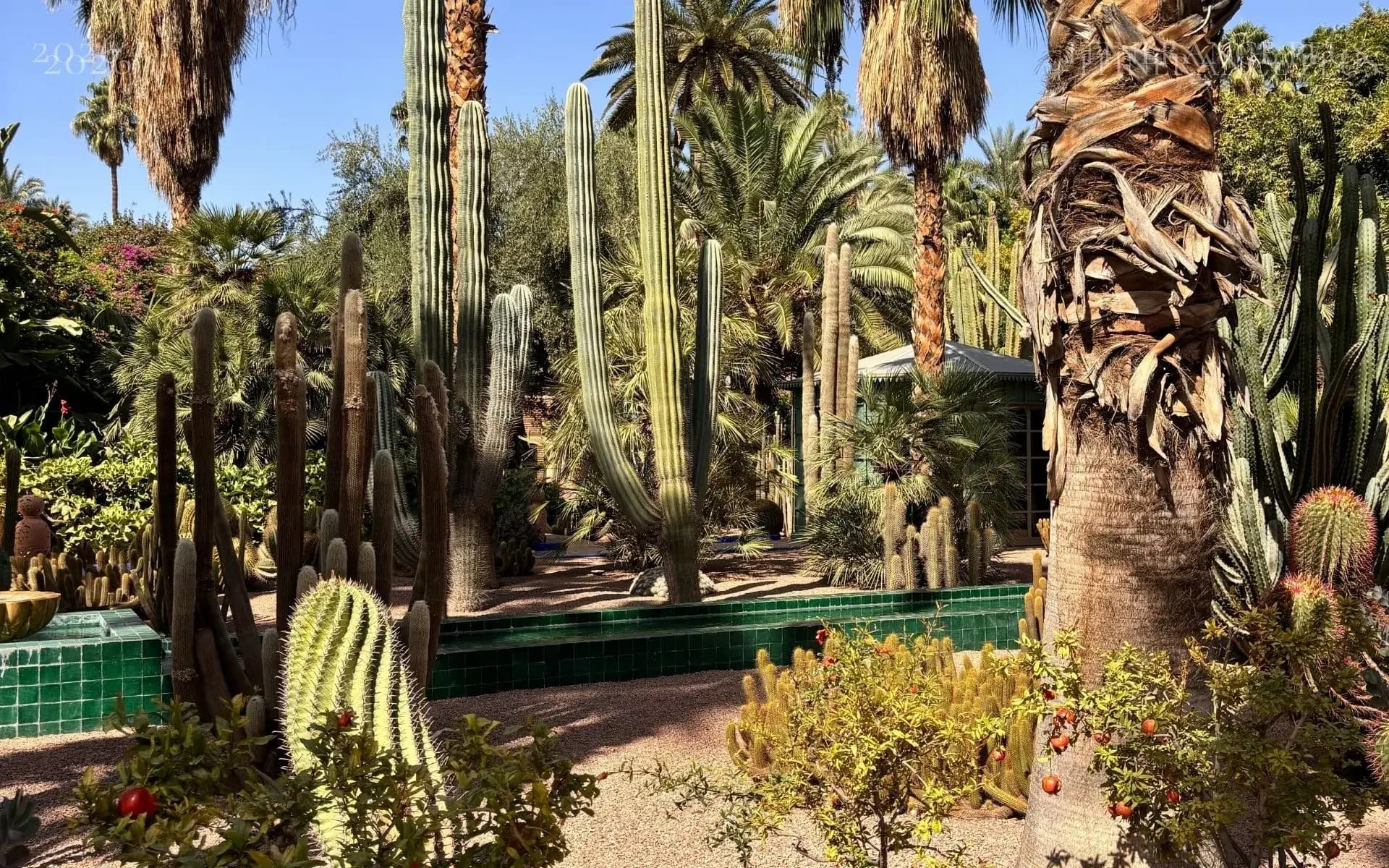
Majorelle Garden: an immersion in the cobalt blue of Marrakech
A sanctuary of freshness and color in the heart of Guéliz, where rare botany, Yves Saint Laurent's legacy and precise light meet.
Square
Jemaa el-Fna: diving into the vertigo of Marrakech
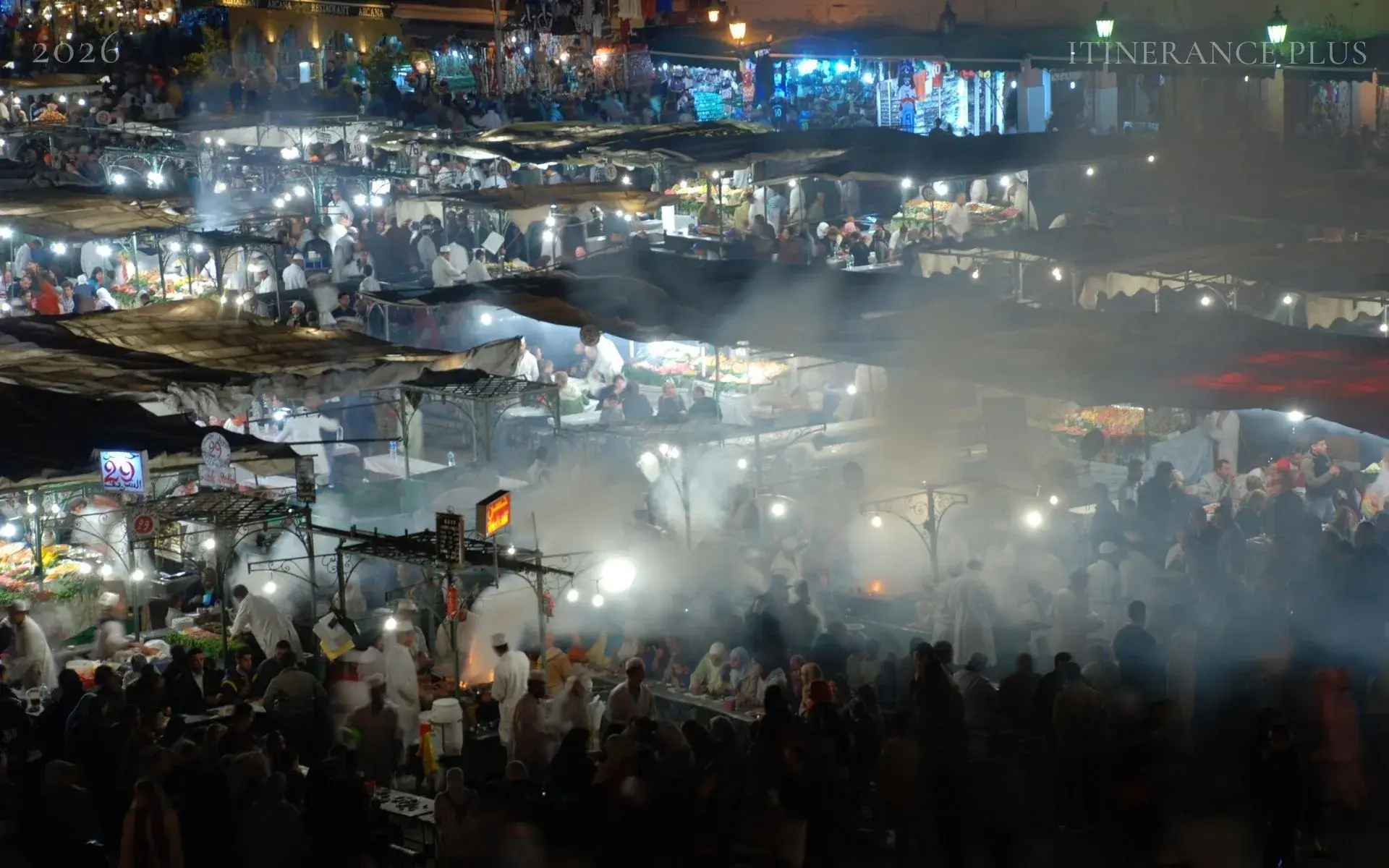
The smell of cedarwood smoke mixes with the scent of freshly pressed oranges, creating a dense, almost tangible atmosphere. In the distance, the first Maghreb call to prayer rises, filtered through the minarets of the...
Practical guides
Useful guides around this place
These guides help compare rhythms, formats and practical choices before shaping the visit.


Related experiences