Back to Marrakech
District
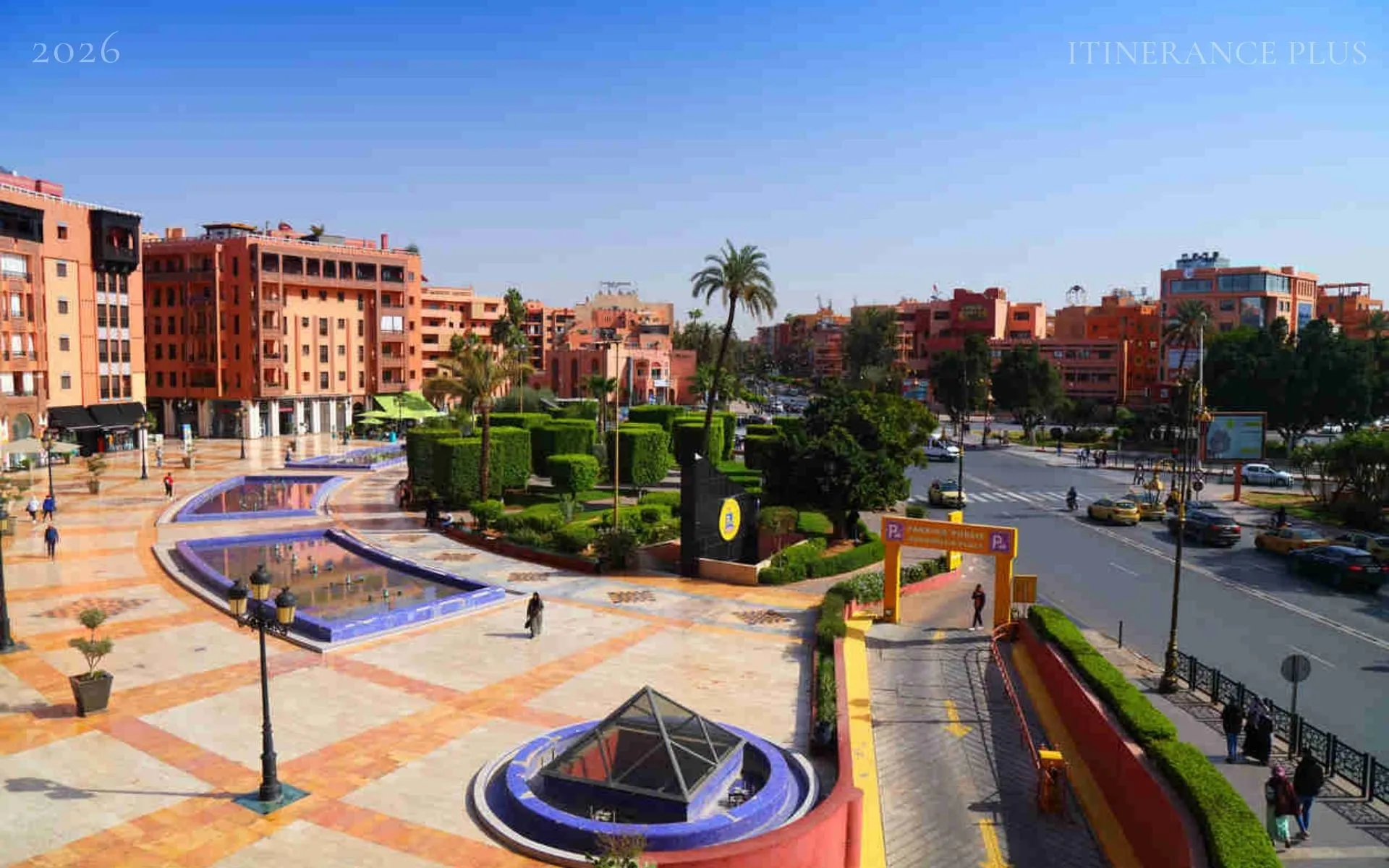
Guéliz District: the ocher elegance of a solar modernity
Before visiting
Key takeThe clicking of heels on the wide asphalt of Mohammed V Avenue responds to the hum of engines, while the shadow of palm trees draws oblique stripes on the Art Deco facades.
You leave the city walls behind, where the dust of centuries seems to evaporate to make way for a vaster, airier geometry. The air here carries scents of roasted coffee and trimmed jasmine, far from the leathery smell of the souks.
The Guéliz District does not reveal itself in a maze, but in perspective. Sitting on the terrace of a historic brasserie, you feel the pulse of a city that has chosen to marry its rammed-earth heritage with the straight lines of the early last century.
In the Guéliz District , Marrakesh swaps its slippers (babouches) for an urban look, where contemporary art galleries and designer boutiques occupy 1930s villas.
It is a sudden and necessary sensory transition: after the density of the Medina, this colonial extension offers a luminous breath, a space where the red of the walls matches the Majorelle blue of the sky to invent a new form of Moroccan stroll.
Location
Insight
First impressions
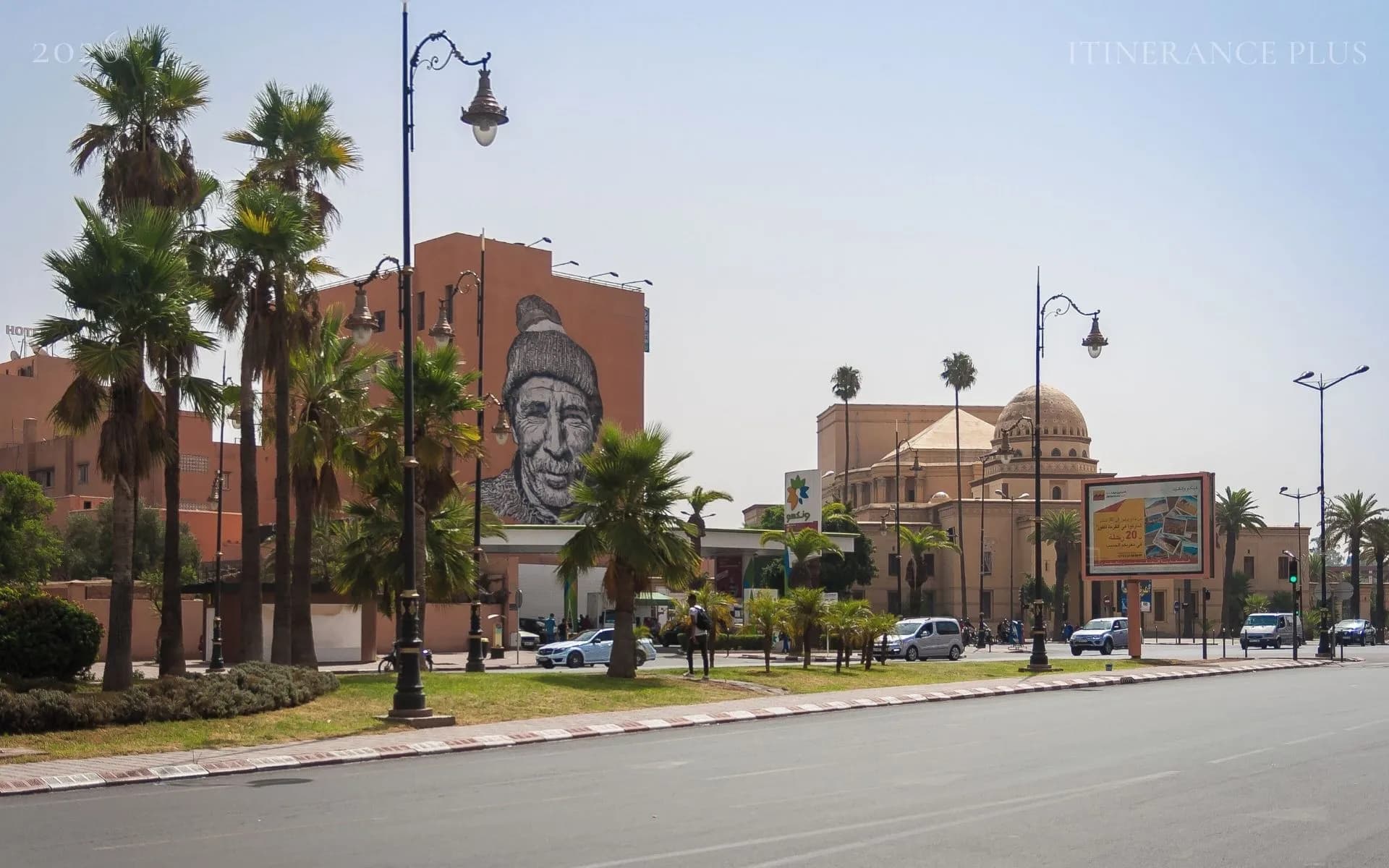
The clicking of heels on the wide asphalt of Mohammed V Avenue responds to the hum of engines, while the shadow of palm trees draws oblique stripes on the Art Deco facades.
You leave the city walls behind, where the dust of centuries seems to evaporate to make way for a vaster, airier geometry. The air here carries scents of roasted coffee and trimmed jasmine, far from the leathery smell of the souks.
The Guéliz District does not reveal itself in a maze, but in perspective. Sitting on the terrace of a historic brasserie, you feel the pulse of a city that has chosen to marry its rammed-earth heritage with the straight lines of the early last century.
In the Guéliz District , Marrakesh swaps its slippers (babouches) for an urban look, where contemporary art galleries and designer boutiques occupy 1930s villas.
It is a sudden and necessary sensory transition: after the density of the Medina, this colonial extension offers a luminous breath, a space where the red of the walls matches the Majorelle blue of the sky to invent a new form of Moroccan stroll.
Insight
Why do the facades of the 30s tell another story?
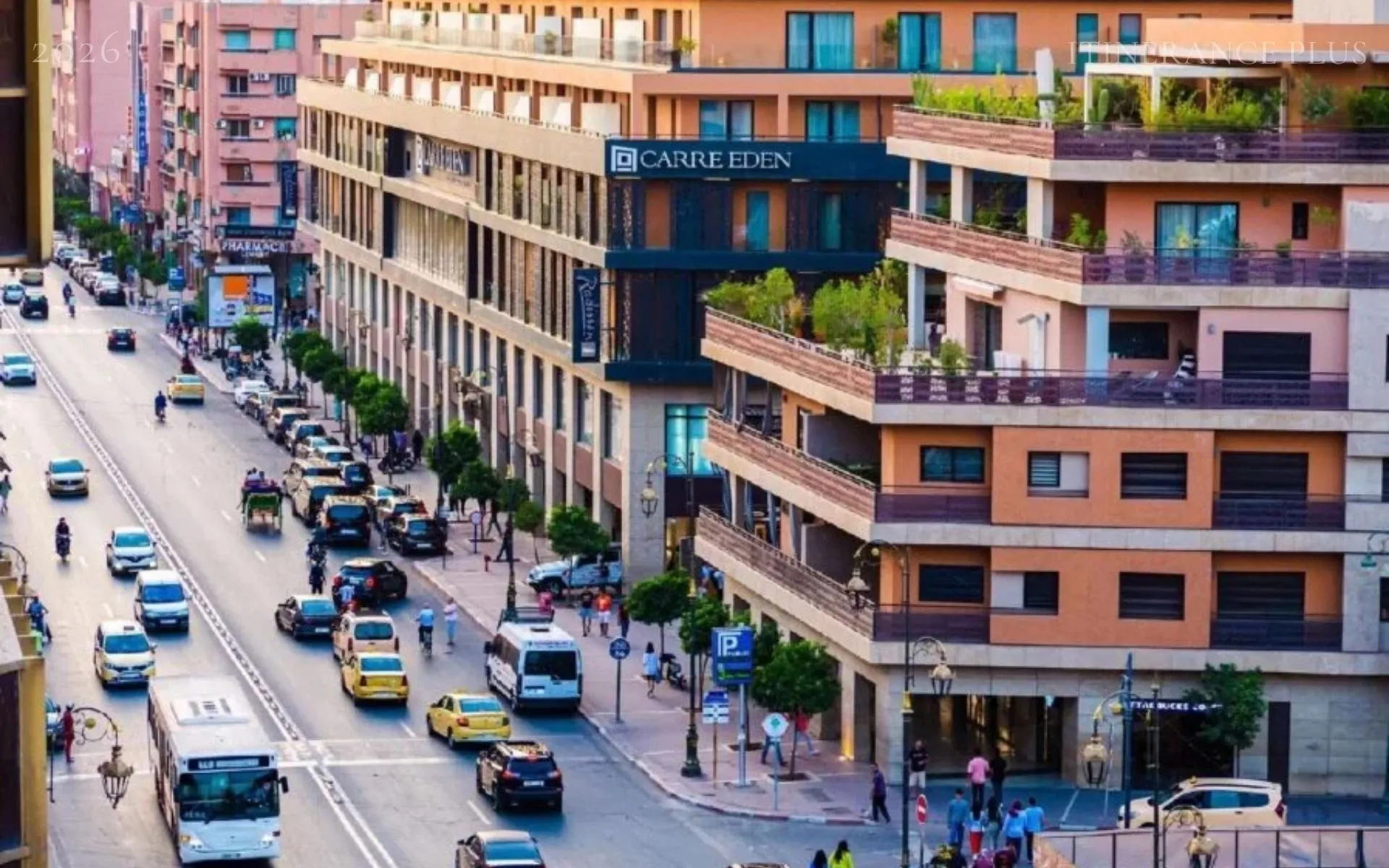
Strolling along Hassan II Avenue, you discover that the Guéliz District is an open-air conservatory of 20th-century architecture.
The curved lines of balconies, the elaborate ironwork, and the geometric patterns engraved in the ocher concrete bear witness to a time when Marrakesh attracted French architects in search of modernity.
You won't find complex zelliges here, but streamlined volumes that play with the harsh southern light.
These buildings, often adorned with stylized bas-reliefs, remind us that the city was a laboratory for the Art Deco movement, adapted to desert thermal constraints with thick walls and protective shutters.
The charm of this part of the city lies in its villas hidden behind hedges of purple bougainvillea.
Some have been transformed into chic restaurants, others into headquarters for cultural foundations, but all retain that scent of nostalgia from the Roaring Twenties.
You can still spot old neon signs or glass awnings that seem to await the return of last century's travelers. It is a movie set, but an inhabited one, where locals cross paths with expatriates in a cosmopolitan atmosphere.
The contrast with the minarets of the old city is striking: here, verticality belongs to bourgeois buildings, proud of their standing and their panoramic terraces.
This architecture is not frozen. It serves as the setting for an intense neighborhood life where every ground floor hides a surprise. You enter a building with an austere facade to discover a contemporary rug showroom or a Moroccan haute couture workshop.
The colonial structure has become the skeleton of overflowing creativity. Observing the details of the wrought-iron doors, one guesses the influence of local artisans on the European models of the time, creating a unique style that some call modern Moorish.
It is this fusion that gives the district its strong personality, an elegance that does not seek to imitate the past but to extend it toward tomorrow.
Insight
How did the art scene make this place its refuge?
If the Medina is the conservatory of traditions, the Guéliz District is the laboratory of the future. For about ten years, art galleries have flourished here, often occupying rehabilitated industrial spaces or high-ceilinged apartments.
Pushing open the door of a place like Galerie 127 or the Comptoir des Mines, you dive into a universe of socially engaged photography, abstract paintings, and monumental sculptures.
Moroccan artists, as well as those from all over Africa, find an echo here to their questions about identity, urbanism, and the environment.
The artistic stroll then becomes a quest for meaning. You pass from an exhibition of contemporary calligraphy to an immersive video installation, all while chatting with passionate gallery owners who know every corner of the cultural scene.
The atmosphere is relaxed, far from the austerity of some European institutions. Here, art is part of the street. You see murals coloring entire sections of buildings, responding to the bright colors of taxis and flowers.
This intellectual effervescence attracts a connected Moroccan youth who come here seeking new inspiration, far from the beaten paths of pure tradition.
At the end of the day, openings transform the sidewalks into fashionable meeting places. All languages are spoken there, ideas are exchanged over a glass, while the golden light of Marrakesh licks the exhibited works.
This vitality makes the district the beating heart of the country's cultural life. One no longer comes only for historical monuments, but to take the pulse of African creation.
The district acts as a magnet, attracting collectors and the curious from all over the world who know that it is within these ocher walls that the visual grammar of the 21st century is being invented—a bold fusion of heritage and provocation.
Insight
What are the pleasures of the table between brasseries and secret spots?
Gastronomy in this area is a multi-faceted experience. You can start your day at the Grand Café de la Poste, an institution where you feel transported to the Marrakesh of the 40s, with its ceiling fans and waiters in white jackets.
You enjoy a continental breakfast while observing the incessant ballet of passersby at the Guéliz District intersection. It is the ideal place to take the city's pulse before heading into its commercial arteries.
But the true culinary wealth is hidden in the cross streets, where flavors blend.
For lunch, you are spoiled for choice between French bistros serving impeccable steak-frites and restaurants with revisited Moroccan cuisine.
Local dishes like beef tajine with apricots are served, but with modern presentation and products sourced from nearby organic farms. Flavors are subtler, less fat-heavy than in popular eateries, prioritizing the freshness of herbs and the quality of oils.
In the evening, the district transforms into an epicenter of nightlife. You'll find establishments where you can savor incredibly fine sushi or Italian specialties while listening to an international DJ set.
But the greatest pleasure remains finding those secret tables, often located in the patios of private villas. There, sheltered from street noise, you are served fusion cuisine that mixes Taliouine saffron with Japanese or Peruvian cooking techniques.
It is a gastronomy without borders, much like the district's inhabitants. Wine culture is also very present here, with cellars offering the best vintages from the estates of Meknès or Benslimane.
Dining here is to accept that Marrakesh is a world-city, capable of offering the best of international cuisine without ever losing its spicy soul.
Insight
Why has shopping become a form of culture here?
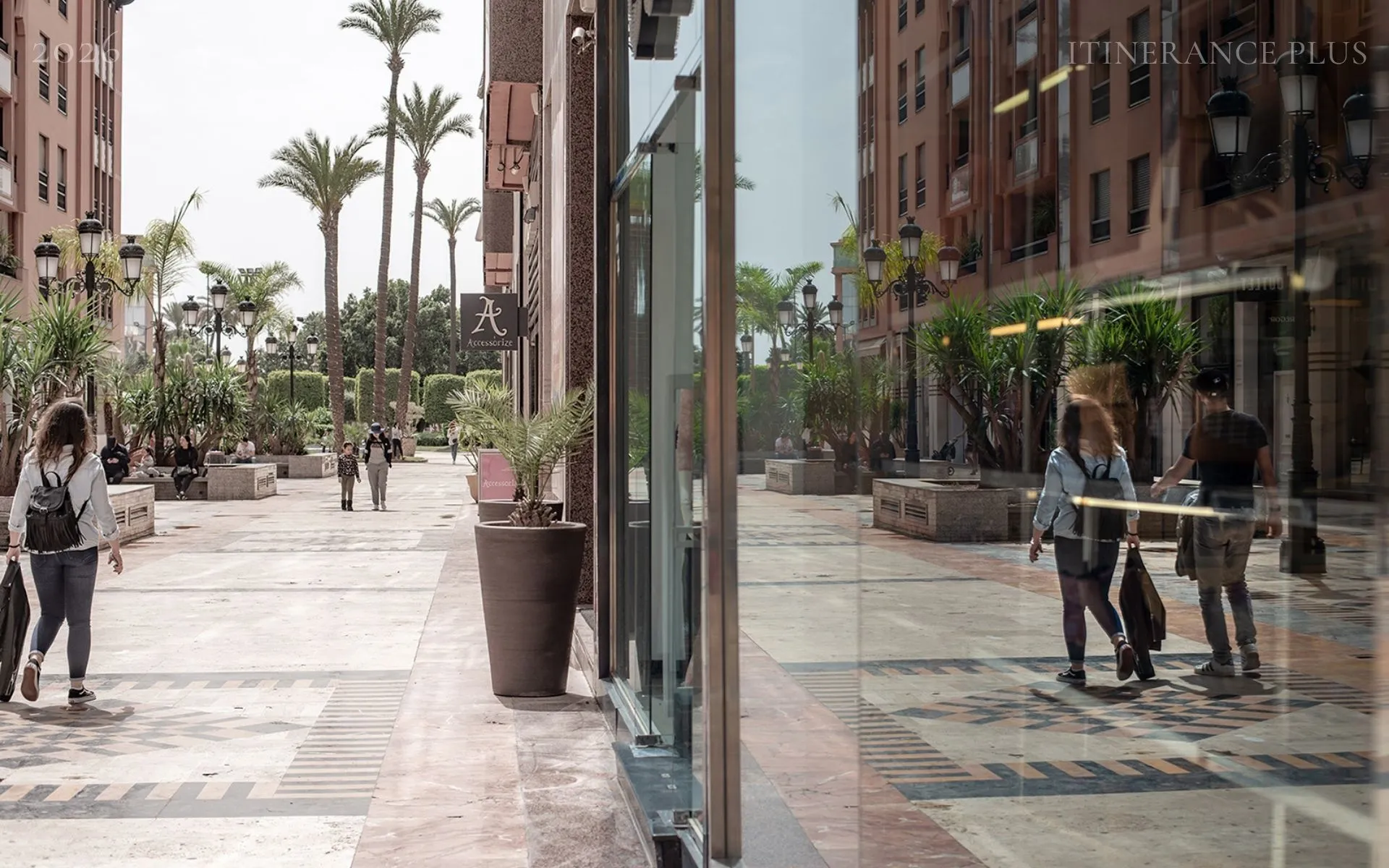
Forget the exhausting negotiation of the souks for a moment. Shopping in the Guéliz District is a matter of concept stores and designer boutiques.
Walking up Rue de la Liberté or Rue Majorelle, you discover brands that have turned Moroccan craftsmanship into an exportable luxury brand.
You'll find leather goods of infinite flexibility, hand-embroidered silk clothing, and decorative objects that marry minimalist design with ancestral zellige or hammered copper techniques.
Entering these boutiques is like visiting a small private museum. Each object is staged, carefully lit, telling the story of the artisan who made it.
The designers established here work hand-in-hand with Medina master craftsmen, bringing them a contemporary eye and international quality requirements.
You can thus acquire a pair of slippers (babouches) revisited with vintage fabrics or a brass light fixture with futuristic lines.
It is an ethical and aesthetic shopping experience, where the time necessary for creation and the nobility of natural materials are valued.
This commercial area attracts a demanding clientele seeking unique objects away from mass production. The bookstores are also magnificent, offering beautiful books on the architecture, photography, and history of the country.
You stroll among French-language literature and international fashion magazines. Shopping here is participating in the safeguarding of know-how by giving it a new economic outlet.
You leave these boutiques with the feeling of having bought a piece of the spirit of Marrakesh, an object that will find its place in a modern interior while retaining the warmth of the hands that shaped it.
Insight
How does nightlife redefine the city's energy?
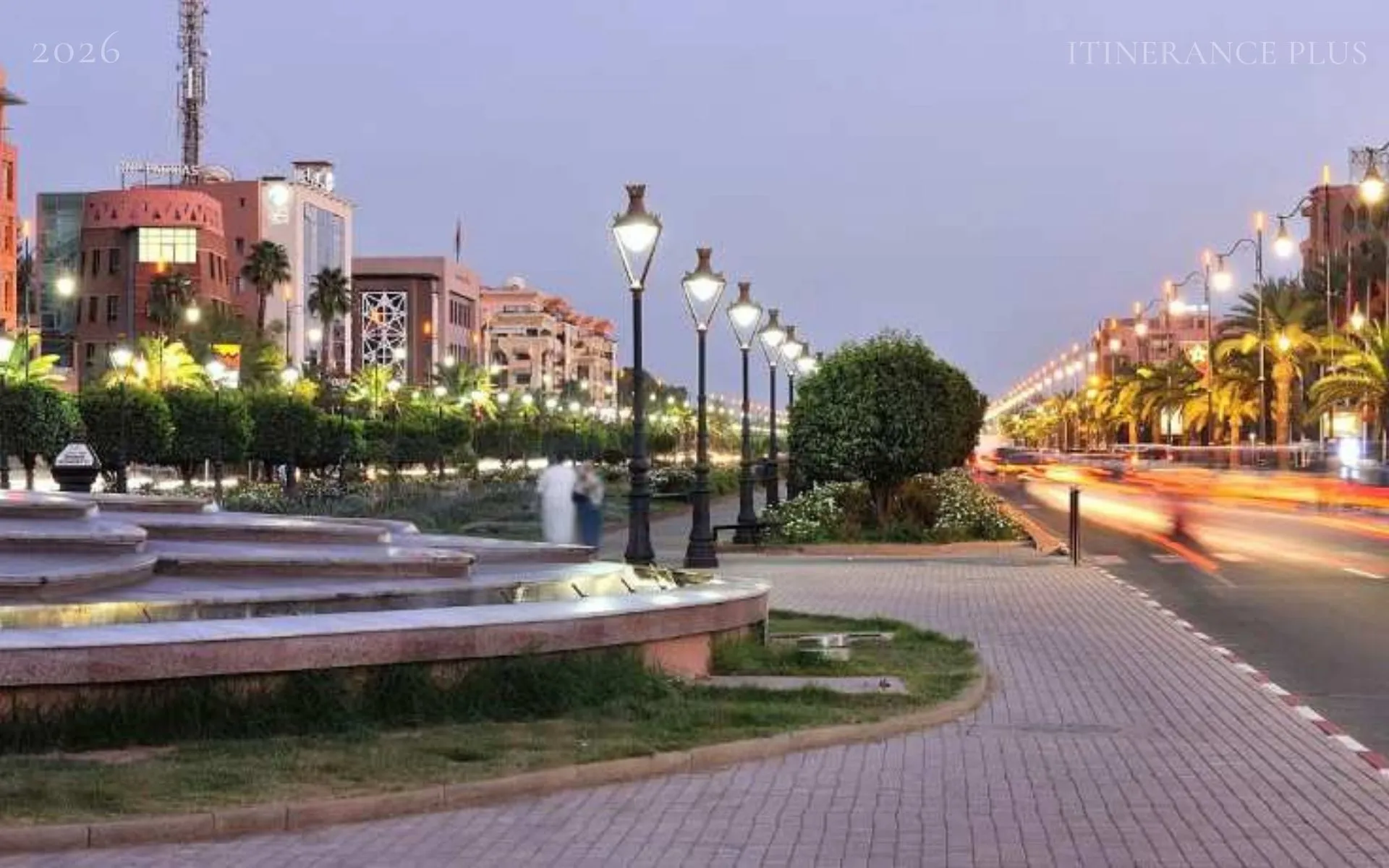
When the sun disappears behind the Atlas peaks, the Guéliz District lights up with a completely different energy. This is where most of the city's cocktail bars, jazz clubs, and trendy establishments are concentrated. The atmosphere is electric.
You cross groups of friends starting the evening on a rooftop with a view of the illuminated Koutoubia, before heading to one of the many establishments with a hushed atmosphere.
Music is everywhere, from remixed Gnawa rhythms to melodic house, creating an urban soundtrack that never stops.
Elegance is the order of the day. Outfits are polished, service is attentive, and mixology becomes an art in its own right. Cocktails are prepared using local gin infused with verbena or rosemary, served in crystal glasses under crystal chandeliers.
It is a facet of Marrakesh that can surprise someone who only knows Jemaa el-Fna square. Here, the city assumes its role as a capital of pleasure and festivity, welcoming an international clientele used to the standards of Paris, Dubai, or London.
People dance until dawn in clubs where the decoration rivals in boldness.
Yet, this nightlife retains a unique Moroccan touch. It is not uncommon to see an oriental dancer perform between two DJ sets, or to hear a traditional singer accompany an electric guitar. This mixture of genres is the district's signature.
Security is omnipresent but discreet, allowing you to enjoy the night with complete peace of mind. Returning to your hotel in the warm Moroccan night, you realize that the district has succeeded in the challenge of festivity without losing its class.
It is a regenerating energy, showing that the city knows how to enjoy itself with as much passion as it knows how to pray or trade.
Gardens
What secret gardens offer a break between two avenues?
Even in this modern-oriented district, nature is never far away. Outside the famous Majorelle Garden bordering the district, there are more secret spaces—neighborhood parks where families gather in the shade of jacarandas and orange trees.
Moulay Abdeslam Park, also called Cyber Park, is a wonder of balance between tradition and technology.
You can stroll through impeccable alleys, surrounded by roses and palm trees, while enjoying free Wi-Fi spots and touch screens informing you about the site's botanical history.
It is a very popular place for locals to rest. You will see students studying on benches, couples strolling discreetly, and tourists seeking a moment of calm away from the noise of horns.
The smell of wet earth after watering and the singing of birds create an enchanted parenthesis. These gardens are the district's lungs, necessary breaths in the middle of ocher concrete.
One appreciates the rigor of the layouts inherited from French urbanism, which nevertheless leave full room for the lushness of Moroccan flora.
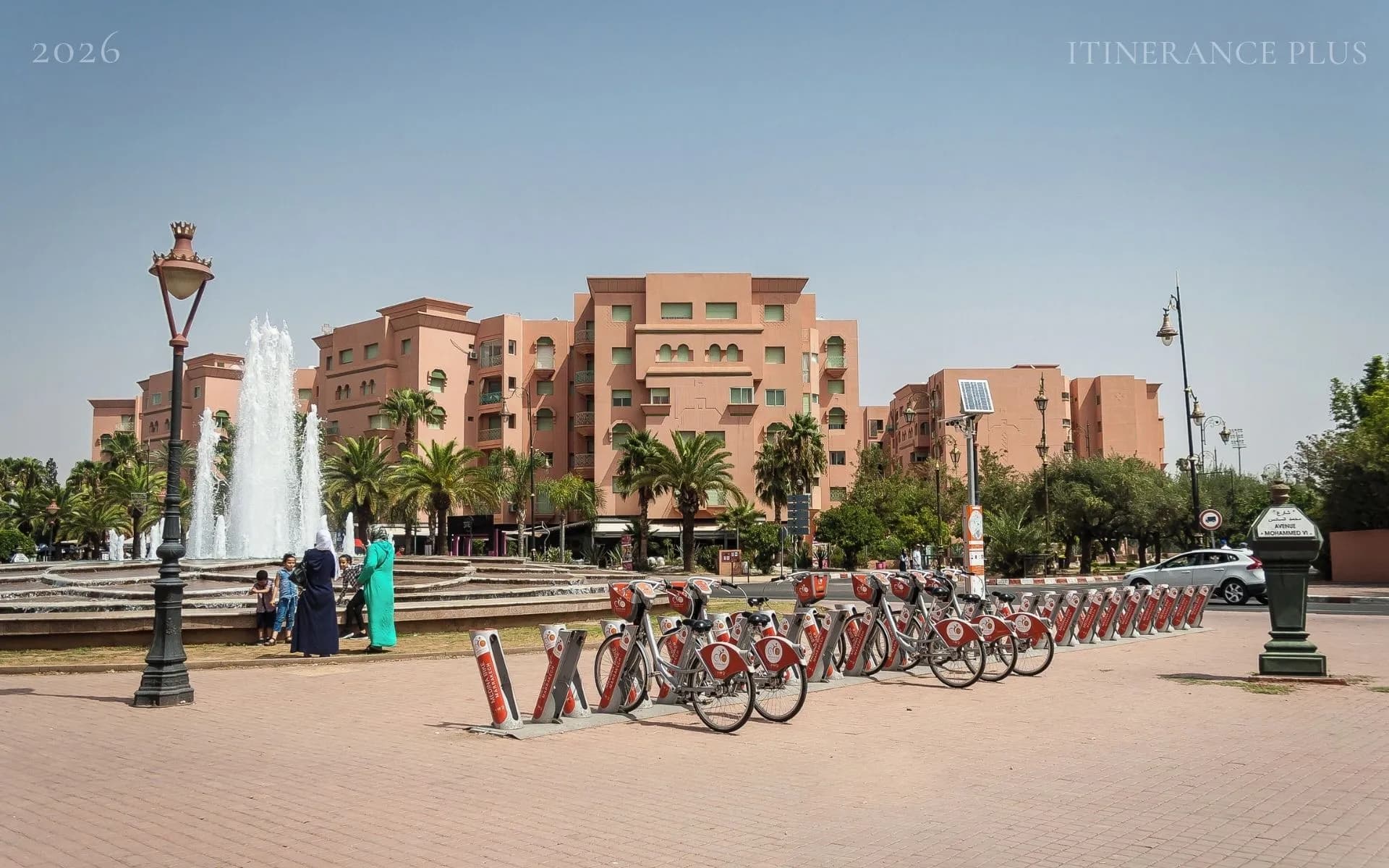
A few streets away, some squares are adorned with modern fountains whose splashing soothes the urban atmosphere. The presence of water, even in contemporary forms, remains a central element of Moroccan urbanity.
You sit at the edge of a basin to read a book or simply watch the buses and carriages go by. This coexistence between the moving city and these islands of silence is one of the great successes of this area's development.
You never feel oppressed there, because there is always a garden or a tree-lined avenue to offer visual and thermal shelter—a welcome halt between two meetings or two gallery visits.
Insight
Why are the covered markets the gourmet heart of the district?
To understand the soul of the Guéliz District , you must venture into its central market, located at the corner of Mohammed V Avenue. It is a covered market reminiscent of European halls, but with an undeniable local touch.
Here, flower stalls welcome the visitor with an explosion of colors and scents. Then come the fishmongers, butchers, and fruit and vegetable vendors. The quality of products is exceptional.
This is where chefs from major restaurants come to shop every morning, looking for the juiciest tomato or the freshest fish arriving from the Atlantic.
The atmosphere is friendly, more orderly than in the Medina souks. You chat with vendors who let you taste an olive marinated in garlic or a fresh almond.
You'll also find imported products, French cheeses, and fine cold cuts, illustrating the area's cosmopolitan character. It is an authentic place of life where neighborhood women cross paths with palace cooks.
Getting lost in the aisles, you also discover herbalists offering rose or argan essential oils of absolute purity, far from tourist traps.
Around the market, bakeries offer gazelle horns and chebakias of incredible finesse. You can buy a box of these sweets to enjoy later, or stop at a small adjacent snack bar for a crisp Moroccan salad and a grilled meat skewer.
This gourmet heart is the guarantor of a culinary tradition that refuses standardization. Seasons are respected; raw products are valued.
It is an indispensable stage for any traveler who wants to understand that the district's modernity rests on solid foundations: those of a generous land and a people who love good food.
Insight
Practical Inset: Organizing your stroll
Best time to visit : The shoulder seasons, from October to April, are ideal for enjoying the terraces and walking the wide avenues. In winter, the light is of absolute clarity, perfect for architectural photography.
Average daily budget : Higher than in the Medina. Plan about 800 to 1200 Dirhams per day to enjoy good restaurants, do some designer shopping, and visit art galleries.
How to get there : From Jemaa el-Fna Square, you can take a small taxi (about 10-15 Dirhams) or walk up Mohammed V Avenue (about 25 minutes) for a gradual transition between the two worlds.
Ideal duration of stay : An entire day or several afternoons are necessary to explore the galleries, do some quality shopping, and test the area's varied gastronomy.
Frequently asked questions
Everything about Guéliz District: the ocher elegance of a solar modernity
Other places to discover
More places to explore nearby
Garden
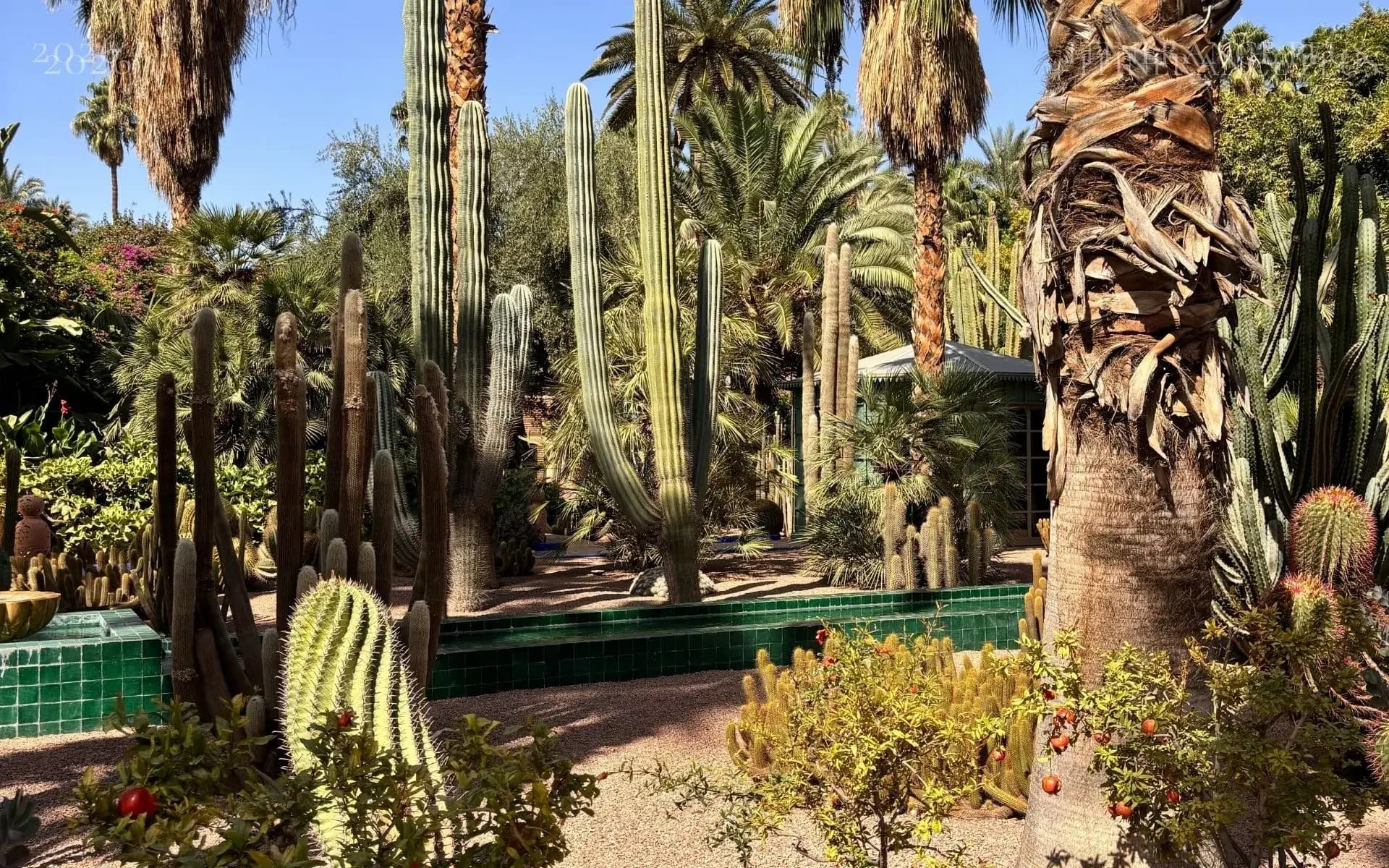
Majorelle Garden: an immersion in the cobalt blue of Marrakech
A sanctuary of freshness and color in the heart of Guéliz, where rare botany, Yves Saint Laurent's legacy and precise light meet.
Square
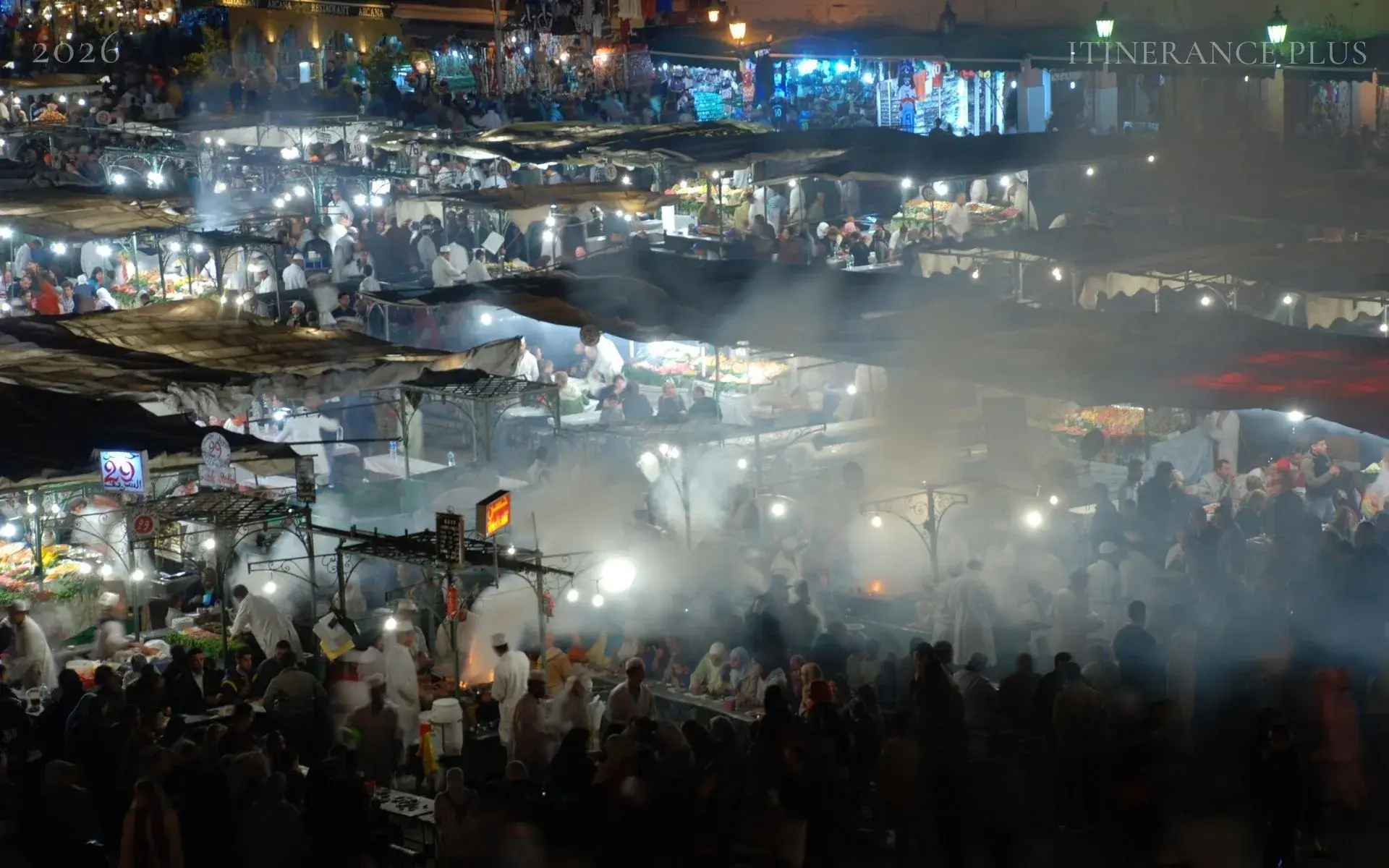
Jemaa el-Fna: diving into the vertigo of Marrakech
The smell of cedarwood smoke mixes with the scent of freshly pressed oranges, creating a dense, almost tangible atmosphere. In the distance, the first Maghreb call to prayer rises, filtered through the minarets of the...
Practical guides
Useful guides around this place
These guides help compare rhythms, formats and practical choices before shaping the visit.


Related experiences