Back to Marrakech
Monument
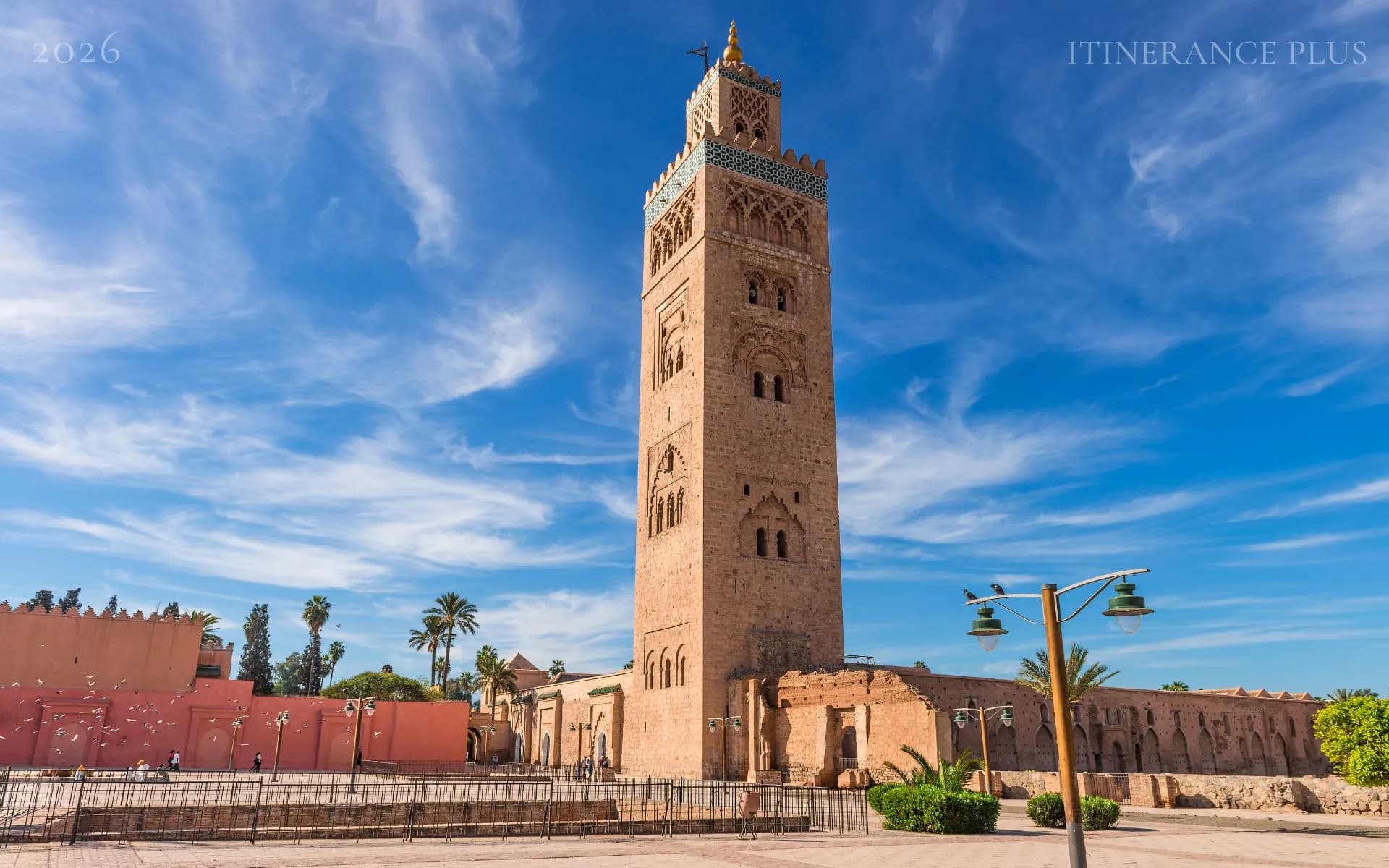
Koutoubia: contemplating the rose-stone soul of Marrakech
Before visiting
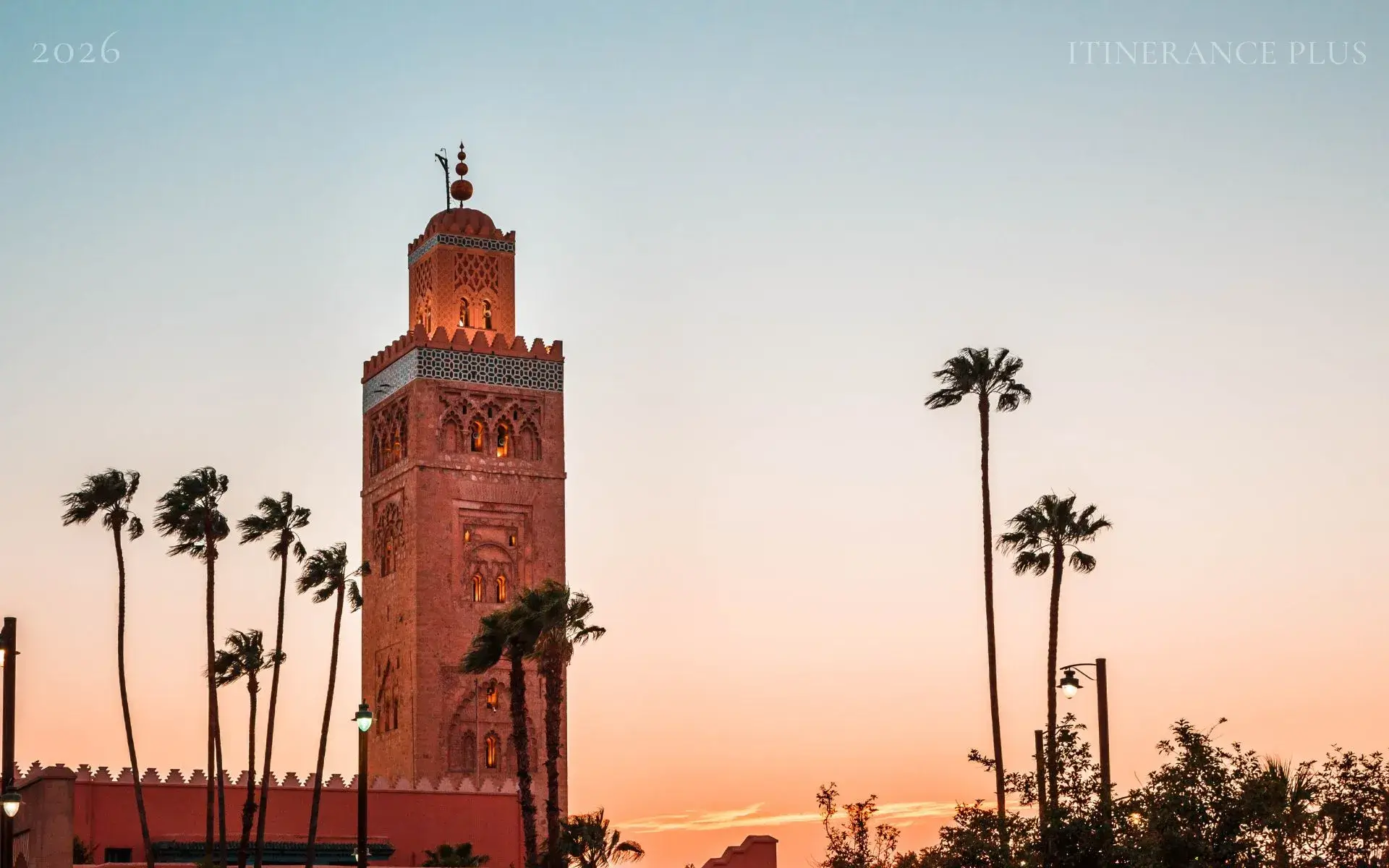
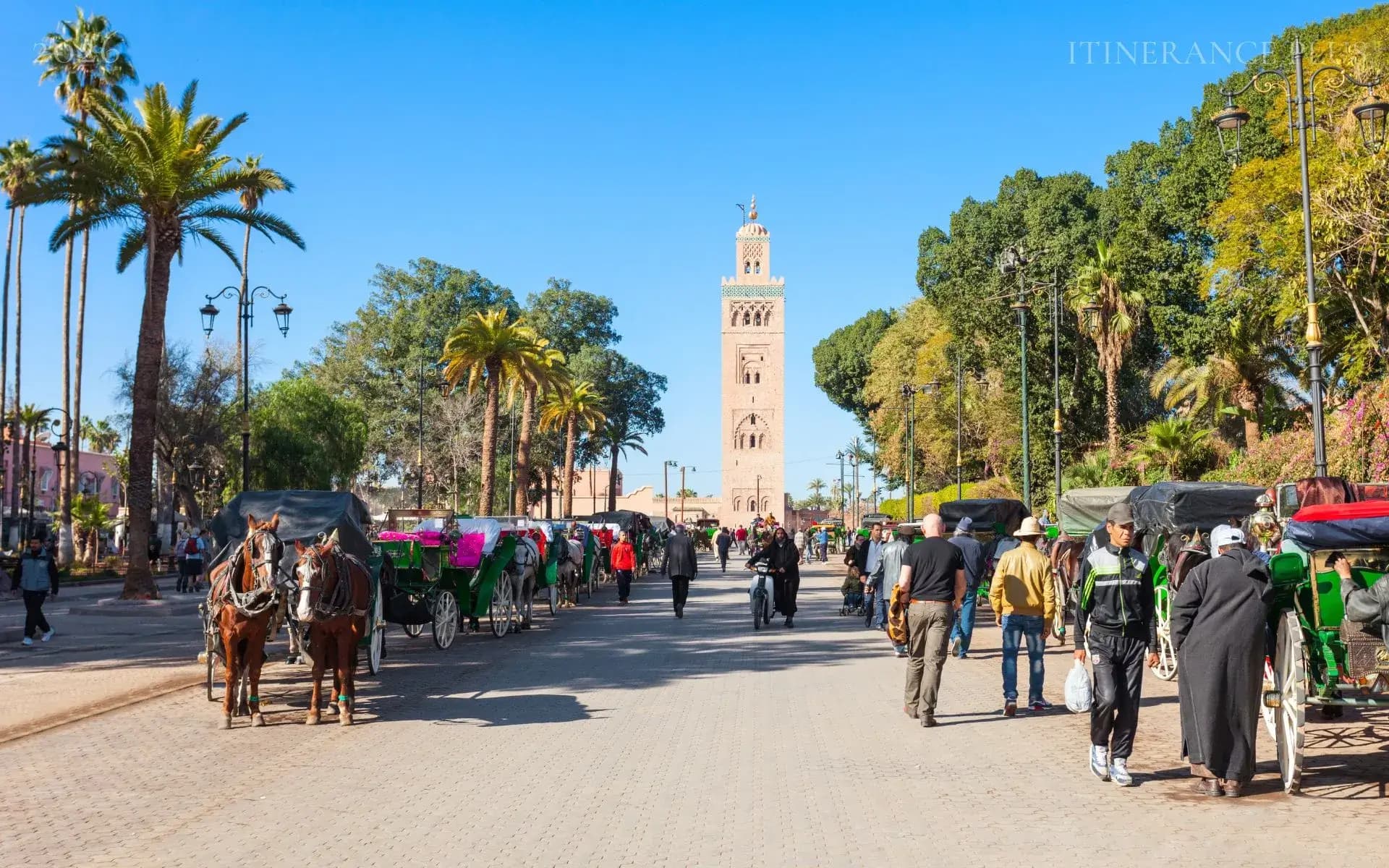
Key takeAs the sun slowly drops over Avenue Mohammed V, the ochre stone turns into a glowing mass of red gold.
It is at that exact moment, when the shadow of the minaret stretches toward the waiting carriages, that the magnetic force of the Koutoubia takes hold of your senses.
Location
Insight
What legacy do the stones of the Almohad minaret tell?
The tower rising in front of you is not only a technical achievement, but the living narrative of a dynasty determined to leave its mark on the world.
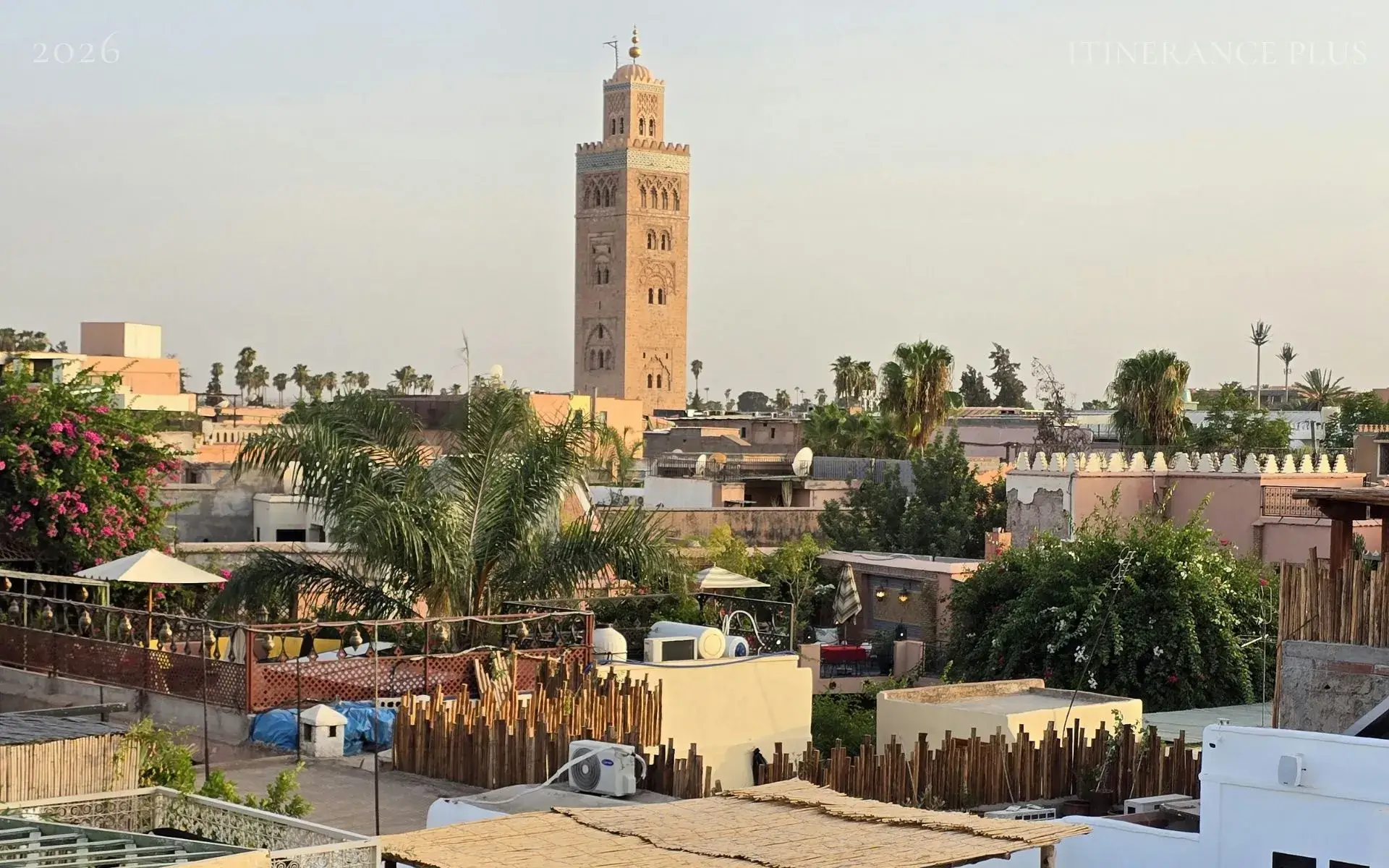
The Almohads, rigorous builders, raised this minaret with a geometry that still feels astonishingly precise for its time.
When you study the facades, you notice that each side carries a different decor: plaster interlace, horseshoe arches and traces of turquoise faience mosaics that still catch the light from certain angles. It is a lesson in sobriety and power.
The schist stone, taken from nearby quarries around Gueliz, gives the monument that changing color which moves from pale pink to deep violet depending on the mood of the sky.
This architecture became a model across the Islamic world of its era, inspiring the Giralda in Seville and the Hassan Tower in Rabat. It forms an invisible link between the shores of the Mediterranean.
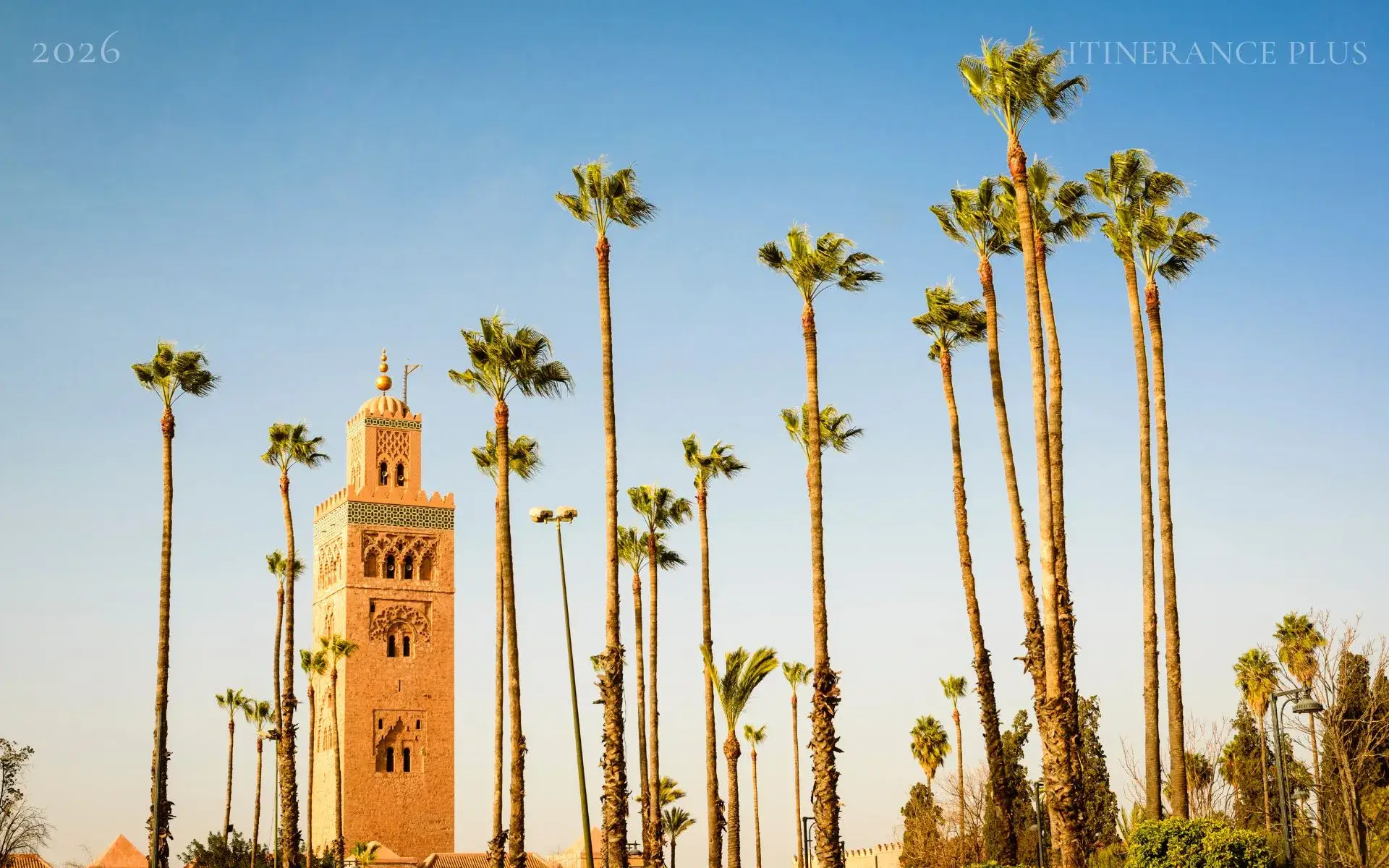
Walking at the foot of the structure, you feel its vertical pull almost physically. The seventy meters of height command respect and remind you how central the monument remains in daily life.
In the past, the ascent for the call to prayer was made on muleback thanks to an interior ramp rather than stairs. That ingenuity reveals a pragmatism strangely well matched with the search for beauty.
The monument takes its name from the Arabic word "Koutoub", meaning books. Originally, a vast esplanade surrounded the mosque and hosted dozens of booksellers and copyists, making the site the intellectual center of the region.
It is easy to imagine the rustle of manuscripts and the smell of ink blending with religious devotion.
Today the books are gone and travelers have taken their place, yet the aura of knowledge and culture still seems embedded in the foundations of the Koutoubia.
It is a monument that reads like an open manuscript, where each mark in the stone is a word and every arch a chapter in Moroccan history.

Insight
How does the vanished first mosque still haunt the ground?
A striking detail awaits anyone who takes time to examine the immediate surroundings: truncated columns and wall bases still emerging from the earth. These are the remains of the very first mosque.
Legend says it was demolished shortly after construction because its orientation toward Mecca, the qibla, was not considered exact enough. The builders of the time accepted no error in sacred matters.
They chose to raze it and rebuild beside it the marvel you admire today, aligned through more rigorous astronomical calculations.
Walking among those ruins means stepping through the traces of a failure transformed into a masterpiece.
You can still sense the position of the aisles, the rhythm of the pillars and the outline of what was once one of the largest places of worship in the medieval Islamic world.
It is a strangely peaceful area where medina cats stretch across stones warmed by the sun. That closeness between the death of one building and the enduring life of its successor creates a tender melancholy.
Here you feel how fragile human ambition can be against the passing of centuries.
Excavation of the ruins also reveals the scale of the original undertaking. Cedar from the Middle Atlas, imported marble and bricks fired in traditional kilns all converged toward this exact point in Marrakech.
Looking at the junction between the older walls and the present minaret, you grasp the continuity of an art that refuses rupture. It becomes a silent dialogue between two eras, between the error of the past and the perfection of the present.
For the visitor, it is an invitation to look beneath the surface and to search for the roots of beauty in the debris of history.
Gardens
Why are the mosque gardens such an essential refuge?
If the minaret is the body, the gardens around it are the lungs of the neighborhood. Designed as a natural extension of the site’s spirituality, the Koutoubia gardens offer a necessary pause within the city’s relentless rhythm.
Earthen paths wind through bitter orange trees whose vivid fruit contrasts with the dark green foliage. In spring, the blossom fills the air with an almost intoxicating fragrance that completely masks the exhaust from nearby boulevards.
It is a free and open sensory experience, available from early morning until late at night.
The white marble fountains, placed with restraint, add a fresh musical note. Here the sound of water acts like an instrument that calms the mind.
On the wrought-iron benches you meet students revising for exams, families sharing dates and travelers worn out by bargaining in the souk. The garden makes no distinction. It welcomes every soul in need of rest.
It is the ideal place to observe local life without feeling intrusive. Children chase pigeons while older men speak quietly under the shade of tall washingtonia palms.
The landscaping respects the codes of classical Islamic gardens: shade, water and fragrance. The geometry of the rose beds echoes the rigor of the minaret’s lines.
Late in the day, the light filters through the foliage and draws moving patterns across the ground like shadow theatre. That is the privileged time to sit and simply watch time pass.
You realize then that the true richness of Marrakech is not found only in its luxurious palaces, but also in these spaces of generosity and serenity offered by the presence of the great mosque.
Insight
What does the call to prayer do to the mood of the district?
The experience of the Koutoubia would remain incomplete without the sonic force of the muezzin. Five times a day, the movement of Jemaa el-Fna and the surrounding streets seems to pause for a brief instant.
When the loudspeaker comes alive, a wave of gravity moves through the crowd. It is not only a religious act, but a temporal punctuation that structures the life of the city.
The voice, often beautifully melodic, rises high above the roofs and carries far toward the Menara gardens and the modern districts of Hivernage.
You will notice that even the most restless tourists sometimes fall silent to listen. The vibration seems to come from the minaret itself, as if the stone were speaking. During Ramadan, this dimension becomes even more powerful.
At the moment of breaking the fast, the silence before the call feels almost supernatural, followed by an explosion of life and sharing.
Thousands of worshippers move toward the mosque entrances, creating a flowing river of white and colored djellabas beneath the arcades.
Although access inside is reserved for Muslims, the exterior scene alone is enough to convey the importance of this center of gravity.
When the monumental doors open, they reveal glimpses of colonnades and reed mats, a world of sobriety that contrasts with the more decorative richness of many riads.
It is a reminder of Almohad austerity, which privileges structure and space over superficial ornament. Remaining outside on the forecourt, you still take part in that collective breath, a moment when the city briefly regains its unity.
Insight
How can you photograph the monument without falling into cliché?
Capturing the tower’s silhouette is a challenge for anyone who loves images. The obvious temptation is to settle for the classic view from the square, but the Koutoubia deserves to be approached as a sculpture to circle around.
To avoid banal photographs, play with natural framing. Use the brick arches of the first mosque ruins to frame the minaret, or look for the tower’s reflection in garden basins after watering.
The contrast between the deep Moroccan sky and the warmth of the stone is your strongest ally.
In the evening, artificial lighting completely transforms the building. Spotlights emphasize the relief of the carved stone and give the tower an almost spectral quality.
That is when the details of the upper section become clearest, including the lantern topped by three copper spheres. It is said those spheres were once pure gold, cast from the jewels of a repentant queen.
Whether true or not, the detail shines with a special intensity beneath the stars and offers dramatic material for nighttime images.
Another rewarding perspective comes from moving toward the Cyber Park gardens or climbing the terraces of cafes around the square. From farther away, the minaret rises from the ocean of flat medina rooftops like a solitary lighthouse.
You then understand its role as protector of the city. By varying your focal length and waiting for raking light, you can do justice to the grain of the stone, that particular texture which shapes Marrakech’s visual identity.
Do not forget the human element in your compositions: a mint seller passing by on a bicycle or a group of friends talking on a low wall gives scale and life to the image.
Insight
Why does this monument remain the beating heart of Marrakech nights?
After sunset, the area around the monument turns into one of the city’s most social promenades. Far from being a dead monument that one visits and leaves, the Koutoubia remains the center of a cheerful urban life.
Families gather on the esplanade to enjoy the night breeze. Vendors selling spring rolls, popcorn and glowing toys animate the walkways and create an atmosphere that feels festive yet respectful.
People sit on the ground, share sunflower seeds and talk about the day under the protective gaze of the illuminated minaret.
This nighttime atmosphere is one of the most authentic in the city. It shows how a religious monument can also function as a pole of urban cohesion. The sound of carriage horses on the asphalt adds a touch of nostalgia.
You feel safe here, held by the goodwill of the crowd and the majesty of the stone. It is the moment when the line between sacred and everyday life blurs slightly in a deeply Moroccan harmony.
Religion is lived here as a natural part of daily existence, not as something set apart.
Walking toward Jemaa el-Fna, you realize that the whole dynamism of Marrakech seems irrigated by this central point. People always return here, whether to orient themselves within the souks or to enjoy a moment of calm before plunging back into the bustle.
The tower is not only a historical monument. It is a living presence that accompanies every resident and every traveler through the city. More than architecture or history, that is what makes the place so special.
Insight
Last impressions before leaving the square
As you leave the perimeter of the Koutoubia, a feeling of fullness rises quietly and stays with you. The image of the minaret cut against the moon will likely remain one of the strongest memories of your journey.
What touched you was not only the beauty of the stone, but the site’s ability to suspend time itself.
You carry away a little of that pink dust and the memory of swifts whose song never seems to stop.
Turning one last time before entering the narrow lanes of the medina, you see the lighthouse of Marrakech still shining and understand that even in total chaos a city can keep an immovable and magnificent center. The Koutoubia is no longer behind you.
It now accompanies you as an inner landmark for the rest of your stay.
Practical box
Best time to visit: September to November and March to May bring soft temperatures and exceptional light for walking through the gardens. In summer, go at sunrise or after sunset to avoid the heaviest heat.
Average daily budget: Access to the gardens and the mosque surroundings is completely free. Plan only a few dirhams for a fresh orange juice or mint tea in one of the nearby cafes.
How to get there: The mosque sits at the junction between the medina and the newer city. It is an easy walk from anywhere around Jemaa el-Fna, and every taxi driver knows the landmark.
Ideal visit duration: Allow about one hour to circle the monument and explore the ruins, then another hour to enjoy the gardens and the atmosphere at sunset.
Frequently asked questions
Everything about Koutoubia: contemplating the rose-stone soul of Marrakech
Other places to discover
More places to explore nearby
Garden
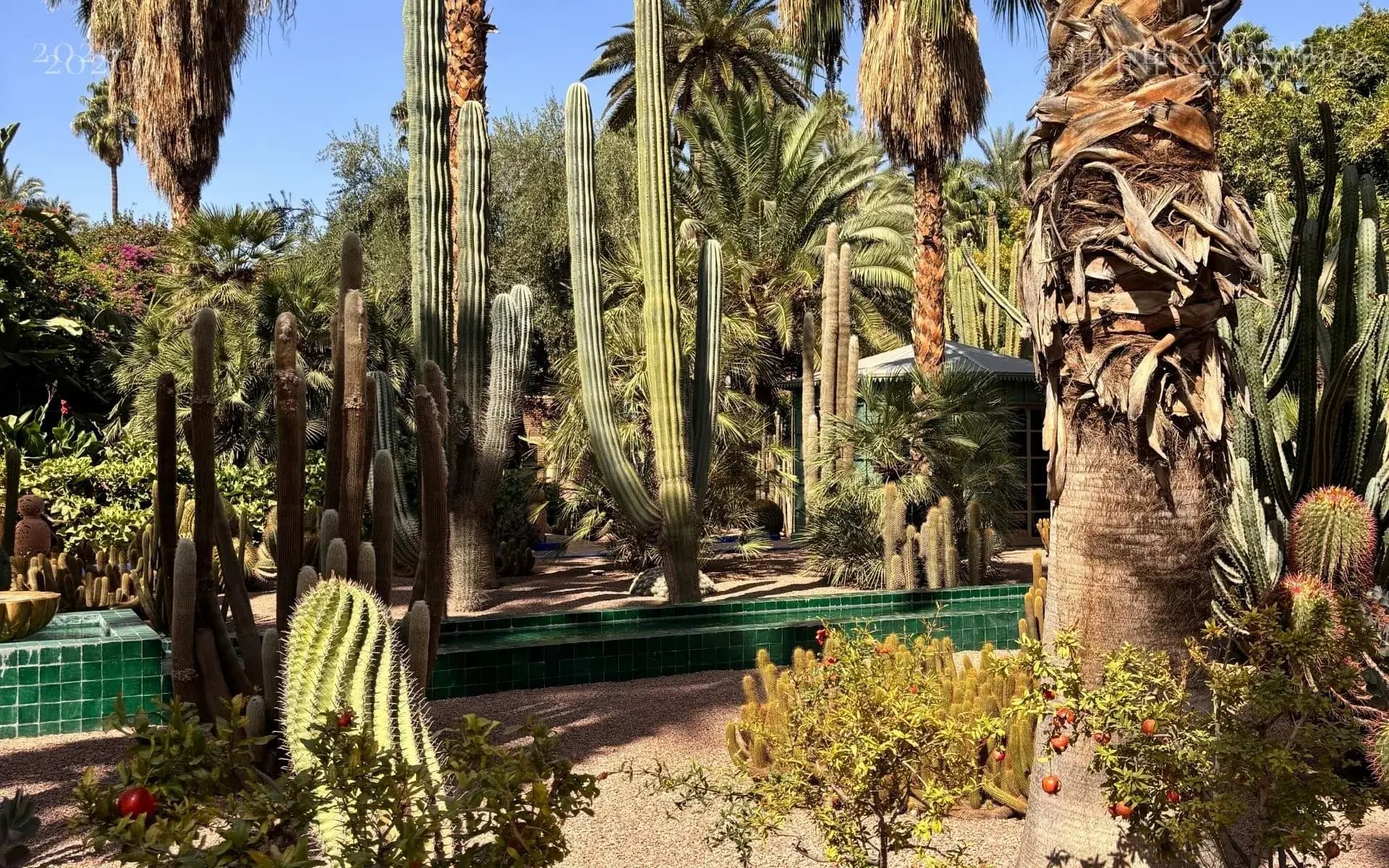
Majorelle Garden: an immersion in the cobalt blue of Marrakech
A sanctuary of freshness and color in the heart of Guéliz, where rare botany, Yves Saint Laurent's legacy and precise light meet.
Square
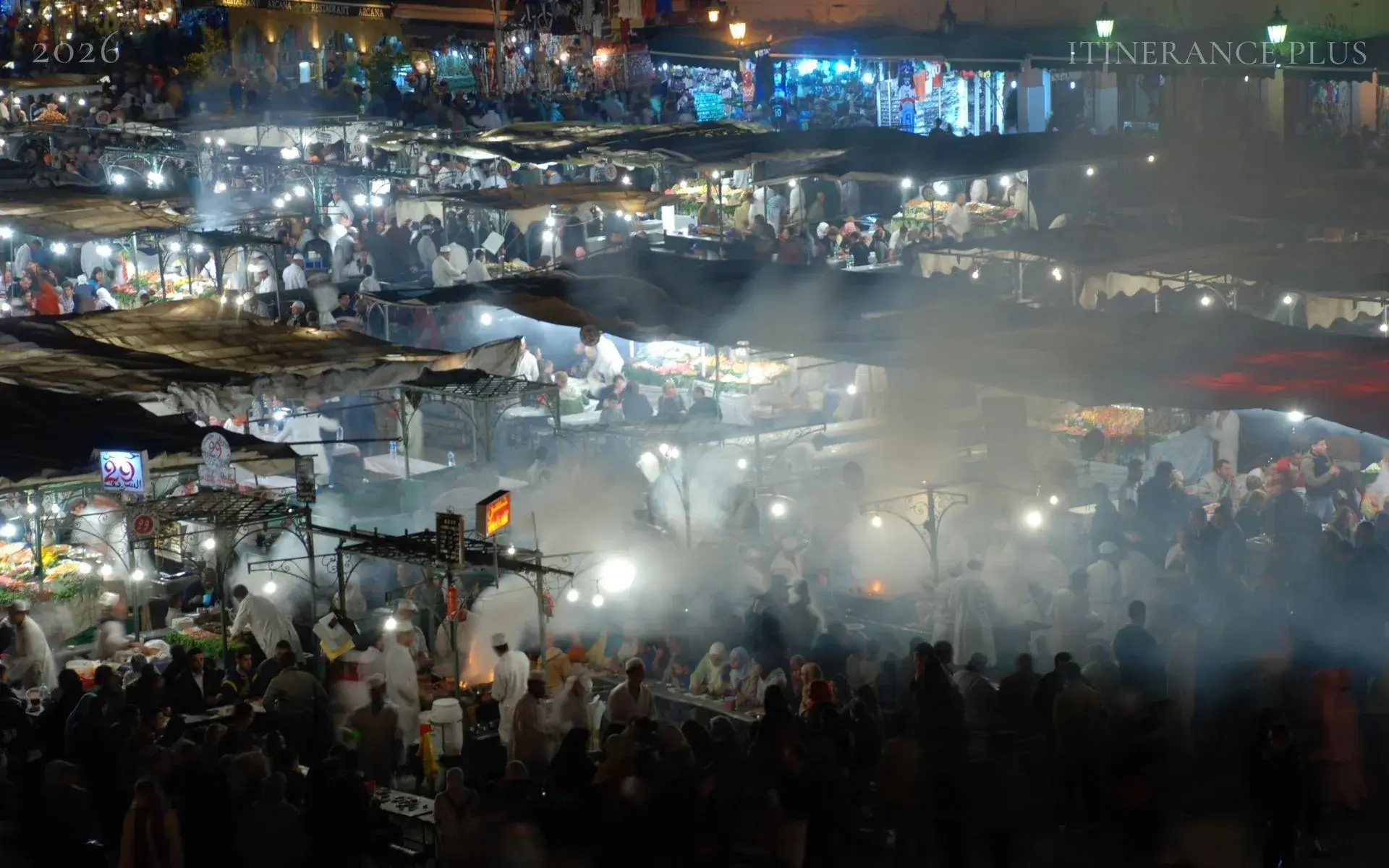
Jemaa el-Fna: diving into the vertigo of Marrakech
The smell of cedarwood smoke mixes with the scent of freshly pressed oranges, creating a dense, almost tangible atmosphere. In the distance, the first Maghreb call to prayer rises, filtered through the minarets of the...
Practical guides
Useful guides around this place
These guides help compare rhythms, formats and practical choices before shaping the visit.

Related experiences