Back to Marrakech
Museum
The Marrakesh Museum: diving into the brilliance of the Mnebhi Palace
Before visiting
Key takeShadow is a promise kept here, a cool caress that welcomes you as soon as you cross the heavy carved wooden gate.
Outside, the Ben Youssef district hums with frenetic activity, between the cries of mint merchants and the roar of mopeds weaving through the narrow alleys.
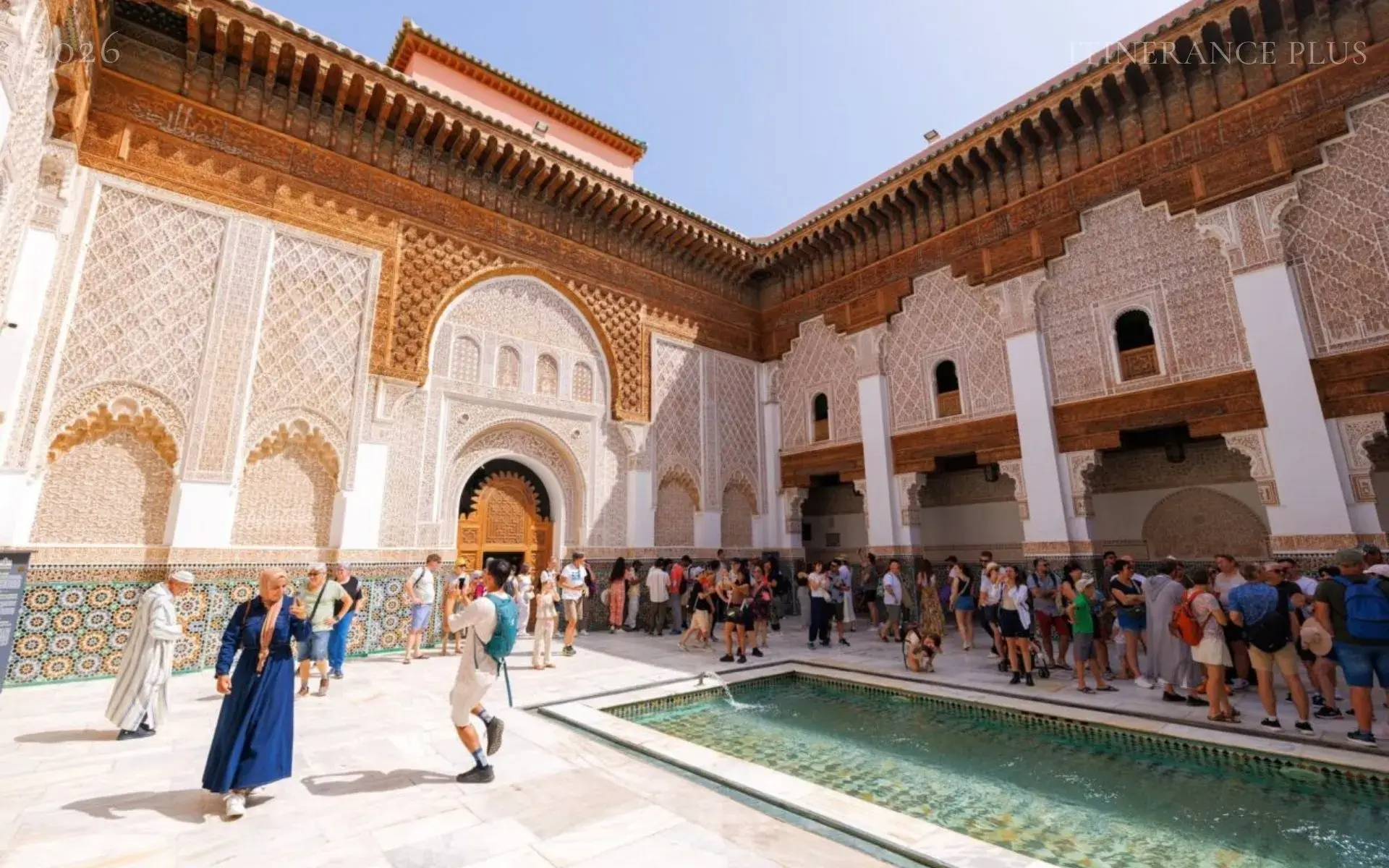
But inside the Marrakesh Museum, time seems to have frozen under a layer of stucco and cedar. You are immediately struck by the vastness of the central patio, a space so large it seems capable of holding the city's entire sky.
The scent of old wood, mixed with a hint of warm dust and distant jasmine, saturates the still air. Your footsteps echo on the zelliges, those terracotta mosaics whose deep blue responds to the saffron yellow of the walls.
It is in this late 19th-century palace, the home of former War Minister Mehdi Mnebhi, that Moroccan art has found one of its most beautiful settings.
One comes here not only to contemplate objects, but to feel the breath of a residence that has known the splendor of the court and the whispers of history, a place where each chiseled archway tells of the quest for absolute geometric perfection.
Insight
First impressions
Shadow is a promise kept here, a cool caress that welcomes you as soon as you cross the heavy carved wooden gate.
Outside, the Ben Youssef district hums with frenetic activity, between the cries of mint merchants and the roar of mopeds weaving through the narrow alleys.
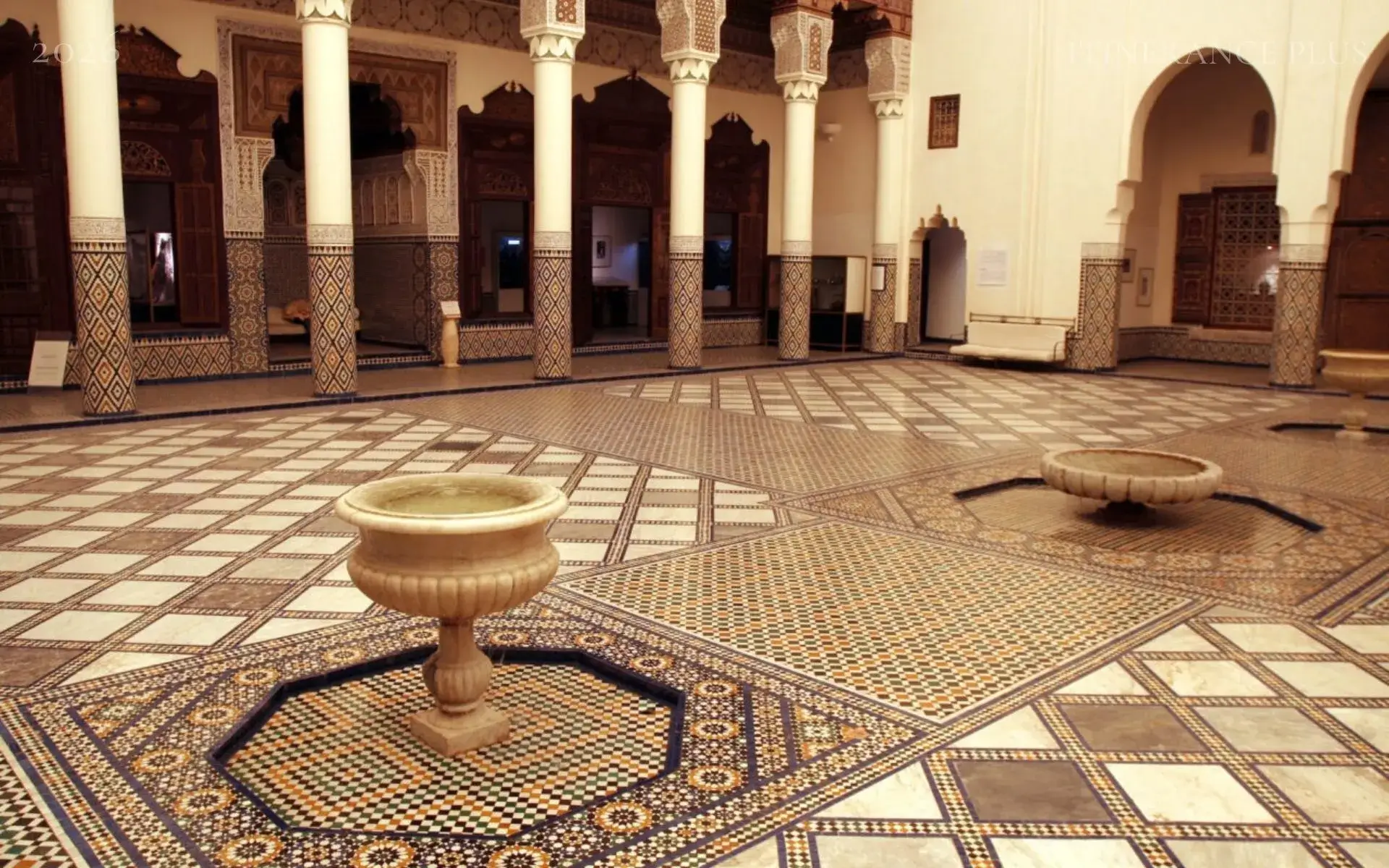
But inside the Marrakesh Museum, time seems to have frozen under a layer of stucco and cedar. You are immediately struck by the vastness of the central patio, a space so large it seems capable of holding the city's entire sky.
The scent of old wood, mixed with a hint of warm dust and distant jasmine, saturates the still air. Your footsteps echo on the zelliges, those terracotta mosaics whose deep blue responds to the saffron yellow of the walls.
It is in this late 19th-century palace, the home of former War Minister Mehdi Mnebhi, that Moroccan art has found one of its most beautiful settings.
One comes here not only to contemplate objects, but to feel the breath of a residence that has known the splendor of the court and the whispers of history, a place where each chiseled archway tells of the quest for absolute geometric perfection.
Light
Why is the monumental chandelier of the central patio a sun of steel?
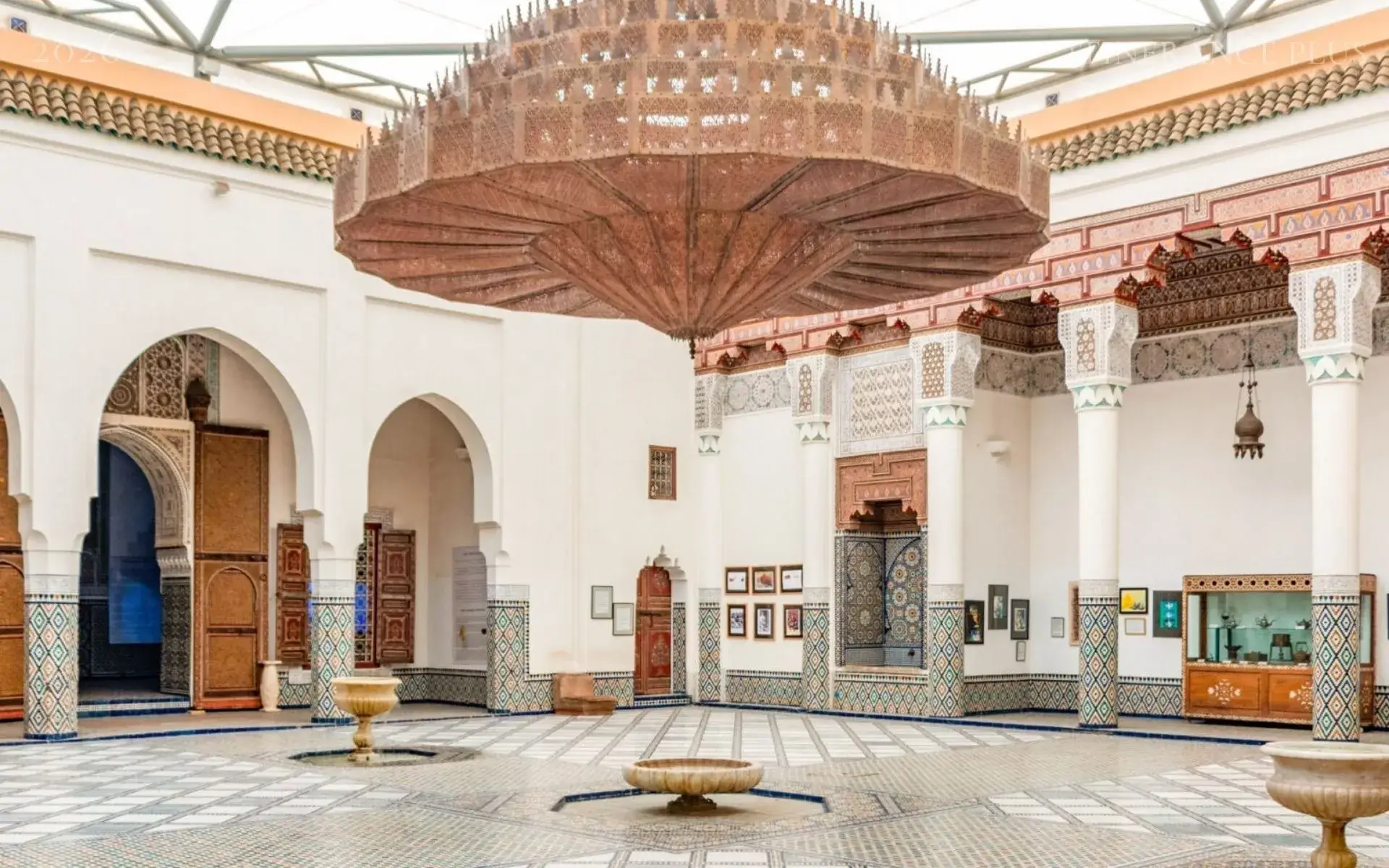
Upon entering the large atrium, your gaze is irremediably drawn upward to that metal monster that seems to float in the center of the space.
This gigantic chandelier, weighing several tons, is a feat of contemporary craftsmanship integrated into the historical setting of the Marrakesh Museum.
Its thousands of perforations allow a soft light to pass through, casting a lace of moving shadows on the ground that overlays the patterns of the zelliges.
It is an artificial sun that gives the patio an almost surreal dimension, especially when natural rays filter through the roof openings.
The patio's surface is immense, paved with marble and mosaics that draw eternal carpets under your feet. You will notice four marble basins, formerly flowing, which remind us that water is the center of all life in a Moroccan home.
Even without the murmur of water jets, the place retains a surprising freshness, a microclimate created by the thickness of the adobe walls and the ceiling height.
It is the ideal place to stop and simply look up at the upper galleries, where carved cedar wood forms friezes of fascinating complexity.
Around this central square, alcoves and salons follow one another, each offering a different detail: here a door painted with the zouak technique, there a window protected by a moucharabieh that allows a glimpse of life in other rooms without ever revealing it.
This architecture of concealment and splendor is typical of the great residences of the Medina. Walking through this space, you feel the power of the former owner, a man who wanted his house to reflect his rank and culture.
The chandelier is not just a decorative object; it is the pivot of a universe where light is sculpted with the same precision as stone.
Insight
What stories do the adornments and weapons of the collection tell?
Leaving the light of the patio to venture into the exhibition rooms is to enter the intimacy of the tribes and city dwellers of Morocco.
The permanent collection of the Marrakesh Museum is a journey through time, presenting objects that were, for some, instruments of war, and for others, symbols of seduction.
You stop before the display cases dedicated to Berber jewelry from the Atlas and the South. Solid silver, engraved, chiseled, or enameled, is king here.
The imposing fibulae, worn by women to drape their heavy woolen garments, shine with a matte glow, charged with protective symbols against the evil eye.
Further on, the curved daggers, the famous koummayas, recall the importance of honor and masculine adornment. The brass or silver scabbards, finely decorated with floral motifs, bear witness to a time when utilitarian objects absolutely had to be beautiful.
One can imagine these blades at the belts of riders during fantasias, those frantic races that kick up the dust of the Haouz plains. Each object here possesses a soul, a patina that tells of the hands that forged it and the bodies that wore it.
Ceramics from Fez and Safi also occupy a prominent place. The cobalt blues and metallic reflections of the parade dishes catch every light. One sees the precision of the line, the balance of geometric shapes that respond to the zelliges of the walls.
It is a silent conversation between the palace's decor and the objects it houses. Observing these pieces, you realize that Moroccan craftsmanship makes no distinction between the daily and the sacred.
A simple oil jar or a painted wooden wedding chest is treated with the same aesthetic devotion, making every moment of life an occasion to celebrate beauty.
Insight
How did the palace's hammam transform into an art space?
One of the most surprising parts of the visit is undoubtedly the palace's former hammam, now converted into a space for temporary exhibitions. Descending the few steps leading to it, you enter a universe of red bricks and low vaults.
The atmosphere changes radically; the space becomes narrower, more secret. This is where the minister and his close associates came to purify themselves, moving from the cold room to the hot room according to an unchangeable ritual.
Today, contemporary artworks, paintings, or photographs are hung on these walls steeped in history.
The acoustics of this place are particular; sounds are muffled, creating an atmosphere of contemplation.
You observe the still-visible heat conduits and the small openings in the domes, the "eyes of the sky," which once allowed steam to escape while letting in a few rays of light.
This blend of past utilitarian function and present cultural vocation gives the Marrakesh Museum a unique temporal depth. One does not just admire paintings; one inhabits the space of an ancestral practice.
Temporary exhibitions often showcase modern Moroccan artists who reinterpret traditional themes. Seeing a brightly colored abstract painting hung in the former rest room of a 19th-century hammam causes a stimulating visual shock.
This shows that Moroccan culture is not a block frozen in the past, but a living material that continues to evolve.
Emerging from the hammam to find the vast patio again, you feel as though you have crossed a temporal rift, an immersion in the depths of the palace that allows you to better appreciate the clarity of the reception spaces.
Insight
Why does the palace kitchen evoke the flavors of the past?
Even though the museum is now dedicated to the arts, some rooms retain an atmosphere that immediately summons the senses.
The former kitchens, though stripped of their original stoves, keep a structure that allows one to imagine the effervescence of past banquets.
One imagines the mountains of couscous, the steaming tajines with preserved lemons, and the sweet-savory pastillas that left these rooms for the minister's guests' tables.
The neighborhood around the museum is full of small stalls where these smells still float, creating an invisible link between the monument and the street.
The woodwork in these service rooms is less sophisticated than in the reception salons, but it possesses an elegant robustness. The raw cedar beam ceilings recall the very structure of the palace.
This is where the heart of the residence beat, where dozens of servants worked to maintain the Mnebhi family's lavish lifestyle. Walking through these spaces, you feel the social dimension of the place, a hierarchy inscribed in stone and decor.
The contrast between the sobriety of the service spaces and the richness of the reception rooms highlights the theatrical character of Medina architecture. Backstages are not shown; only splendor is displayed.
Yet, at the Marrakesh Museum, these shadowed spaces are just as fascinating because they tell the other side of the story.
They allow one to imagine the logistics required to keep such a structure alive at a time when Marrakesh was the nerve center of Moroccan power.
It is a dive into the logistics of luxury that gives depth to the beauty of the objects exhibited in the neighboring rooms.
Insight
What is the impact of contemporary art on the memory of the place?
The Marrakesh Museum does not just look to the past. Under the impetus of the Omar Benjelloun Foundation, it has become a major player on the current art scene.
The large rooms surrounding the patio regularly host retrospectives of major Moroccan painters or installations by international sculptors.
This dialogue between the ornament-laden historical setting and the sometimes radical purity of contemporary art creates an exciting aesthetic tension.
You may find yourself facing a minimalist canvas framed by century-old stucco friezes.
This confrontation forces the gaze to be more attentive. One is not simply lulled by the repetition of traditional geometric patterns; one is jostled by new shapes and colors.
This prevents the palace from becoming a simple mausoleum of past culture. On the contrary, it becomes a bridge between generations.
Students from nearby art schools come here to be inspired by the rigor of zellige masters while discovering the latest global trends.
The use of the large patio for concerts or artistic performances adds another layer of life to the building.
It is said that the acoustics, with their particular resonance due to the marble and the central void, transform every musical note into an immersive experience.
By visiting the Marrakesh Museum, you participate in this uninterrupted chain of creation. You are not just a passive observer;
you are a witness to a culture that constantly reinvents itself, drawing from its deepest roots to bloom in unexpected ways in the present.
Insight
How does calligraphy link wood, stone, and paper?
Everywhere you look, writing is present. In the collection of the Marrakesh Museum, ancient manuscripts hold a place of honor. On yellowed parchment or fine paper, calligraphies in Maghrebi script draw waves of black ink enhanced with gold.
These are sacred texts, law treatises, or poems that bear witness to the importance of the written word in the city's culture. But calligraphy does not stop at paper; it escapes books to invade the palace walls.
Observing the door lintels and plaster friezes, you discover that texts are everywhere. Verses from the Quran or praises to the house's owner are carved in cedar or chiseled in stucco. Writing becomes an ornament, a texture in its own right.
You no longer just read a message; you admire a form. This omnipresence of letters creates a unity between the collection's objects and the architecture that houses them.
It is the guiding thread of the visit, a silent melody that reminds us that in this culture, knowledge and beauty are inseparable.
The precision of the calligrapher's gesture responds to that of the stonemason. One feels the same demand for perfection, the same respect for rhythm and balance.
Before an 18th-century Quran displayed in a showcase, you measure the time needed to produce such a work. This long time is what permeates the entire palace. We are not in immediacy, but in sedimentation.
Calligraphy is the language through which the palace's stones continue to speak to visitors, transmitting wisdom that goes beyond the simple framework of aesthetics to touch the sacred.
Insight
Why is the Ben Youssef district the soul of Marrakesh?
Best time to visit: The shoulder seasons, from October to May, offer bright days and cool evenings ideal for exploring the Medina. In winter, the low light enhances the patio's zelliges. Avoid the hottest hours of summer if possible, even though the palace interior remains naturally cool.
Average daily budget: Entry to the museum is about 50 to 70 Dirhams. For a day in the district including nearby visits and a local lunch, plan a budget of about 400 Dirhams per person for comfortable enjoyment.
How to get there: Located in the very heart of the Medina, the museum is accessible only on foot. From Jemaa el-Fna square, allow about 15 minutes of walking, following signs to the Ben Youssef Madrasa. it is a labyrinthine but fascinating journey.
Ideal length of stay: Half a day (about 2 to 3 hours) allows you to enjoy the museum, its hammam, and the permanent collections without rushing, before enjoying a break on Ben Youssef Square.
Other places to discover
More places to explore nearby
Garden
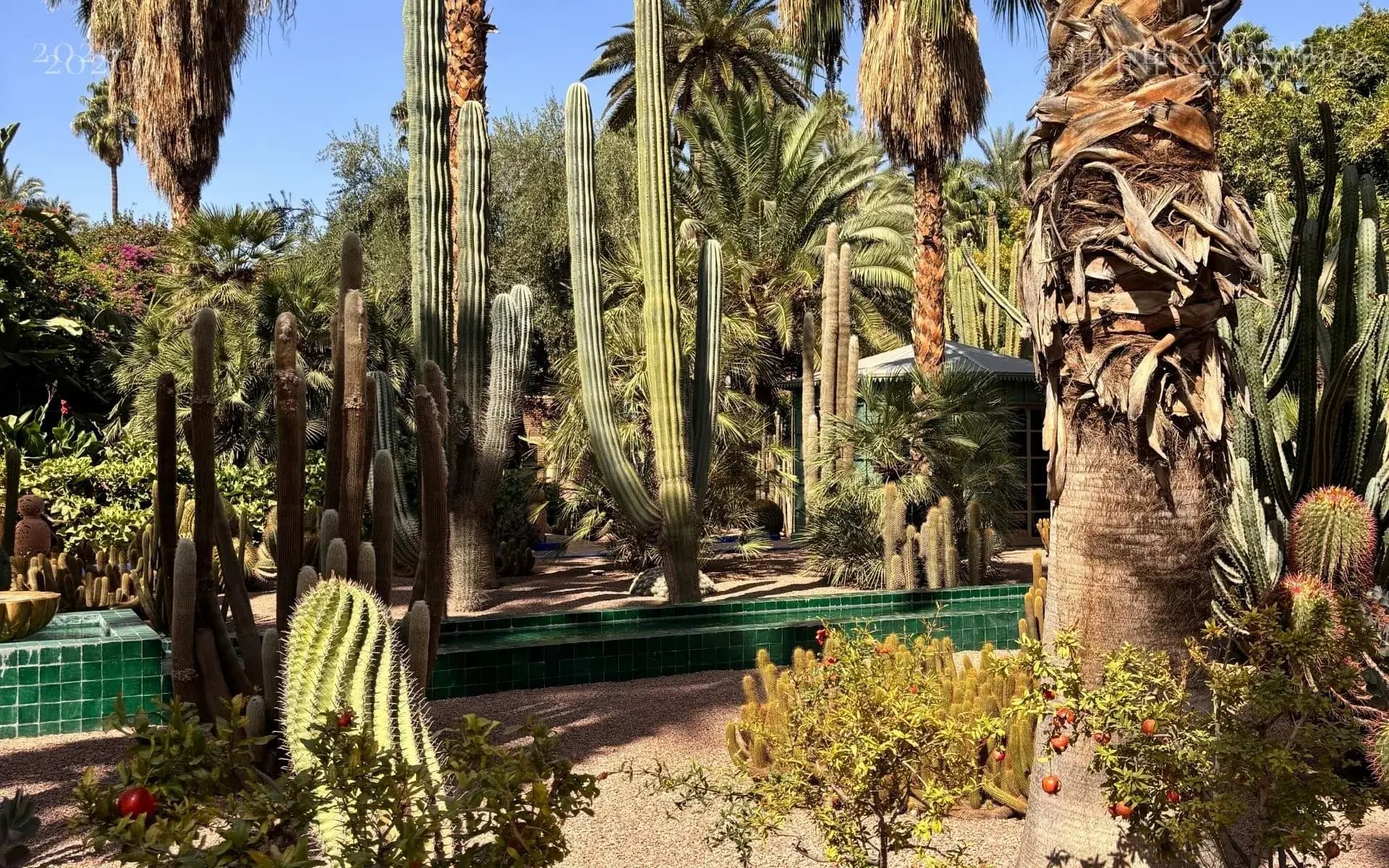
Majorelle Garden: an immersion in the cobalt blue of Marrakech
A sanctuary of freshness and color in the heart of Guéliz, where rare botany, Yves Saint Laurent's legacy and precise light meet.
Square
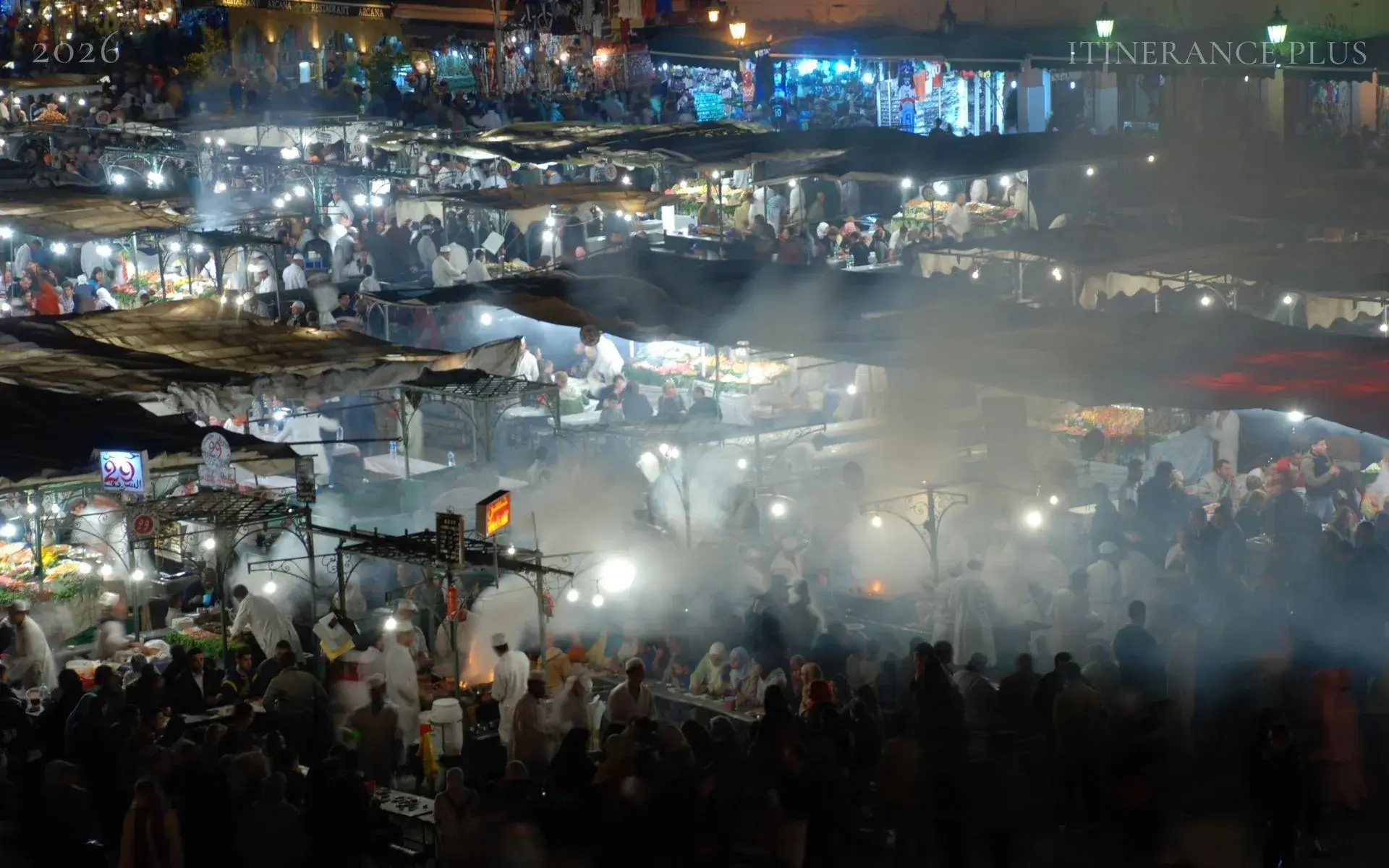
Jemaa el-Fna: diving into the vertigo of Marrakech
The smell of cedarwood smoke mixes with the scent of freshly pressed oranges, creating a dense, almost tangible atmosphere. In the distance, the first Maghreb call to prayer rises, filtered through the minarets of the...
Practical guides
Useful guides around this place
These guides help compare rhythms, formats and practical choices before shaping the visit.

Related experiences