Back to Marrakech
Garden
The Menara: a mirror of water facing the Atlas snows
Before visiting
Key takeThe ground crunches under your steps, a fine ochre dust that rises in silence before settling on the leather of your shoes. The air here is cooler than in the center of the Medina, charged with a subtle humidity escaping from the immense central basin.
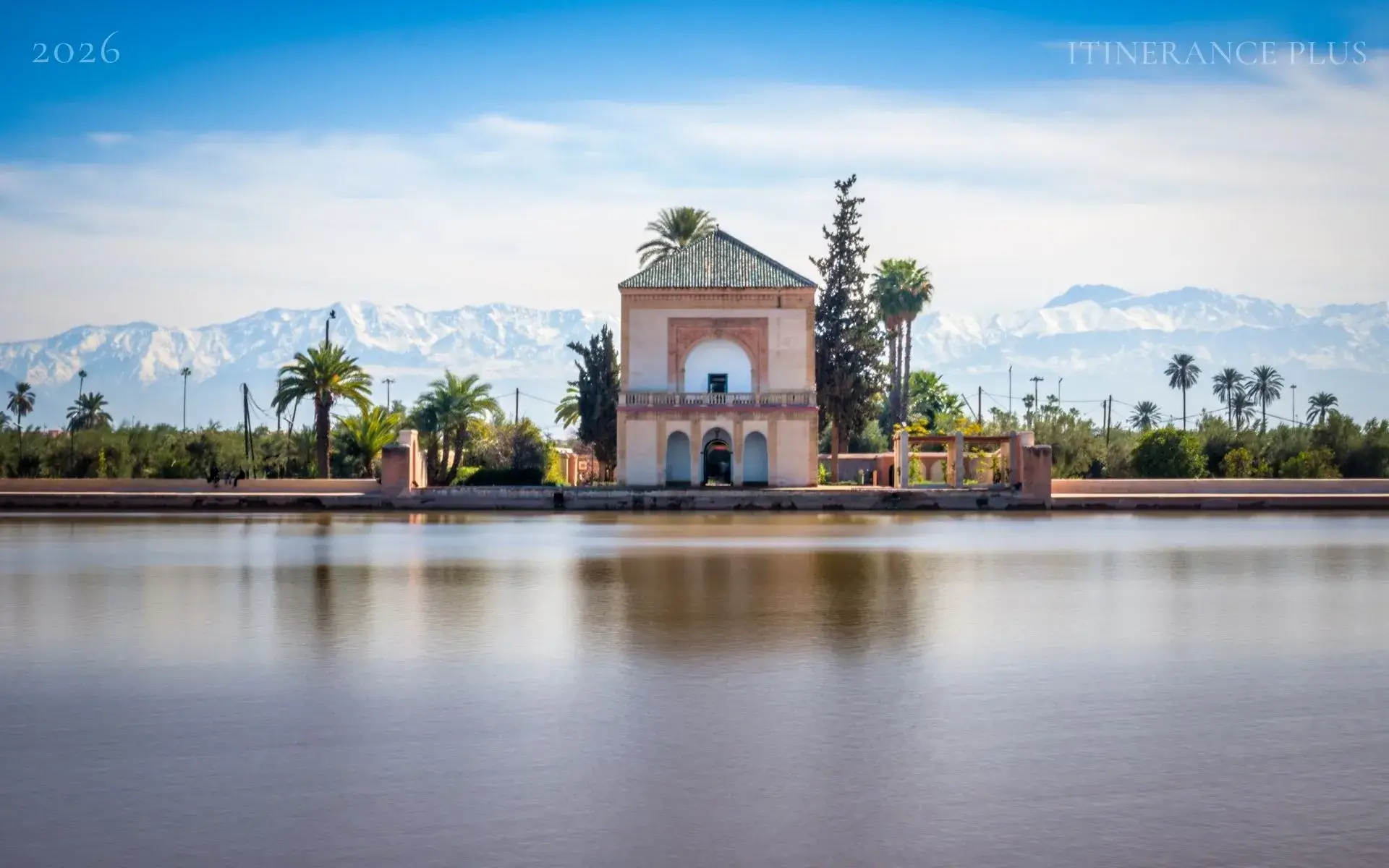
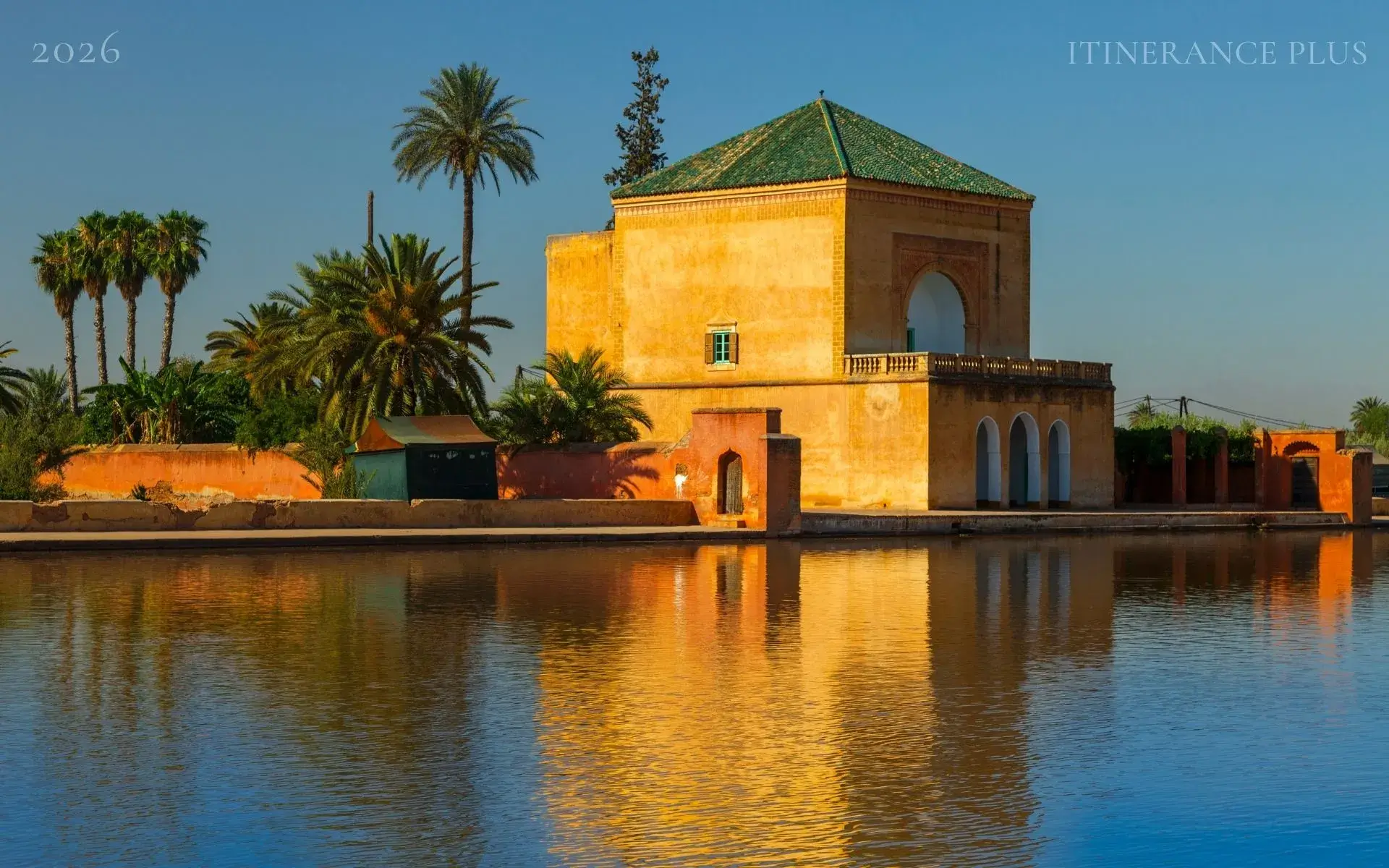
You walk down a straight path, lined with gnarled trunks whose bark seems to have drunk the sun for centuries. Looking up, you see the pavilion with its green-tiled roof standing out with surgical precision against the azure sky.
The Menara is not just a garden; it is a mineral and plant breath located at the edge of urban bustle. In the first hundred meters, silence envelops you, only disturbed by the rustling of palms and the discrete lapping of water.
The name The Menara resonates like a promise of serenity, a place where time seems to have suspended its course to give way to contemplation.
Here, no overloaded decorations, but a sovereign geometry that soothes the mind and invites drifting between the olive trees and the reflection of distant mountains.
Location
Insight
First impressions
The ground crunches under your steps, a fine ochre dust that rises in silence before settling on the leather of your shoes. The air here is cooler than in the center of the Medina, charged with a subtle humidity escaping from the immense central basin.
You walk down a straight path, lined with gnarled trunks whose bark seems to have drunk the sun for centuries. Looking up, you see the pavilion with its green-tiled roof standing out with surgical precision against the azure sky.
The Menara is not just a garden; it is a mineral and plant breath located at the edge of urban bustle. In the first hundred meters, silence envelops you, only disturbed by the rustling of palms and the discrete lapping of water.
The name The Menara resonates like a promise of serenity, a place where time seems to have suspended its course to give way to contemplation.
Here, no overloaded decorations, but a sovereign geometry that soothes the mind and invites drifting between the olive trees and the reflection of distant mountains.
Gardens
Why is the central basin the beating heart of this garden?
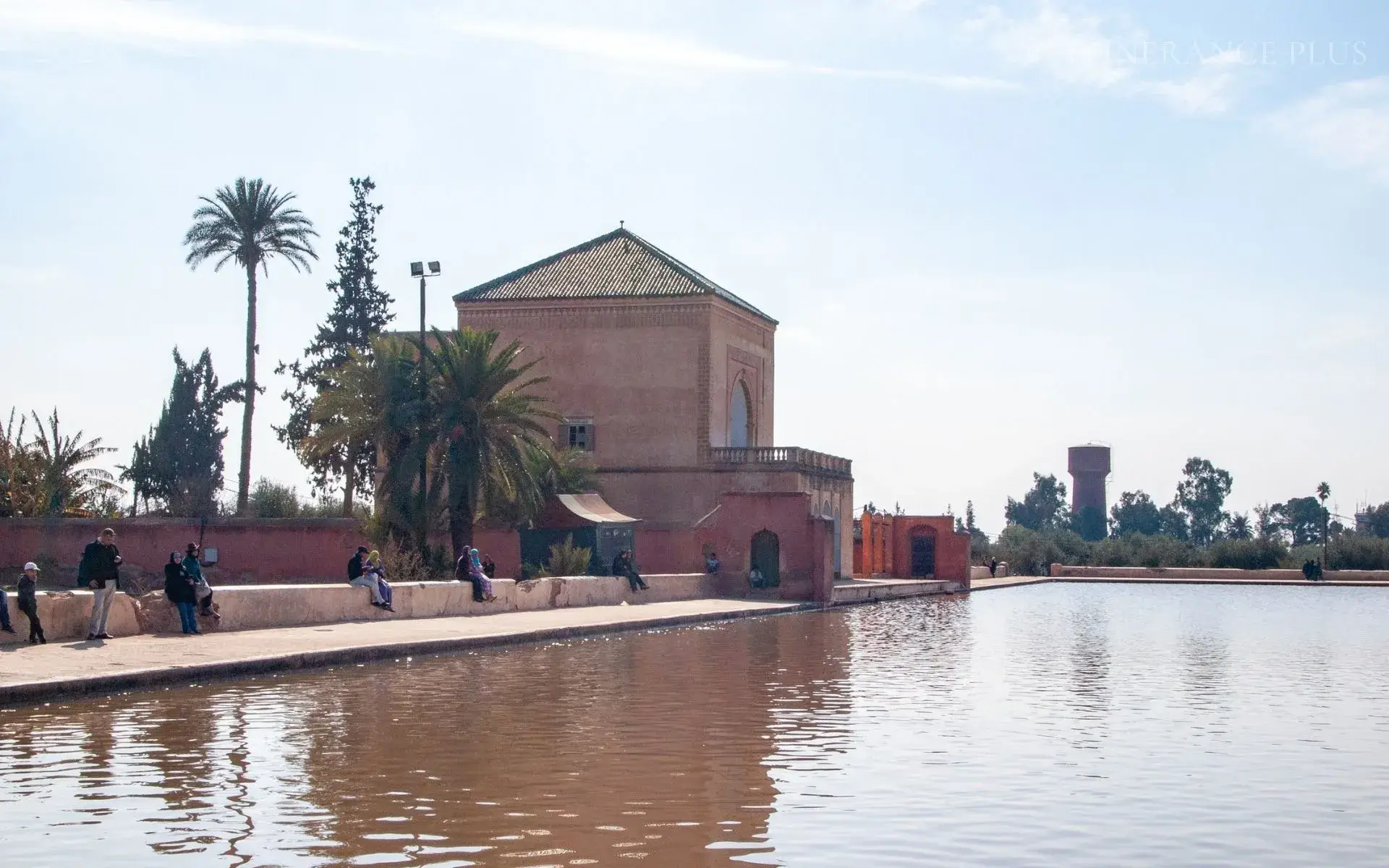
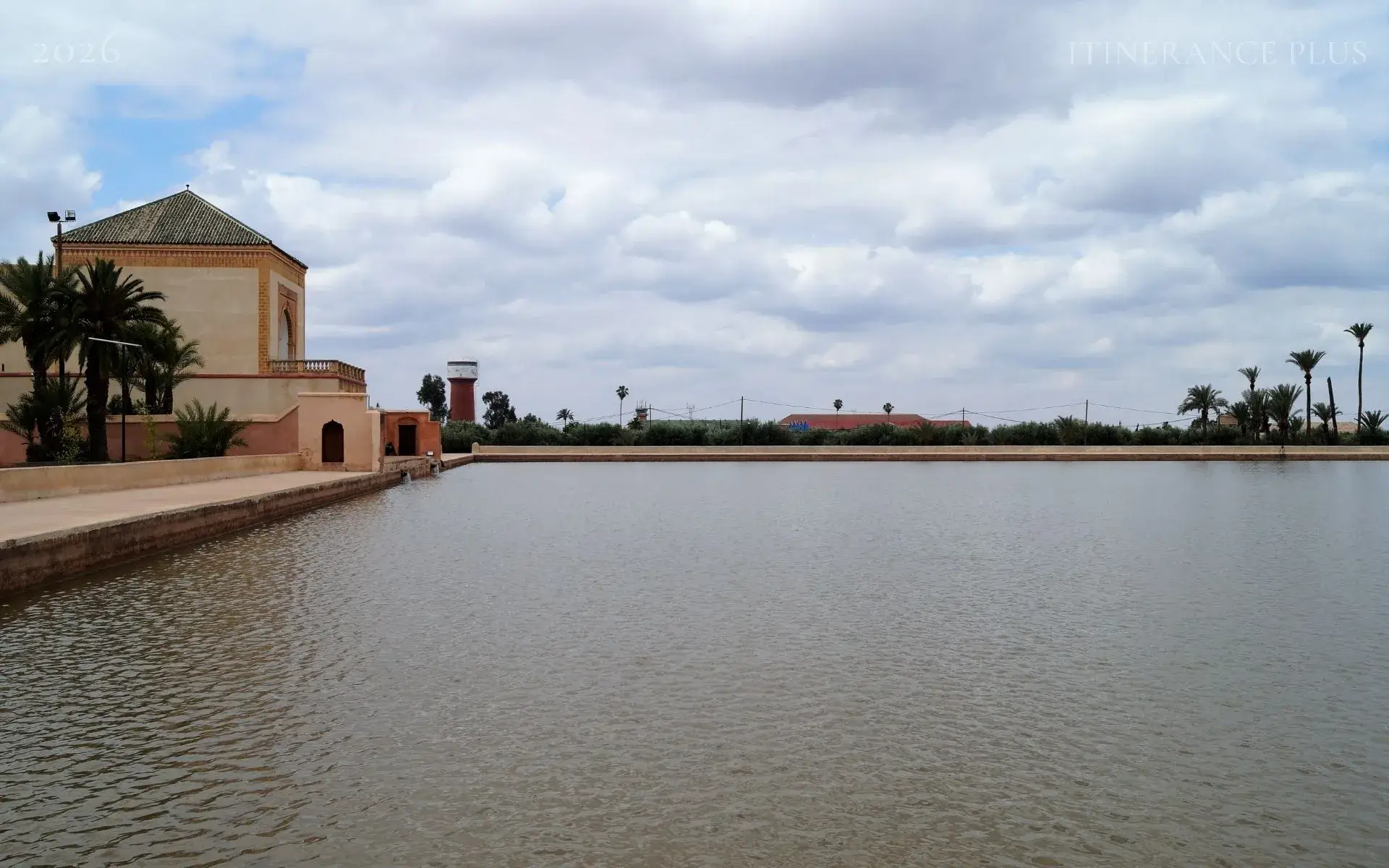
The nerve center of this space is undoubtedly its immense water reservoir, a feat of engineering inherited from the Almohad dynasty. Arriving at the edge of this inland sea, you are struck by the immensity of the flat surface acting as a perfect mirror.
This basin was not designed for simple decoration; it once served to irrigate the thousands of surrounding olive trees thanks to a sophisticated system of underground pipes.
Water traveled from the peaks of the Atlas, captured by draining galleries, to come to rest here, at the foot of the pavilion.
You can sit on the stone wall and observe the ballet of carp rising to the surface, creating circular ripples that momentarily break the reflection of the clouds. It is a hypnotic spectacle that invites meditation.
The contrast between the deep blue of the water and the red of the surrounding terracotta creates a visual harmony of rare power.
Here, water is treated as a sacred resource, a source of life that allows this oasis to subsist against the aridity of the surrounding climate.
Many locals come here at the end of the day to enjoy the coolness emanating from the basin. You cross students reviewing under the arcades, families sharing a moment of relaxation, and solitary dreamers.
The basin is the pivot around which all park life is organized. Its utilitarian function has faded over time to give way to a purely aesthetic and spiritual dimension.
It is the mirror of the city's soul, a place where one comes to reconnect with fundamental elements: earth, water, and sky.
Insight
What secret hides the green-tiled pavilion of The Menara?
Dominating the basin, the pavilion of The Menara is the most emblematic image of the site, the one found on all postcards without ever really grasping its essence before being there.
Built in the 19th century on much older foundations, this small palace served as a summer residence for sultans in search of tranquility.
Its architecture is of an elegant sobriety, with its ochre walls and pyramidal roof covered with glazed tiles that catch light in a changing way depending on the tilt of the sun.
Observing the structure more closely, you will notice the finesse of the openings and the balcony overlooking the water. One easily imagines the sovereign standing there to admire the sunset, enjoying the breeze that crosses the airy rooms.
The interior, although bare, retains an atmosphere of contemplation. Thick walls protect from the heat, creating a natural refuge where the air stays still and cool.
It is an architecture of discretion, far from the pomp of the Medina palaces, privileging the view of nature over excessive ornamentation.
Legend tells romantic and sometimes dark stories related to this pavilion, but beyond the myths, it is its silhouette that strikes the imagination. It seems to float on the basin, particularly when the morning mist envelops the gardens.
This building is the visual landmark that gives verticality to the entire site. It embodies the dialogue between man and landscape, an architectural punctuation that highlights the beauty of the horizon.
Walking around the basin, you will see the pavilion change face, sometimes bathed in golden light, sometimes silhouetted as a shadow against the crimson sky.
Light
How to lose oneself with delight in the millennial olive grove?
As soon as you move away from the central basin, you enter a plant labyrinth composed of more than forty thousand olive trees. This is where the sensory experience of The Menara takes on its full scale. The trees are not planted at random;
they form regular paths that create games of shadow and light on the ground. The smell here is woody, mixed with a scent of heated earth and dry grass.
It is a domesticated forest where one can walk for hours without ever feeling tired, protected by the silvery foliage.
The olive tree trunks are true natural sculptures. Some are so old they seem to carry within them the memory of past centuries. You can touch the rough bark, feel the wood grain, and imagine the generations of gardeners who took care of these trees.
During the harvest season, the garden comes alive with frenetic activity, but the rest of the year, it belongs to strollers and birds. It is a space of freedom where one can step off the beaten path to find one's own corner of shade.
The olive grove is also home to many bird species whose song accompanies your steps. The rustling of leaves in the wind resembles a permanent murmur, a plant breath that isolates you from the outside world.
Going deeper into the park, traffic noises fade away completely. You find yourself alone with the trees, in a rare intimacy with nature.
It is the ideal place for an improvised picnic, far from sight, savoring the simplicity of local bread and a few olives, in perfect harmony with the setting.
Atmosphere
Why is the Atlas the essential background to the spectacle?
One cannot talk about this place without mentioning the monumental presence of the Atlas Mountains barring the horizon to the south.
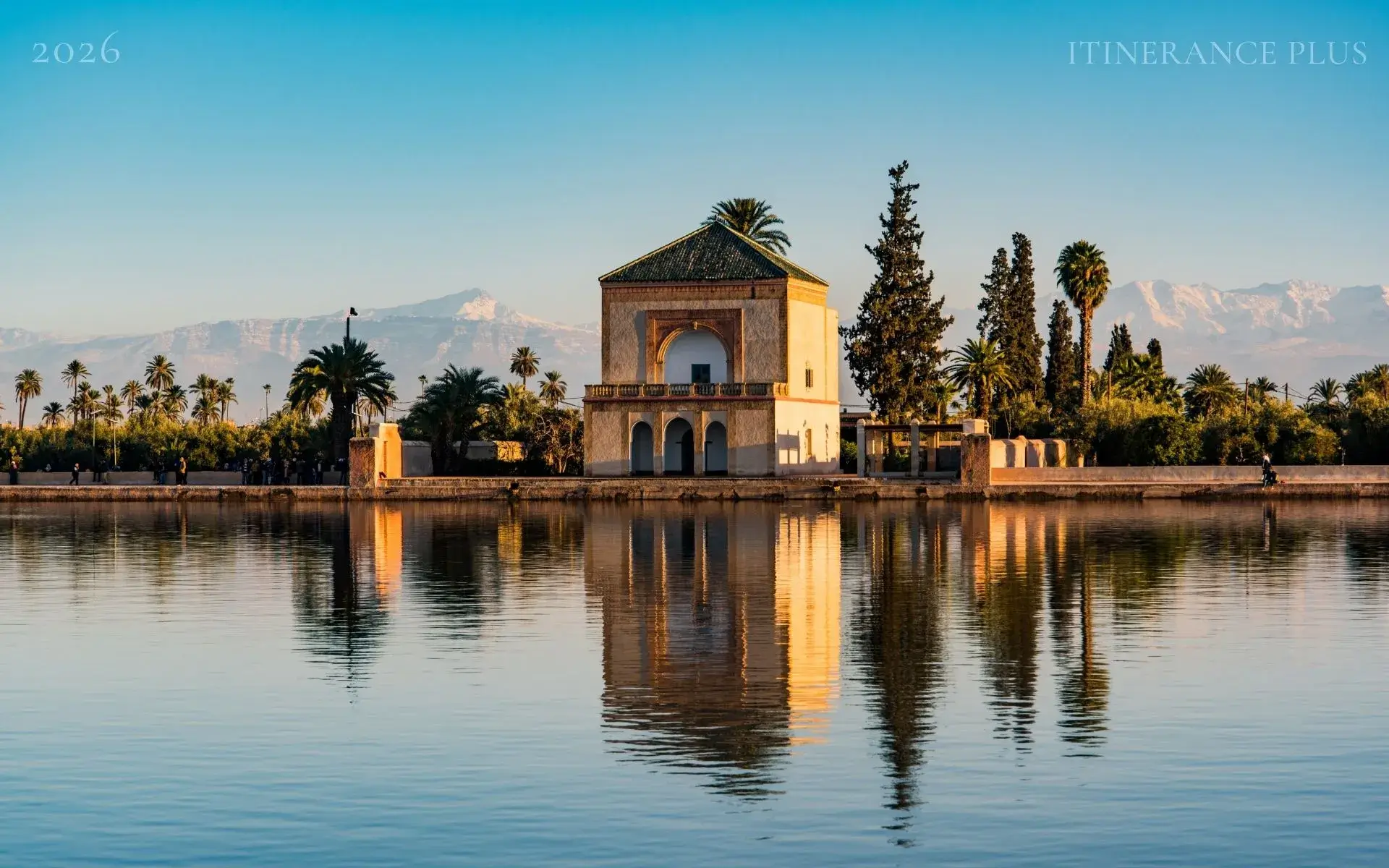
In clear weather, particularly in winter and spring, the snowy peaks create a striking contrast with the red earth and the green of the olive trees. It is this image that gives The Menara its grandiose dimension.
The mountain seems so close that one would think it possible to touch it, though it is several dozen kilometers away.
The view from the edge of the basin, with the pavilion in the foreground and the snowy peaks in the background, is one of the most moving spectacles one can experience.
It is a meeting between two worlds: the horizontal oasis shaped by man and the wild verticality of the mountain range. On days of pure wind, the sharpness of the landscape is such that every fold of the relief, every patch of snow is distinguishable.
It is a lesson in living geography, a constant reminder of the very source of life in this region.
At sunset, the changing light transforms the mountain into a moving painting. The peaks pass from sparkling white to dusty pink, then to intense purple before vanishing into darkness.
This daily spectacle attracts photographers and nature lovers. The presence of the Atlas gives a depth of field to the garden, inscribing it into a much larger landscape.
One then understands that the garden is only a stage, a gateway to the heights, a place of transition between the Haouz plain and the Atlas peaks.
Light
What is the unique atmosphere during a Sunday afternoon?
To grasp the human aspect of the site, one must go there on Sunday, when locals appropriate the place for their weekly leisure. The atmosphere changes radically;
contemplative calm gives way to a communicative joy of living. Families settle under the olive trees with rugs, food baskets, and thermoses of tea. Children's laughter echoes in the paths, while young people engage in ball games in the more open spaces.
It is an immersion into local daily life, far from classic tourist circuits. You will see groups of friends sharing a home-prepared tagine, couples strolling arm in arm, and elders discussing wisely on stone benches.
This popular appropriation of the monument is what makes it alive. The Menara is not a frozen museum; it is a loved and frequented public park, a space of green democracy where everyone crosses paths without distinction.
The air then fills with smells of food, fresh mint, and spring scents. Vendors of sunflower seeds and treats circulate at the entrance, adding a touch of color and animation.
Despite the crowd, the space is so vast that everyone finds their corner of intimacy.
Participating in this Sunday ritual is a way to understand the importance of gardens in Moroccan culture: places of gathering, sharing, and simple celebration, where people come to celebrate the end of the week in an exceptional setting.
Light
How does the evening light transform the space into an ochre dream?
When the sun begins its descent toward the horizon, the park undergoes a fascinating chromatic metamorphosis. The ochre earth seems to catch fire, taking on orange and copper hues of rare intensity.
The olive tree trunks cast oversized shadows that stretch across the ground, creating a powerful graphic rhythm in the paths. It is the golden hour, that fleeting moment when every detail is magnified by a low light that carves volumes.
The pavilion then reflects with incredible clarity in the still water of the basin. It looks as if a second, more mysterious structure exists beneath the surface.
The green tiles of the roof shine with a new brilliance, as if illuminated from within. It is the ideal time to stand facing the basin and watch the light decline.
The temperature drops gently, and a light breeze often rises, bringing with it the scents of nocturnal vegetation starting to awaken.
This transition between day and night is the most poetic moment of the visit. The sky passes through shades of saffron, turquoise, and crimson, offering a spectacle one never tires of.
The silhouettes of palms and olive trees are cut into black shadows against this colorful background.
Leaving the park at that moment, you carry with you images of unreal beauty, the feeling of having witnessed an ancestral solar rite where architecture and nature merge into the same harmony of colors.
Insight
Why is the symbolism of water omnipresent here?
Water at The Menara is much more than a simple decorative element or an agricultural necessity; it is invested with a strong symbolic charge. In a region where the desert is never far away, the mastery of water is the ultimate sign of power and wisdom.
The large basin is a demonstration of this ability to tame the elements to create life. It represents fertility, purity, and prosperity. Walking along its banks, you feel this quasi-religious respect for this precious liquid.
The system of khettaras, those underground galleries that channeled water, is a metaphor for the circulation of life beneath the earth. One only sees the final basin, but one imagines the entire hidden network that allows the garden to exist.
It is an invitation to reflect on what is not immediately visible. The still water of the reservoir invites clarity of mind and reflection. It acts as a soothing for the senses, a necessary pause in the heat of the day.
Many popular rites and beliefs are linked to this water. It is sometimes credited with soothing virtues. The mere fact of contemplating it is considered a therapy against the stress of city life.
Observing the changing reflections on the surface, one understands that water is the true master of the place. It is water that dictates the rhythm of the seasons, the growth of trees, and the coolness of the air.
Without this basin, the garden would quickly return to dust. This omnipresence of water makes this site a sanctuary of life, a permanent tribute to Morocco's most precious resource.
Insight
Final impressions
Leaving The Menara, as you cross the exit gate to return to the asphalt of the avenue, you keep within you the feeling of a peace found. The strong image of the pavilion reflecting in the water will remain engraved as the climax of your wander.
You carry with you the smell of earth baked by the sun and the memory of that golden light that transforms each olive tree into a silver sentinel. It is not just a park you visited, but a fragment of eternity placed at the city's gates.
Casting a last look toward the horizon, you realize that the balance between water, architecture, and mountain is perfect here.
You leave with the certainty that in this city that never sleeps, there is a mirror of water capable of reflecting not only the Atlas peaks but also the deep serenity one comes to seek in the heart of The Menara, this garden where every step is a promise of freshness and every look an encounter with history.
Practical Box: Organizing your visit
Best time to visit: Spring (March to May) is the ideal season to see the olive trees in bloom and enjoy the view of the snowy Atlas. Autumn (October and November) also offers very pleasant temperatures and exceptional light.
Average daily budget: Access to the garden is free. If you wish to visit the interior of the pavilion, count about 10 to 20 Dirhams. Plan a small budget for a taxi (20-30 Dirhams from the center) and a few coins for refreshments or seeds from street vendors.
How to get there: Located about 3 kilometers from the city center, at the end of Menara Avenue. You can get there by small taxi, by horse-drawn carriage for a slower experience, or even on foot from the Hivernage district if the temperature is mild.
Ideal duration of stay: A half-day (about 2 to 3 hours) is perfect to walk around the basin, stroll in the olive grove, and enjoy the view of the mountains without rushing.
Frequently asked questions
Everything about The Menara: a mirror of water facing the Atlas snows
Other places to discover
More places to explore nearby
Garden
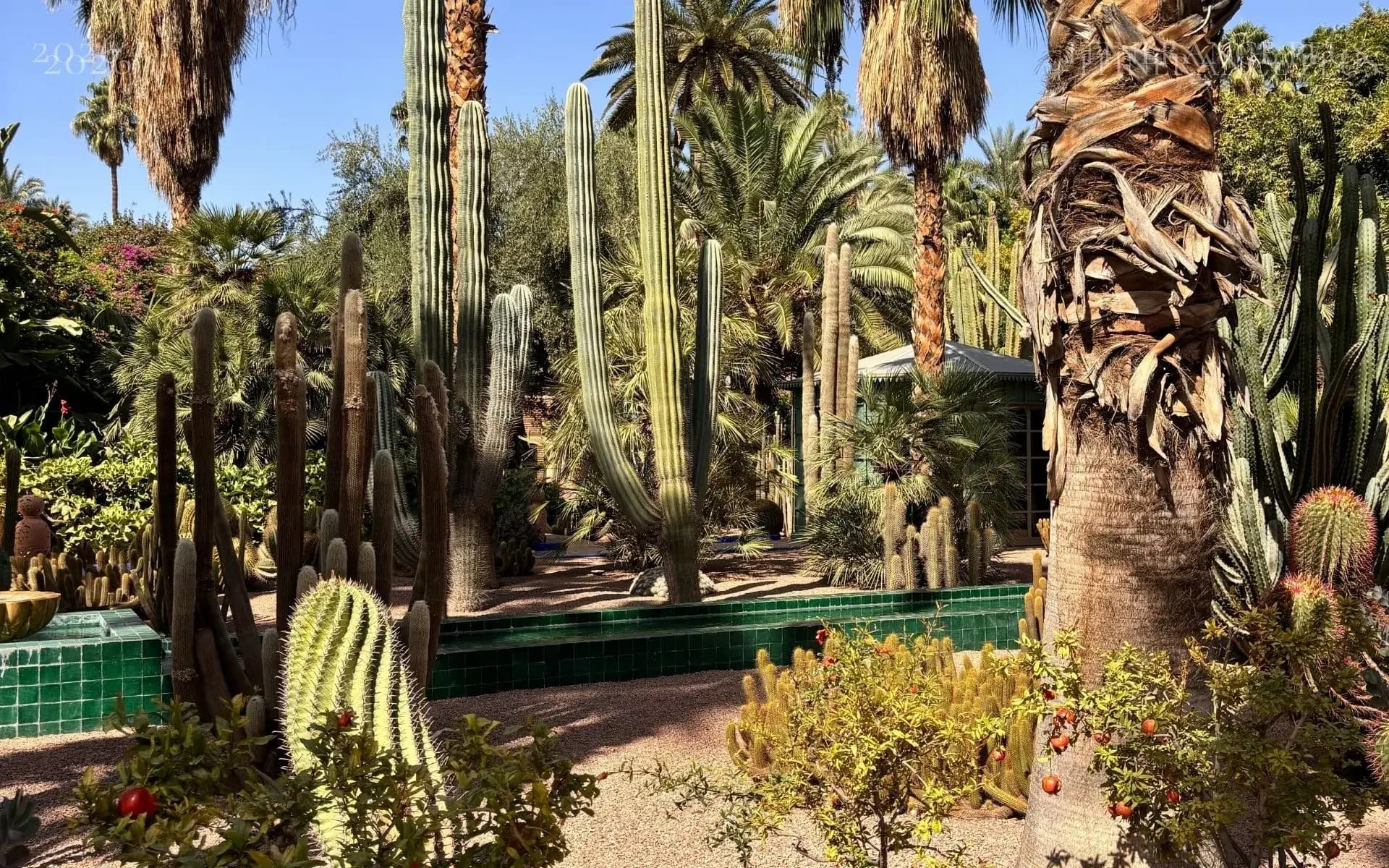
Majorelle Garden: an immersion in the cobalt blue of Marrakech
A sanctuary of freshness and color in the heart of Guéliz, where rare botany, Yves Saint Laurent's legacy and precise light meet.
Square
Jemaa el-Fna: diving into the vertigo of Marrakech
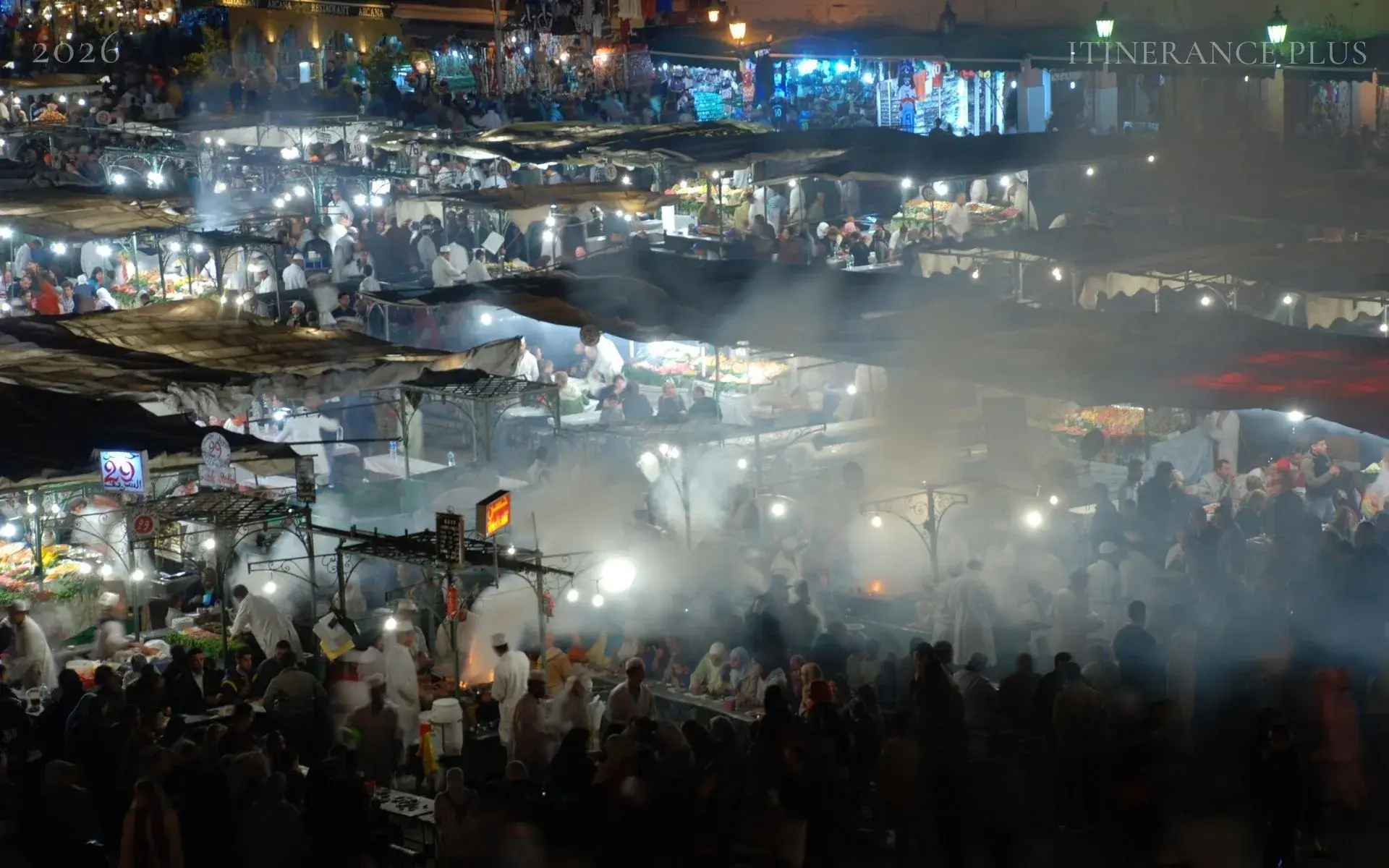
The smell of cedarwood smoke mixes with the scent of freshly pressed oranges, creating a dense, almost tangible atmosphere. In the distance, the first Maghreb call to prayer rises, filtered through the minarets of the...
Practical guides
Useful guides around this place
These guides help compare rhythms, formats and practical choices before shaping the visit.


Related experiences