Back to Marrakech
Historic site
The Saadian Tombs: Whispers of Gold Beneath the Storks
Before visiting
Key takeThe Saadian Tombs: Whispers of Gold Beneath the Storks
Location
Insight
What secret does the gloom of the Hall of the Twelve Columns conceal?
To reach the heart of the monument, patience is sometimes required, as access is well-earned. You find yourself facing a narrow opening where daylight struggles to penetrate.
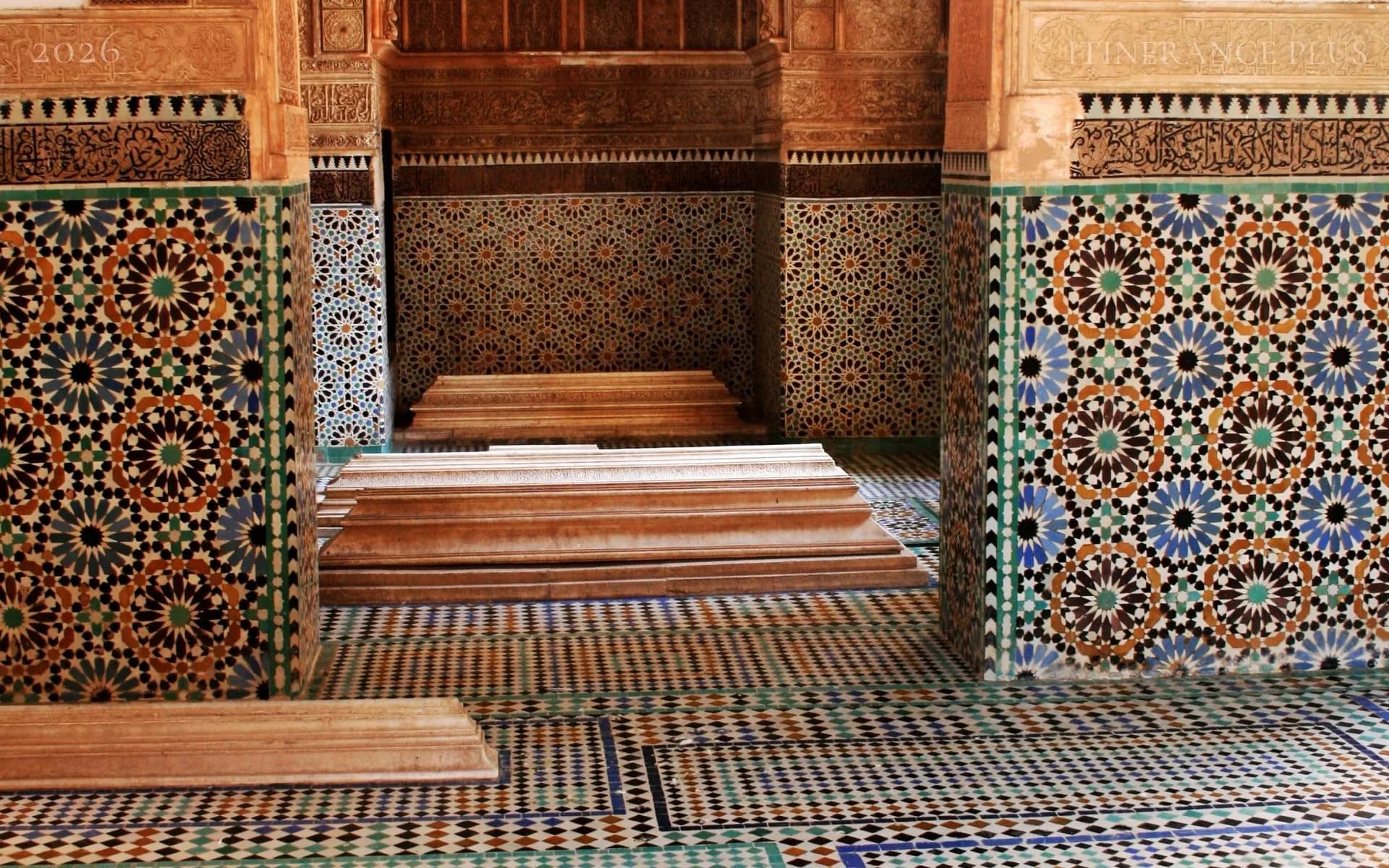
Inside, your eyes take a few moments to adjust before discovering the Hall of the Twelve Columns. This is where Ahmed el-Mansour, the "Golden" Sultan, rests. The spectacle is breathtakingly sophisticated.
Twelve columns of milky white Carrara marble rise to support a cedarwood dome carved with mathematical complexity.
The gold, once applied lavishly, still gleams in places under discreet spotlights, a reminder of the riches brought back from expeditions to Timbuktu.
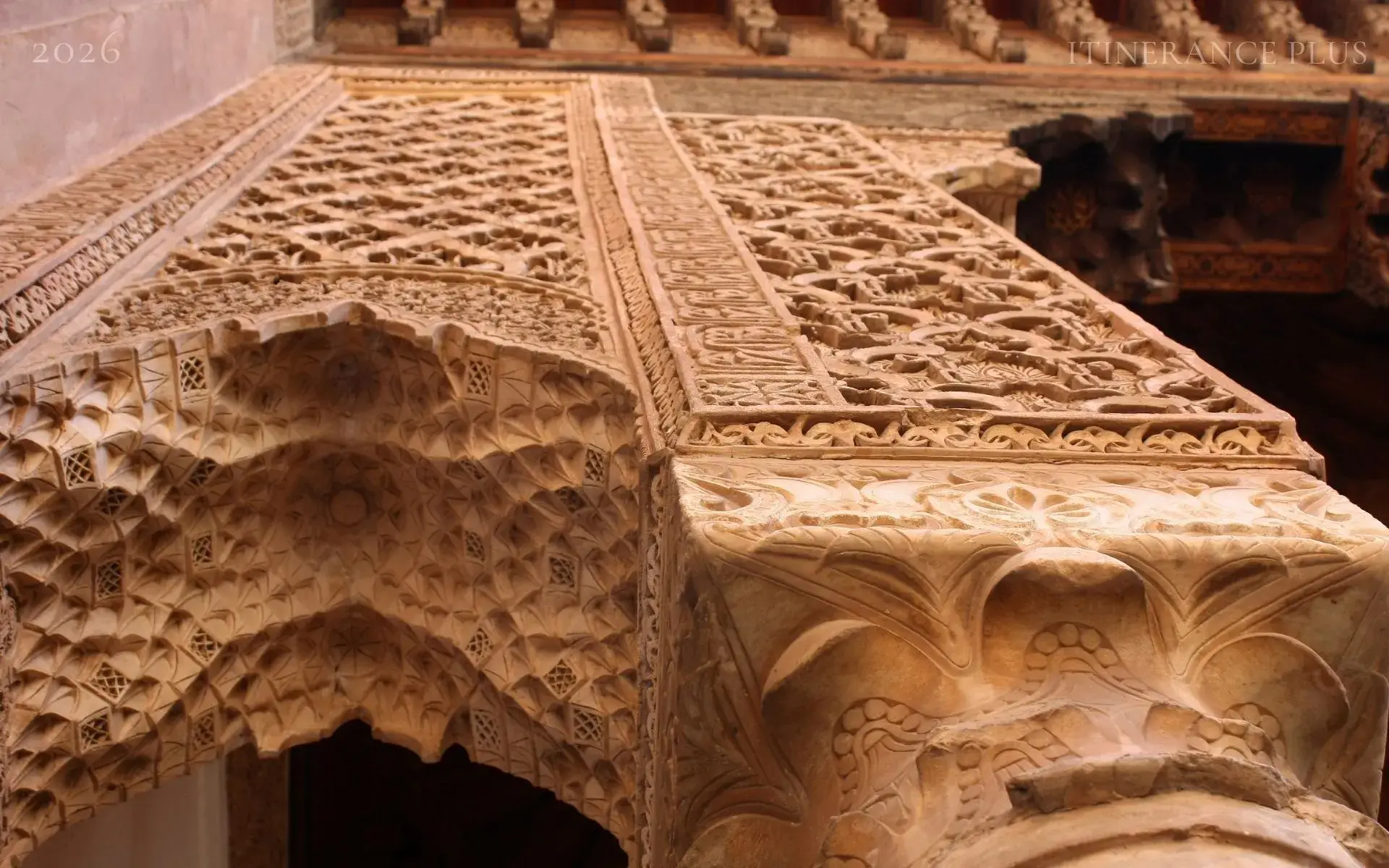
The stucco work, or sculpted plasterwork, reaches its zenith here. Floral and geometric motifs intertwine in an infinite repetition, symbolizing divine eternity.
You observe the calligraphic inscriptions that run along the walls, verses and praises that seem to dance in the dim light. The contrast between the rigor of the stone columns and the lightness of the wooden tracery creates an atmosphere of absolute solemnity.
One does not speak aloud here; one whispers, out of respect for history and for the beauty that emanates from every square inch of this room.
Gardens
Why are the necropolis gardens so peaceful?
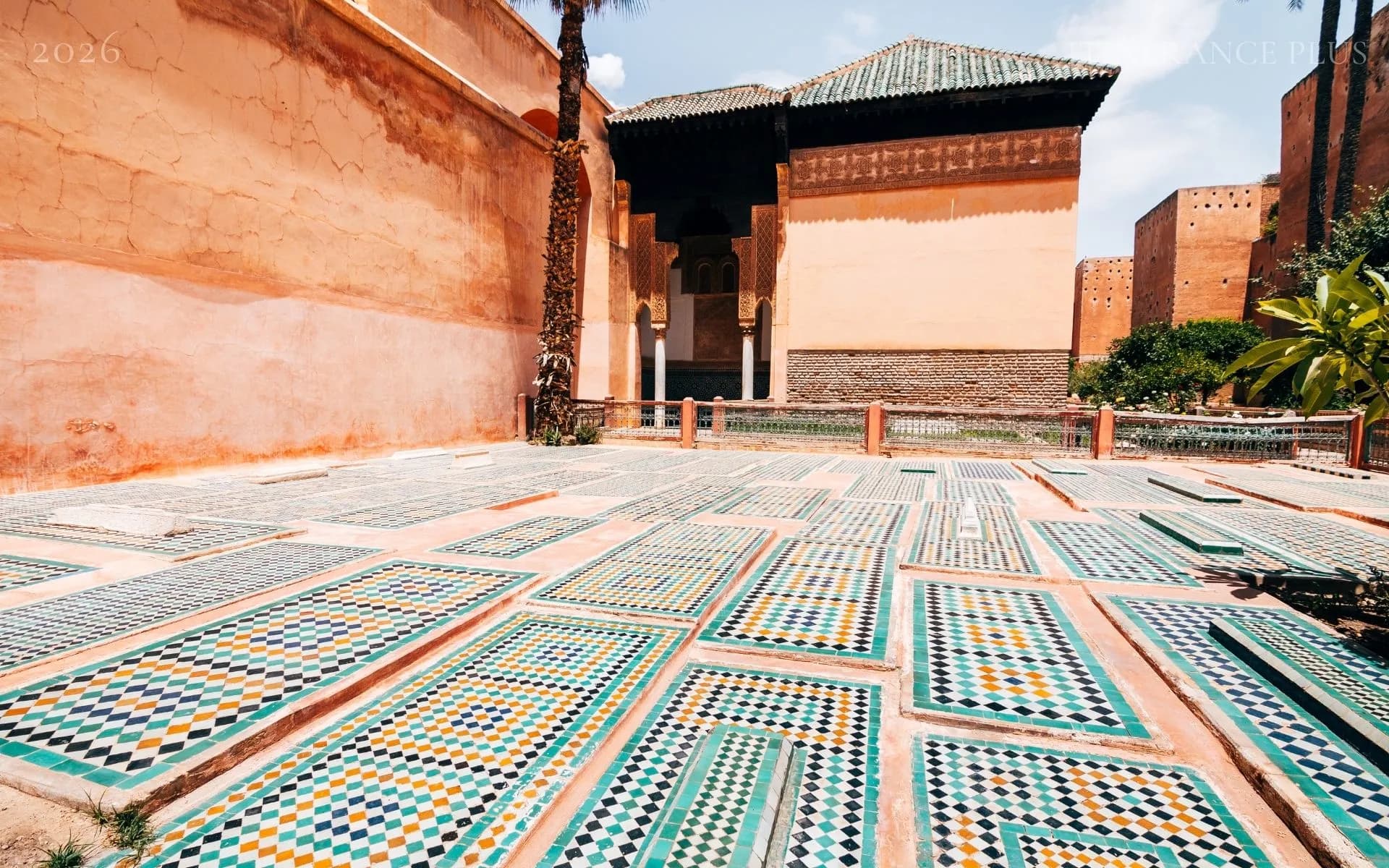
You wander among the palm trees and bougainvillea, listening to the birdsong that finds refuge in this protected enclosure. The mud-brick walls surrounding the site act as effective soundproofing against the bustle of the nearby market.
Sometimes, in the distance, you can hear the call to prayer from the Al-Mansour Mosque, a melody that reinforces the spirituality of the place.
The garden is a constant reminder of the cycle of life, where flowers bloom each season on the vestiges of a bygone era.
It is in this space that one realizes the importance of hierarchy, even in the afterlife. The simplest tombs are located directly in the earth, while members of the royal family occupy the pavilions. Yet, a shared dignity unites the entire site.
Rays of light filtering through the palm fronds cast geometric shadows on the stelae, transforming the garden into a giant sundial. It is the ideal place to sit for a moment and simply watch time pass, far from the clock and the urban bustle.
.webp&w=1920&q=75)
Craft
How does cedar wood craftsmanship survive through the centuries?
By closely observing the doors or lintels, one can discern the marks of the tools, the precise gesture of the carver who shaped the raw material. This human presence, palpable in every groove, makes the monument extremely vibrant.
It is not a cold architecture; it is a work made by human hands to honor the memory of other men. The enduring nature of cedar wood here symbolizes the continuity of Moroccan culture, a strong link between the forests of the North and the palaces of the South.
.webp&w=1920&q=75)
Light
What role does the light of Marrakech play in the site experience?
In the late afternoon, the necropolis is bathed in golden and pink hues. It is the most poetic hour. The mud-brick walls seem to gently ignite, and the reflections on the marble tombs grow warmer.
It is at this moment that the storks are most active, returning to their nests in a noisy ballet overhead. The fading light lends the site an aura of mystery, a reminder that these places spent centuries in total darkness before becoming accessible again.
This dance of light is the soul of the place, transforming a simple historical visit into a moving sensory experience.
.webp&w=1920&q=75)
Insight
Why is the Kasbah district the perfect setting for this site?
You can't reach the Saadian Tombs without passing through the Kasbah district, one of the oldest and most populated in the city. This district, which once housed the royal guard and palace officials, retains a strong identity.
Walking towards the entrance of the monument, you pass fruit stalls, vendors of hot doughnuts (sfenj), and carpenters' workshops.
This vibrant, noisy, and colorful daily life is the necessary counterpoint to the silent serenity that reigns behind the walls of the necropolis.
Insight
A poem in stone and wood
A place of silence at the heart of the medina.
This rediscovery acted as a catalyst for the preservation of the city's heritage. It reminded the world that beneath the dust and behind the blank walls of the Medina lay hidden masterpieces of Islamic art.
The Saadian Tombs became a symbol of the country's historical wealth, attracting researchers, artists, and travelers from around the globe.
The meticulous restoration that followed stabilized the structures without altering their patina, respecting the delicate balance between splendor and decay.
Frequently asked questions
Everything about The Saadian Tombs: Whispers of Gold Beneath the Storks
Other places to discover
More places to explore nearby
Garden
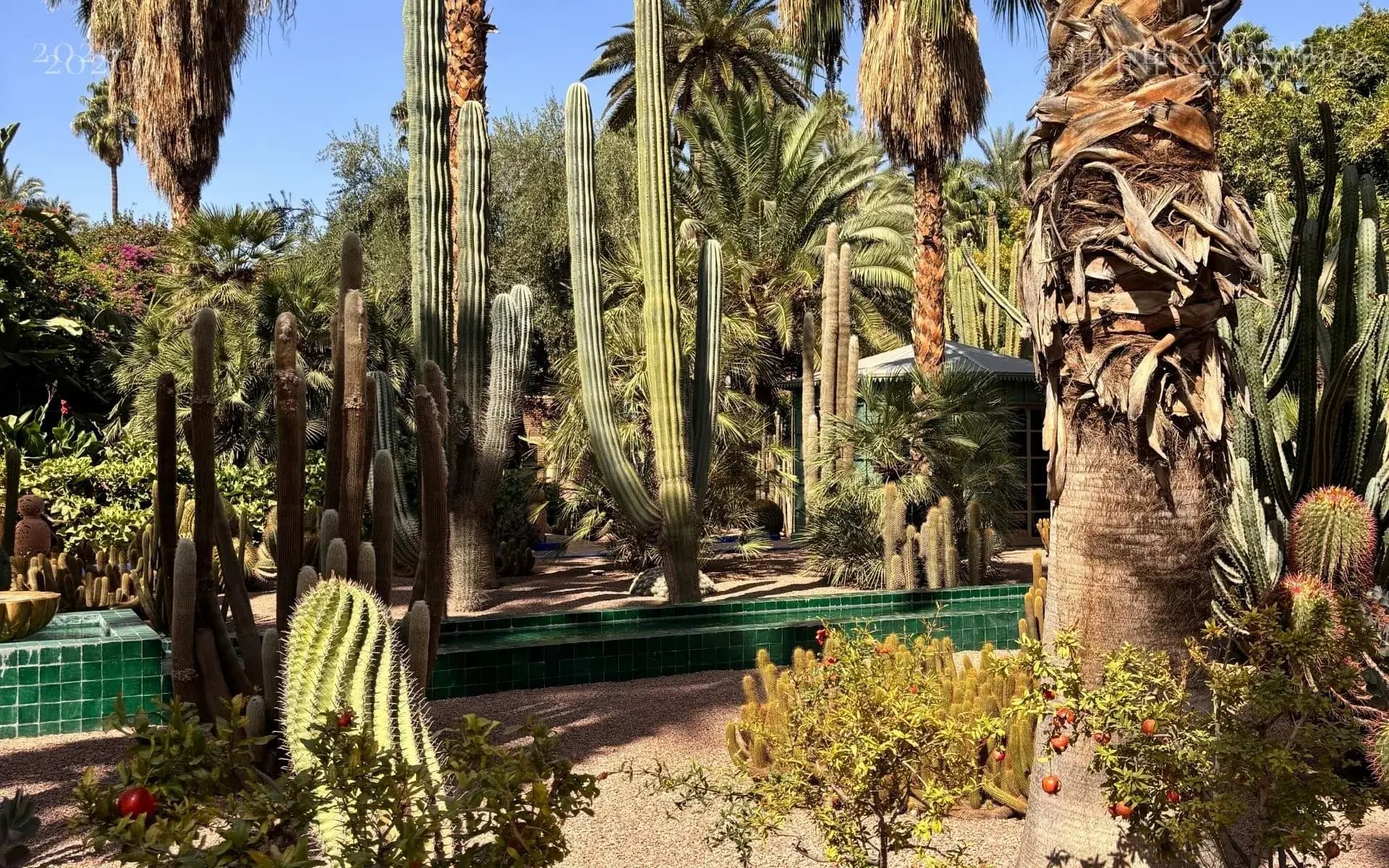
Majorelle Garden: an immersion in the cobalt blue of Marrakech
A sanctuary of freshness and color in the heart of Guéliz, where rare botany, Yves Saint Laurent's legacy and precise light meet.
Square
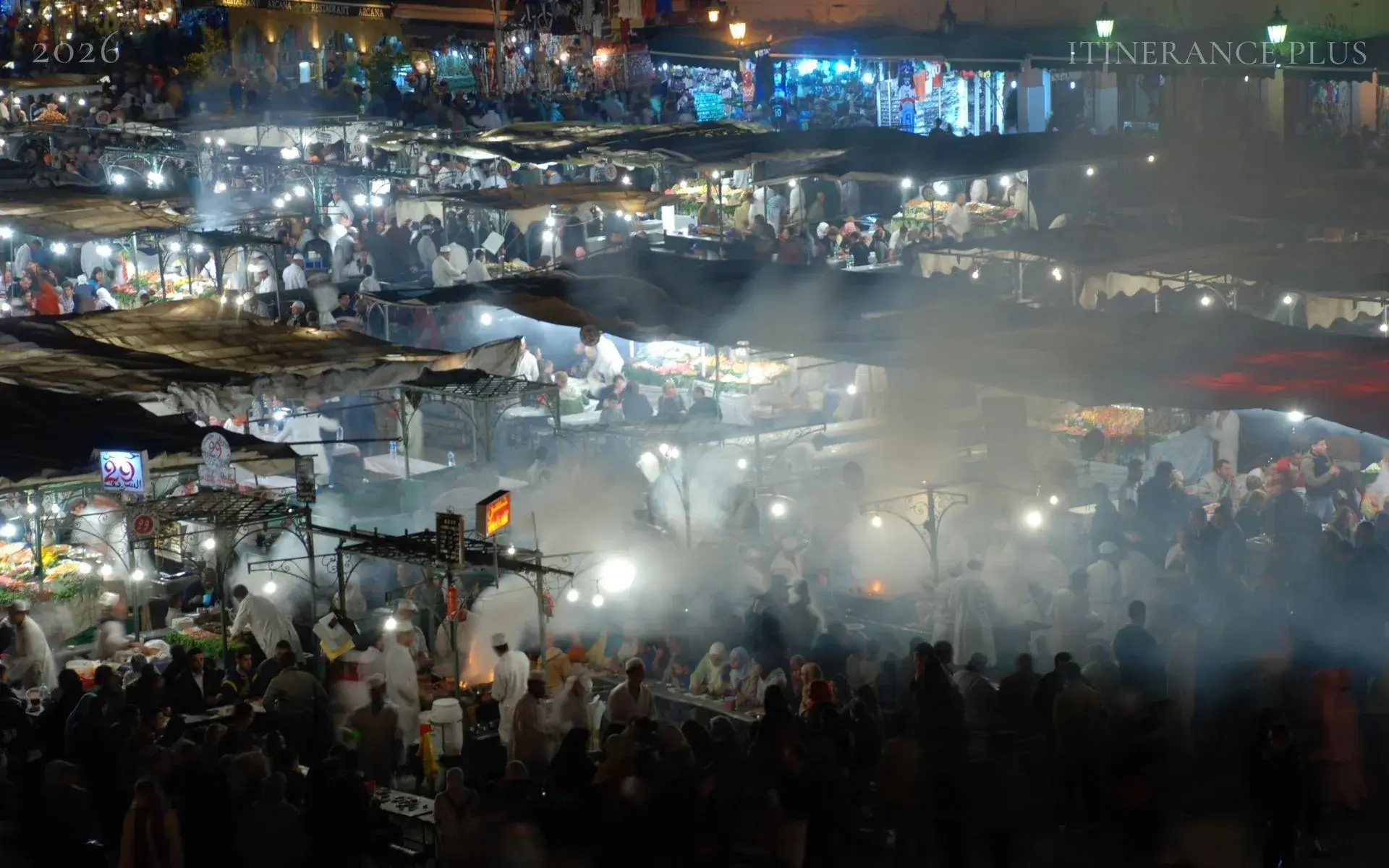
Jemaa el-Fna: diving into the vertigo of Marrakech
The smell of cedarwood smoke mixes with the scent of freshly pressed oranges, creating a dense, almost tangible atmosphere. In the distance, the first Maghreb call to prayer rises, filtered through the minarets of the...
Practical guides
Useful guides around this place
These guides help compare rhythms, formats and practical choices before shaping the visit.

Related experiences